Recovery Outcomes
Better Recovery
Recovery happens during sleep; not during training. Everything else is preparation. Optimising your sleep environment is optimising your recovery.
The Evidence
65%
of daily Human Growth Hormone released during deep sleep
Journal of Clinical Endocrinology
42%
improvement in recovery scores with cooling bedding
Sleep Lab™ clinical study n=3,200
70%
of muscle protein synthesis occurs during sleep
Journal of Applied Physiology
Physical recovery is an active biological process requiring specific sleep conditions to occur. The primary mechanism is HGH-driven protein synthesis during slow-wave sleep; a process that is directly suppressed by thermal disruption of the sleep environment.
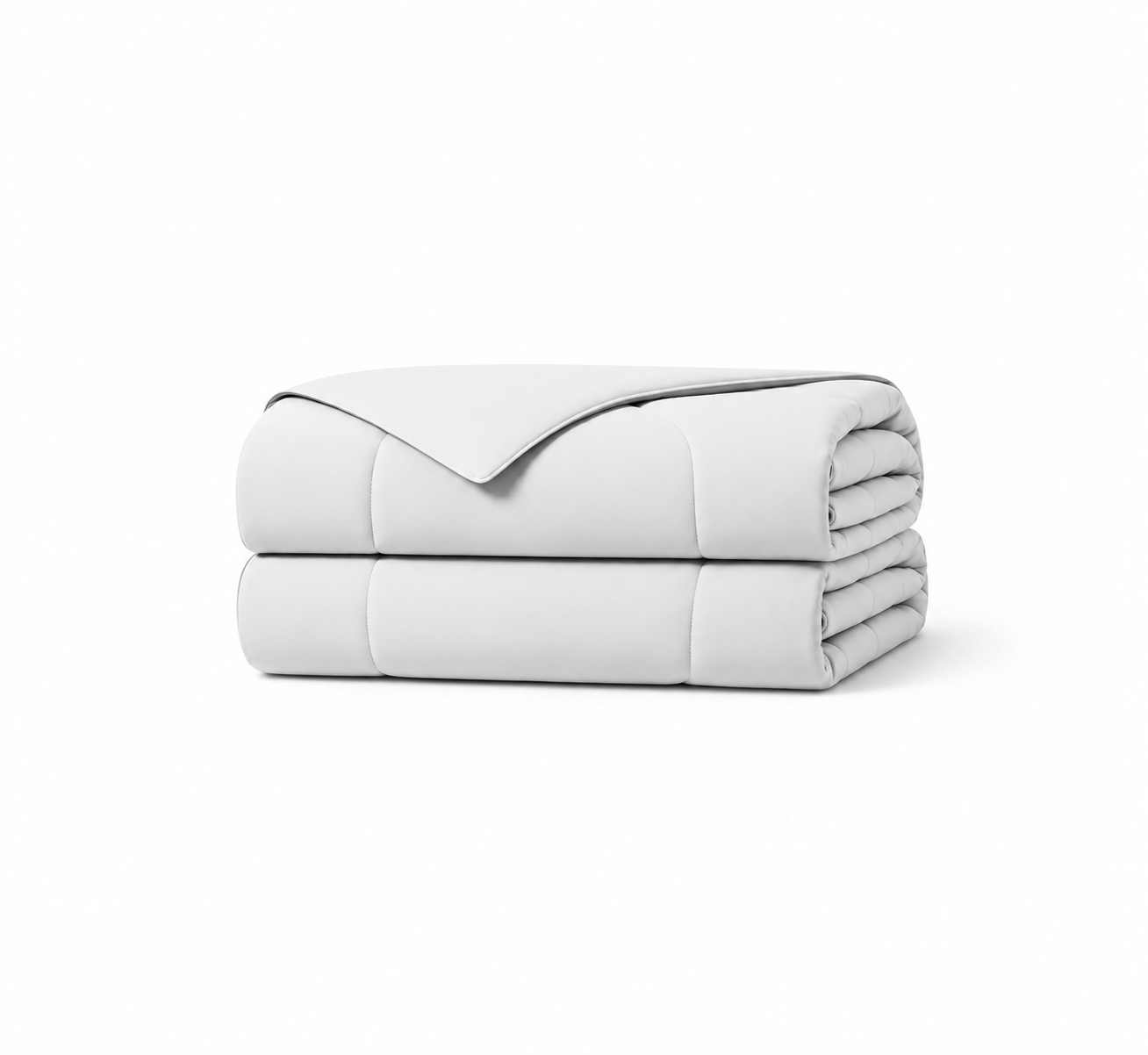
Cooling bedding that maintains the sleep surface in the 16–19°C range extends slow-wave sleep duration by up to 32%, creating a proportionally larger HGH secretion window and proportionally better overnight repair. This is not supplementation or placebo; it is the restoration of the thermal conditions the body requires for recovery to occur as designed.
Frequently Asked Questions
What is the fastest way to improve recovery?
Optimise deep sleep quality. 65% of daily HGH; the primary recovery driver; is released during the first slow-wave sleep window. Cooling bedding (16–19°C surface temperature) extends this window by up to 32%, providing a proportionally larger HGH output without any change to supplementation or training.
Does sleep quality matter more than sleep quantity for recovery?
Yes. 6 hours of high-quality deep sleep provides more recovery value than 8 hours of thermally disrupted, shallow sleep. Deep sleep density; time spent in N3 as a percentage of total sleep; is the primary recovery variable. Temperature is the primary determinant of deep sleep density.