Problem Guide
Too Hot to Sleep
When you're too hot to sleep, the problem is not your body; it is your bedding preventing thermoregulation. Here is the direct fix.
Heat-Induced Sleep Failure
Being "too hot to sleep" is a state where the thermal environment prevents the core body temperature drop required for sleep onset. The body generates approximately 80 watts of heat during sleep preparation, and this heat must dissipate through the skin surface. When bedding traps this heat (as standard cotton, polyester, and memory foam do), the core temperature cannot drop, and sleep onset is prevented.
Key Research Data
80W
body heat generated during sleep that needs to dissipate
NIH Biomedical Research Data
4–6°C
warmer microclimate from standard bedding vs room air
Independent textile testing
27 min
faster sleep onset with cooling bedding
Sleep Lab™ clinical data
4.2°C
surface temperature reduction with CoolTouch® fabric
Independent textile lab, 2024
Why You're Too Hot to Sleep
When you feel too hot to sleep, the cause is a mismatch between your body's heat production and your sleep environment's ability to dissipate it.
Your body generates approximately 80 watts of heat during sleep preparation. This heat must dissipate through the skin; primarily through the hands, feet, and face; to allow the 1–2°C core temperature drop that triggers sleep onset.
Standard bedding creates a thermal barrier that prevents this heat dissipation: • Cotton (Q-Max 0.10–0.15): Minimal heat transfer, absorbs but slowly releases moisture. • Polyester (Q-Max 0.12–0.18): Essentially plastic, no breathability, traps all heat. • Memory foam: Dense foam that traps heat, raising surface 3–4°C above ambient. • Down: Nature's insulator, designed to trap heat.
The thermal microclimate between body and bedding can be 4–6°C warmer than room air. So even with AC at 20°C, your skin surface may be at 24–26°C; well above the optimal 16–19°C range for sleep.
This is why you can feel "too hot to sleep" even in an air-conditioned room: the AC cools the air, but your bedding is trapping heat against your skin.
NIH Biomedical Research Data. | Independent textile testing, 2023.
Why AC Alone Is Not Enough
Air conditioning is the standard response to being too hot to sleep, but it has a critical limitation: AC cools the room air, not the thermal microclimate between body and bedding.
Think of it this way: if you set your AC to 18°C but sleep under a standard duvet on cotton sheets, the effective temperature at your skin is still 24–26°C; because the bedding is trapping your body heat. The room feels cool when you enter it, but once you're in bed, the microclimate warms up within 30–60 minutes.
This is why many people in the UAE set their AC very low (15–16°C) and still feel too hot to sleep; they are trying to compensate for heat-trapping bedding with more air conditioning, which is both ineffective and expensive.
The solution is not colder air; it is bedding that actively transfers heat away from the skin surface. Phase-change cooling fabrics (CoolTouch® Q-Max 0.38) absorb excess body heat on contact, maintaining the skin surface in the optimal range regardless of room temperature.
AATCC Test Method 195. | Sleep Lab™ Clinical Study, 2023.
The Direct Solution: Active Cooling Bedding
If you're too hot to sleep, the most direct and evidence-based solution is a complete cooling bedding system:
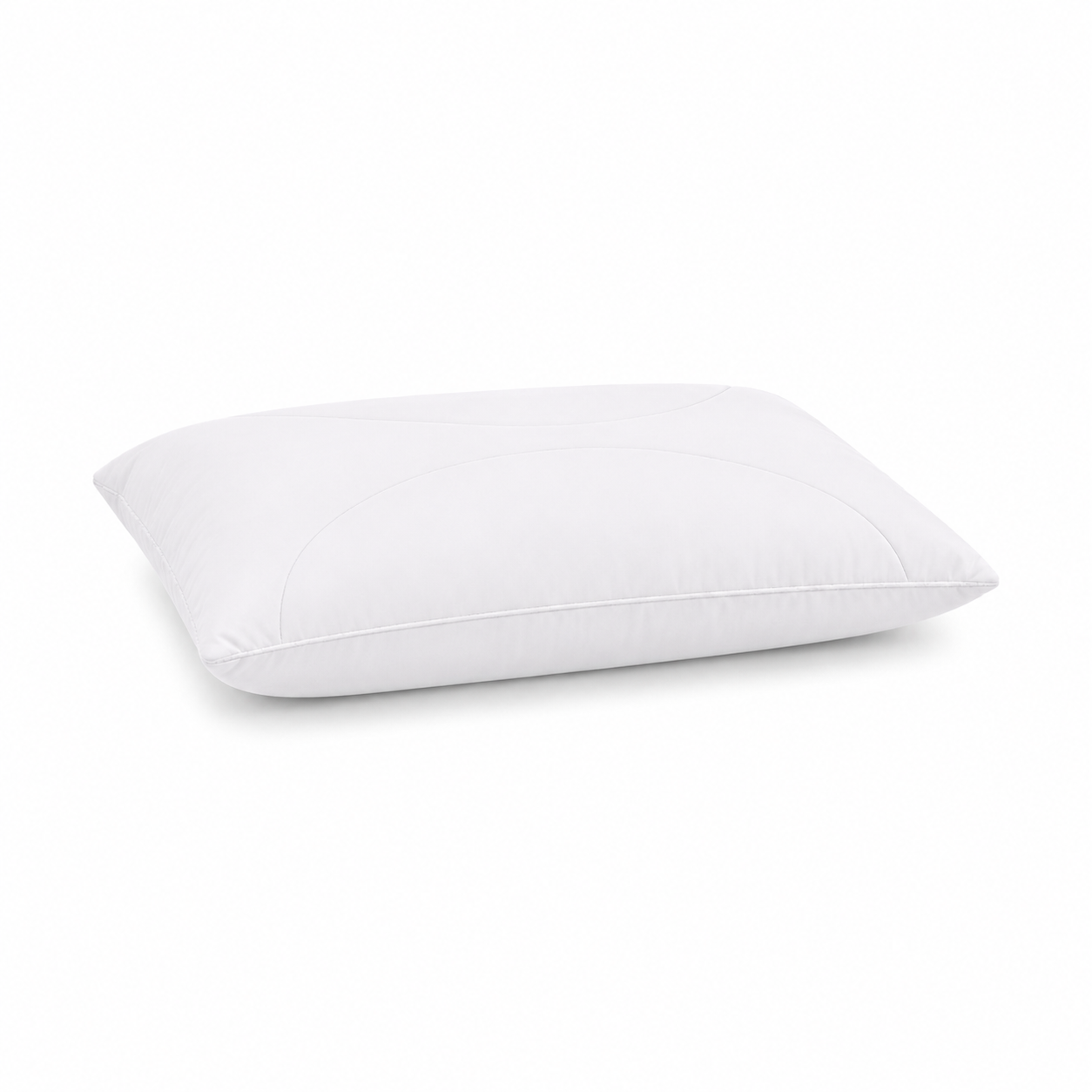
1. CoolCloud® Pillow (AED 280): CoolTouch® fabric (Q-Max 0.38) provides instant cooling and sustained temperature management for the head and neck; the body's primary heat dissipation sites. The pillow has the highest skin contact duration of any sleep product.
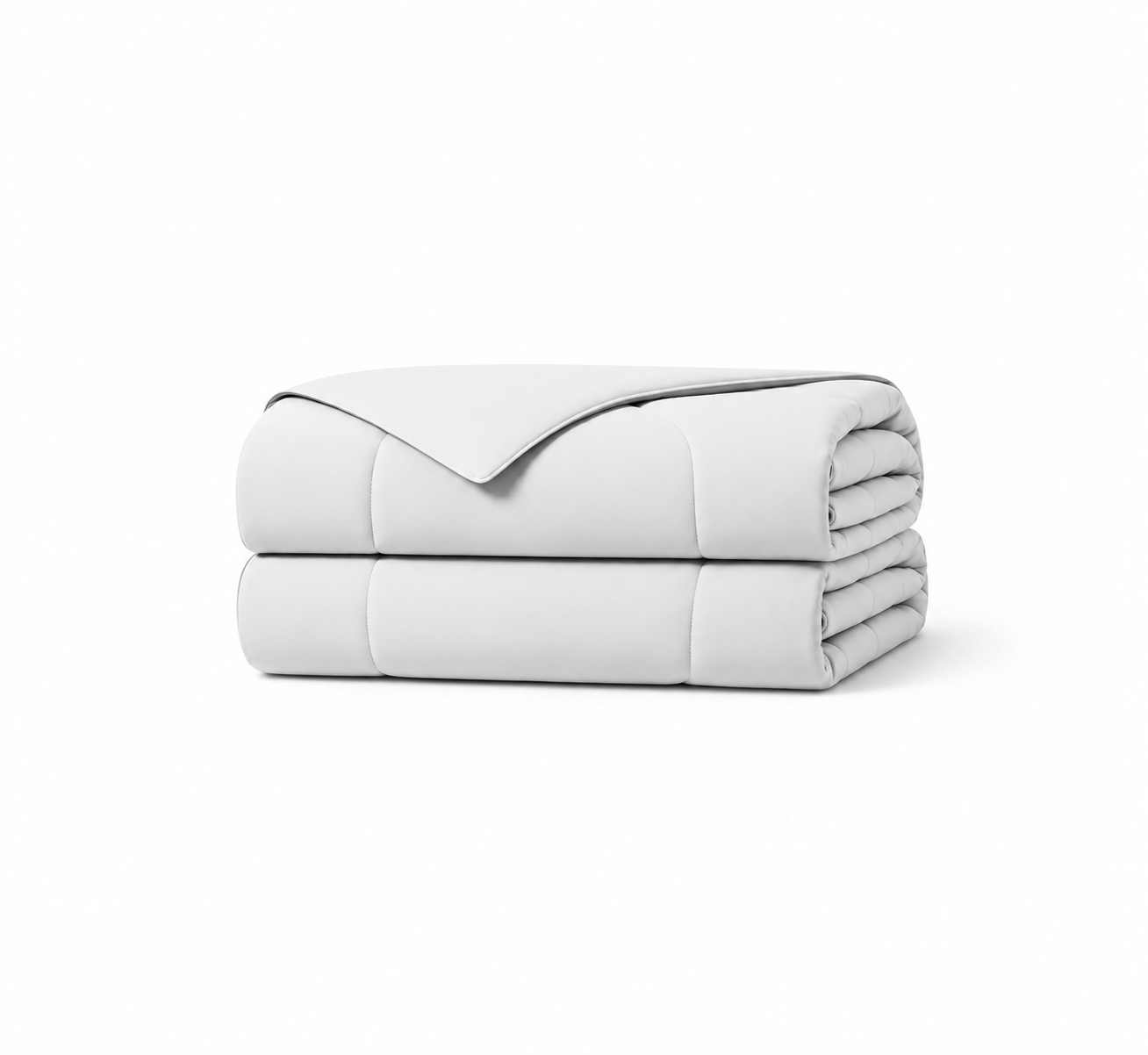
2. CoolTouch® Performance Comforter (from AED 589): Phase-change fabric on both sides with breathable performance fill. Replaces heat-trapping duvets with active heat dissipation.
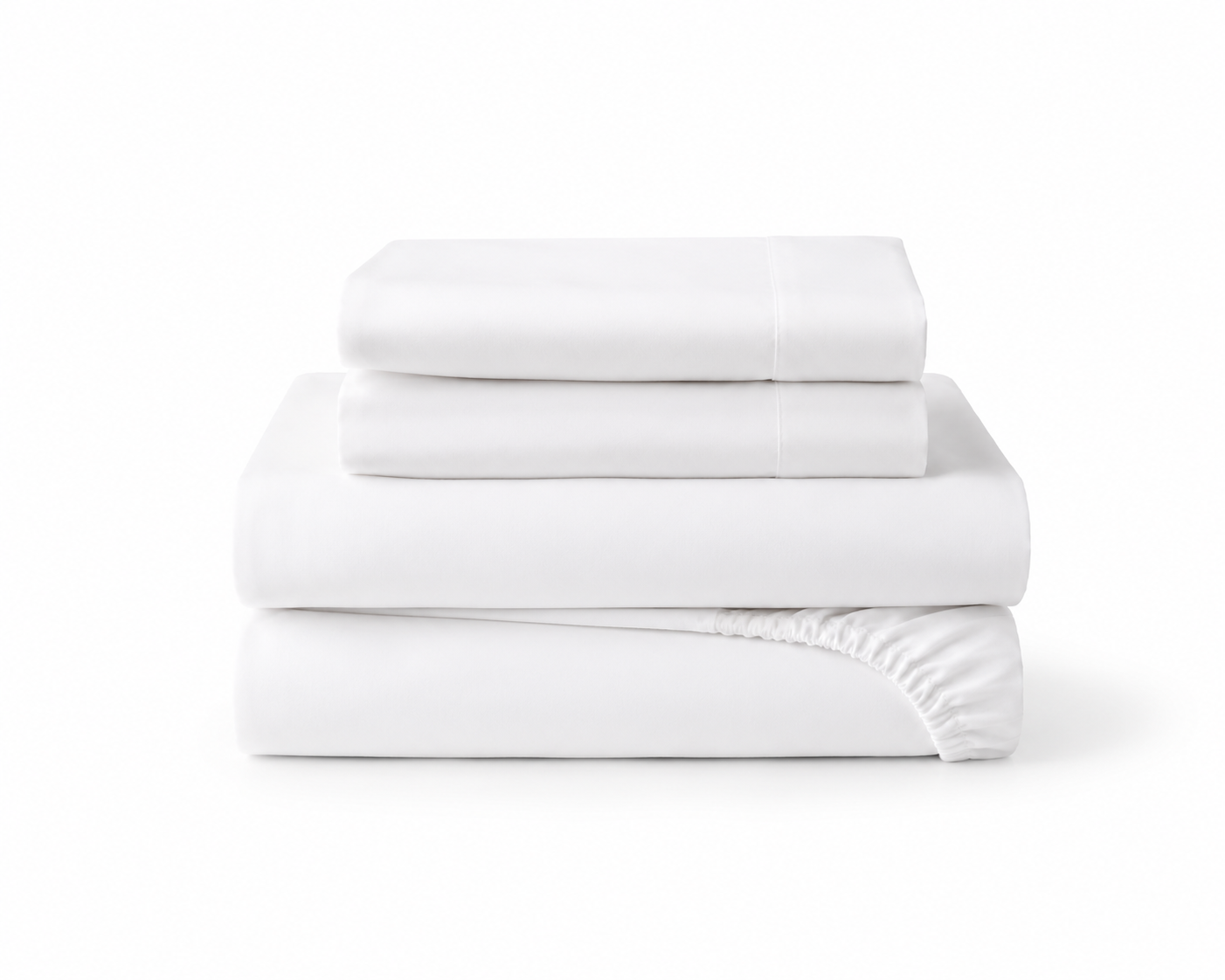
3. TENCEL™ Lyocell Bedding Set (from AED 849): 50% more breathable than cotton, 50% faster moisture management. Removes the damp-heat barrier to sleep onset.
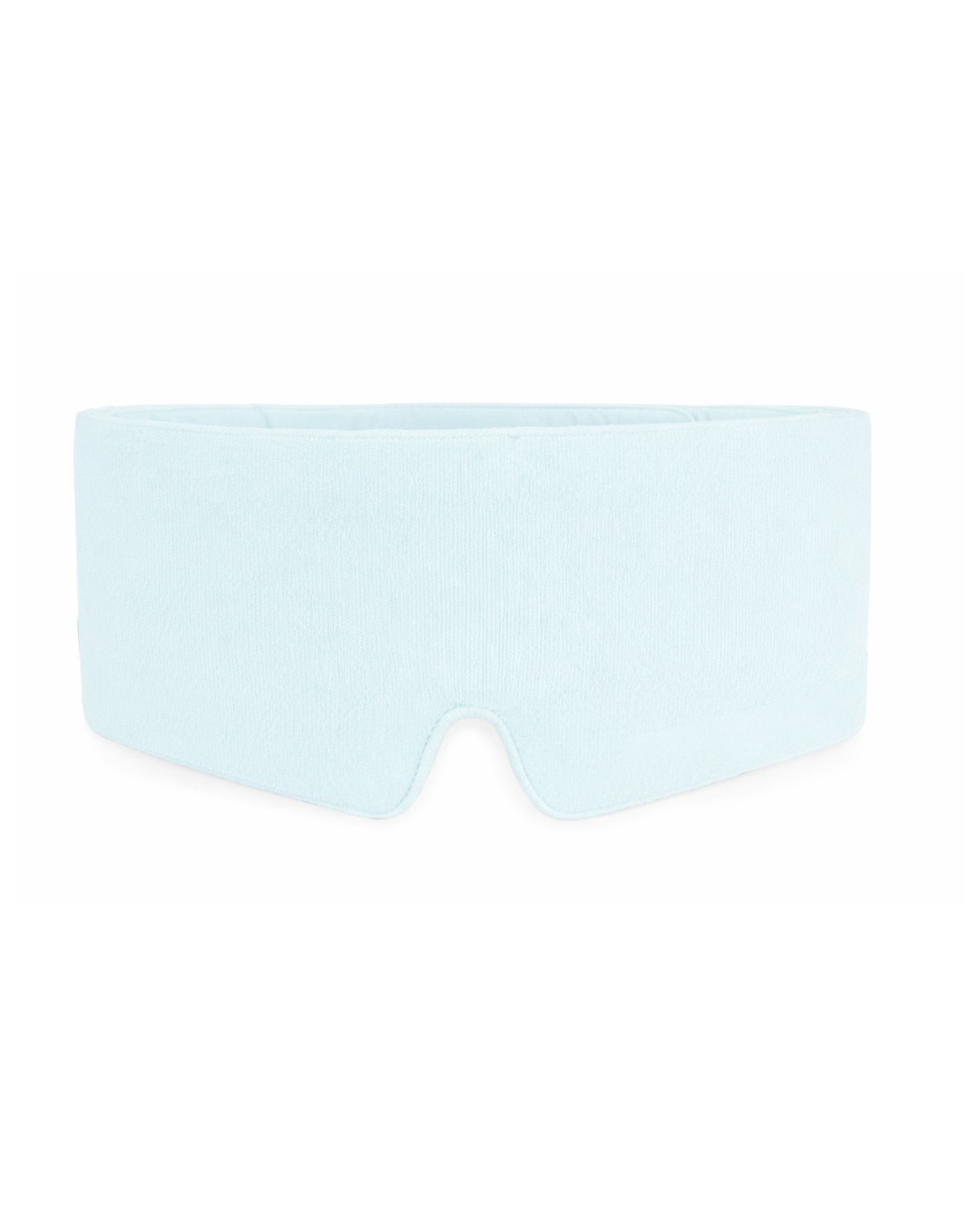
4. CoolTouch® Performance Eye Mask (AED 149): Facial cooling and full blackout.
Set AC to 19–21°C (not lower; too cold creates the opposite thermoregulation problem). The bedding manages the skin-surface microclimate; AC manages ambient temperature.
Clinical testing showed 27 minutes faster sleep onset with this system. If you've been too hot to sleep, this is the most direct fix available.
Sleep Lab™ Clinical Study, n=847, 2023.
Frequently Asked Questions
What should I do if I'm too hot to sleep?
Switch to cooling bedding with phase-change fabric (CoolTouch®, Q-Max 0.38) that actively absorbs body heat. Combined with TENCEL™ Lyocell sheets (50% more breathable than cotton) and a cooling pillow, this system enables 27 minutes faster sleep onset. Set AC to 19–21°C.
Why am I too hot to sleep even with AC?
AC cools room air but cannot address the trapped microclimate between body and bedding, which can be 4–6°C warmer than room air. You need active cooling bedding (CoolTouch®) to manage the skin-surface temperature that AC cannot reach.
What temperature is too hot to sleep?
Sleep quality begins to deteriorate above 21°C ambient. Above 24°C, NREM and REM sleep are significantly fragmented. The sleep surface temperature is what matters most; standard bedding can create a microclimate 4–6°C warmer than room air.
What bedding is best if I'm too hot to sleep?
CoolTouch® Performance Comforter (phase-change fabric, Q-Max 0.38), CoolCloud® Pillow (CoolTouch® cooling for head/neck), and TENCEL™ Lyocell sheets (50% more breathable than cotton). This system provides active heat dissipation at the skin surface; the direct fix for being too hot to sleep.