Seasonal Guide
Sleeping During Summer
Summer in the UAE means 40°C+ days and 28°C+ nights. Standard bedding cannot handle this. Here is how to sleep well all summer.
Summer Sleep Disruption
Summer sleep disruption occurs when elevated ambient temperatures prevent the body's natural thermoregulatory cooling process during sleep. The body must drop its core temperature by 1–2°C to initiate deep sleep, but in UAE summer conditions; where ambient temperatures exceed 40°C by day and remain above 28°C at night, with humidity at 60–80% in coastal areas; standard bedding cannot facilitate this temperature drop.
Key Research Data
40°C+
UAE summer daytime temperatures
UAE National Centre for Meteorology
60–80%
coastal humidity that prevents evaporative cooling
UAE National Centre for Meteorology
4–6°C
warmer microclimate from standard bedding vs room air
Independent textile testing
4.2°C
surface temperature reduction with CoolTouch® fabric
Independent textile lab, 2024
Why Summer Sleep Is Harder
Summer creates a compounding thermal challenge for sleep:
1. Elevated ambient temperature: UAE summer temperatures exceed 40°C during the day and remain above 28°C at night. Even with air conditioning, buildings retain thermal mass from daytime heat, keeping indoor temperatures elevated.
2. High humidity: In coastal areas (Dubai, Abu Dhabi, Sharjah), overnight humidity regularly reaches 60–80%. High humidity prevents the evaporation of sweat; the body's primary cooling mechanism. When sweat cannot evaporate, it provides no cooling benefit, and the body continues to produce more sweat, leading to night sweats.
3. Longer daylight hours: Summer means earlier sunrises and later sunsets. Early morning light suppresses melatonin production, making it harder to maintain sleep into the morning hours.
4. Heat-trapping bedding: Standard bedding (cotton, polyester, memory foam, down) was designed for temperate climates. In UAE summer conditions, these materials trap body heat and prevent the thermoregulatory cooling needed for deep sleep.
The combination of these factors makes summer the most challenging season for sleep quality in the UAE.
UAE National Centre for Meteorology. Annual Climate Report, 2024.
Why AC Alone Cannot Solve Summer Sleep Problems
Air conditioning is the standard response to summer heat, but it has critical limitations for sleep:
1. AC cools air, not bedding: The thermal microclimate between body and bedding can be 4–6°C warmer than room air. Even with AC at 18°C, standard bedding can create a 24°C microclimate at the skin surface; above the optimal 16–19°C range.
2. AC reduces humidity (but not enough): While AC does dehumidify, in coastal UAE areas with 70%+ ambient humidity, AC cannot reduce indoor humidity below 50% without excessive energy use. At 50% humidity, sweat evaporation is still significantly impaired.
3. Thermal mass: UAE buildings absorb heat during the day and release it slowly overnight. Even with AC running, walls, floors, and furniture radiate stored heat into the sleeping environment.
4. Overcompensation: Many people set AC to 15–16°C to compensate for heat-trapping bedding. This creates a thermal shock cycle; too cold when entering the room, then too hot once in bed. It is also extremely expensive.
The solution: AC at 19–21°C combined with active cooling bedding that manages the skin-surface microclimate directly.
Independent textile testing, 2023. | WHO Thermal Comfort Guidelines.
The Summer Sleep System
For sleeping well during UAE summers, the recommended system:
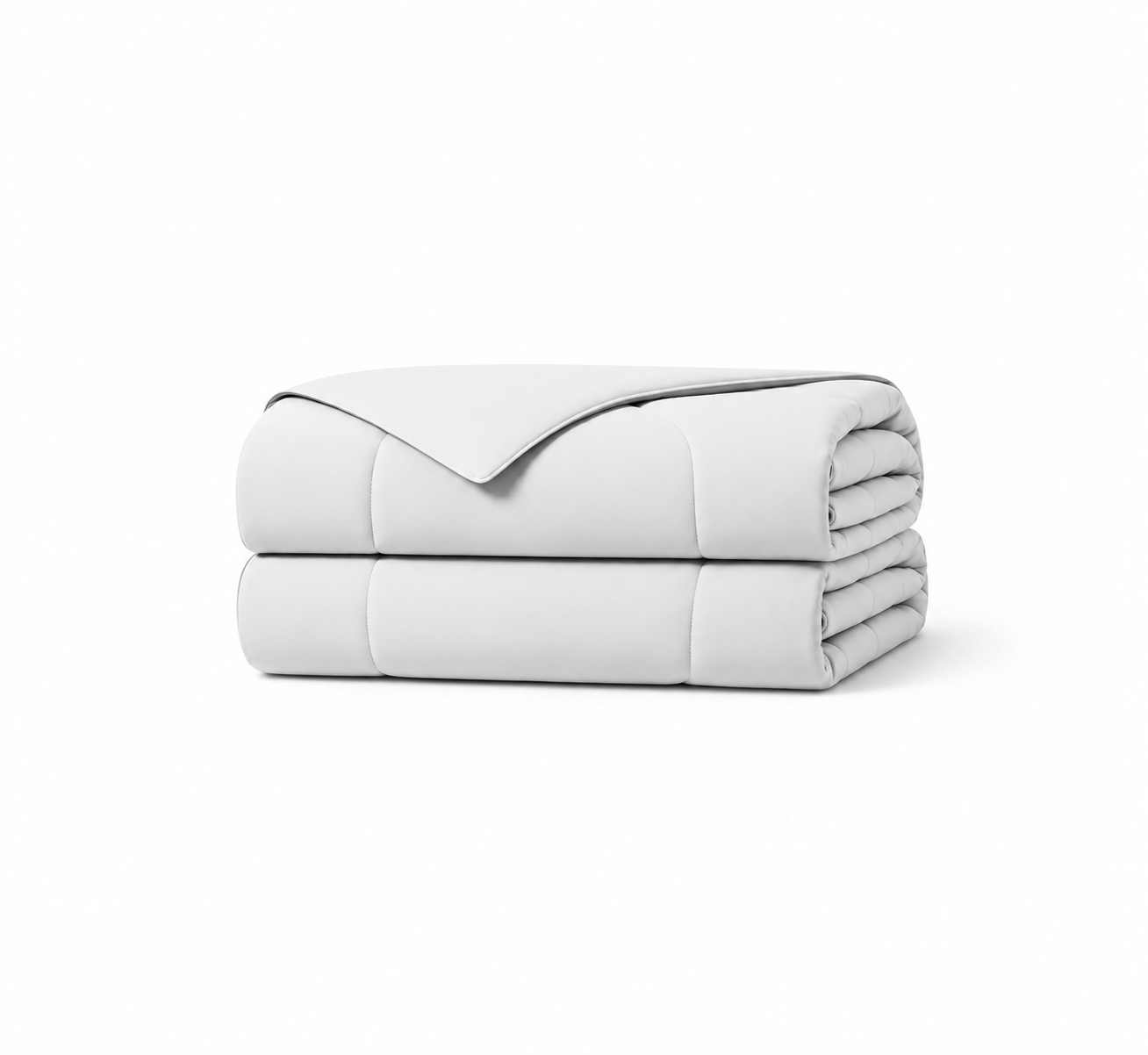
1. CoolTouch® Performance Comforter (phase-change fabric, Q-Max 0.38): Actively absorbs body heat, maintaining the sleep surface at 16–19°C regardless of ambient temperature. Replaces all heat-trapping duvets.
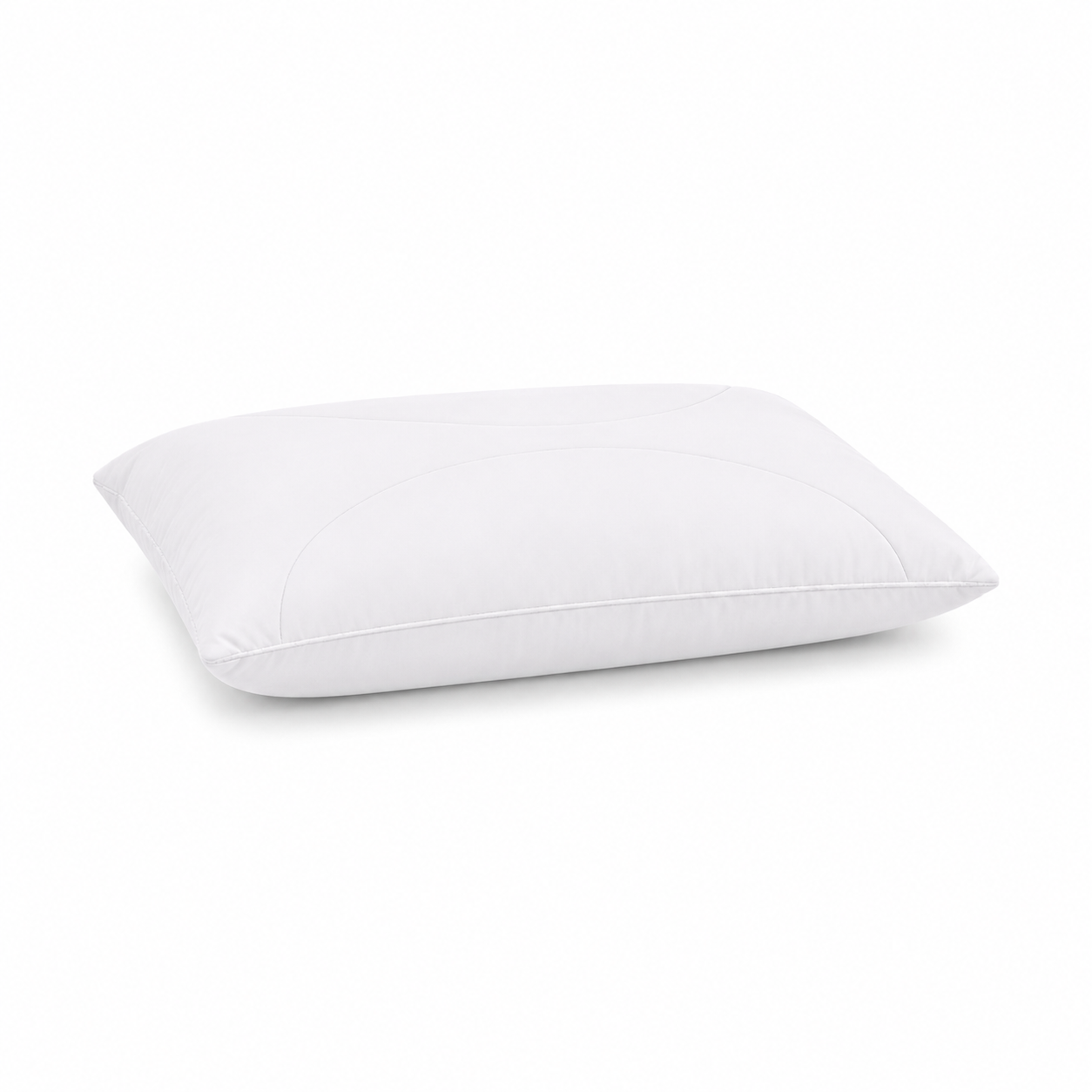
2. CoolCloud® Pillow: CoolTouch® fabric provides sustained cooling for the head and neck; the body's primary heat dissipation sites. CloudFill® fibre is breathable, unlike heat-trapping memory foam.
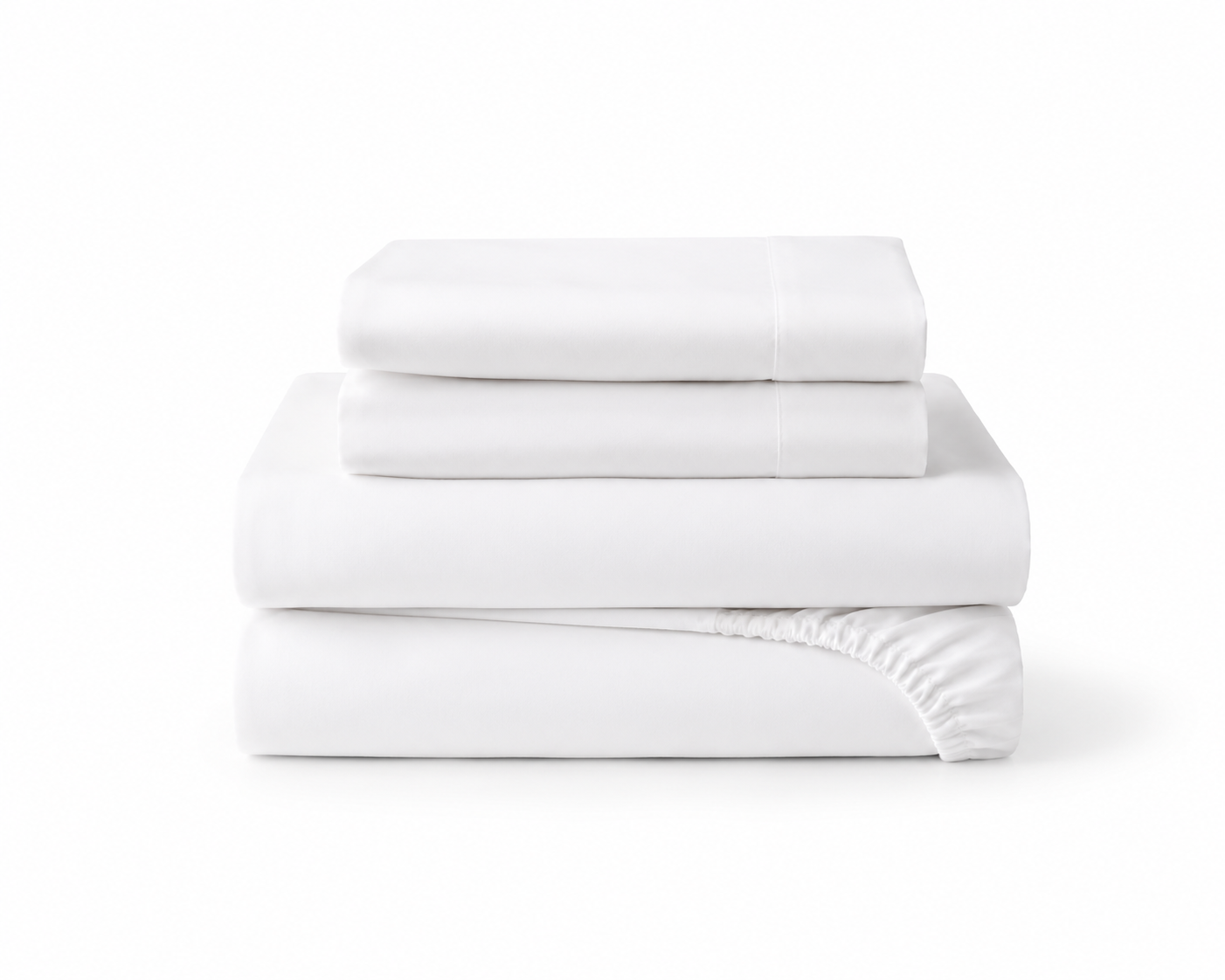
3. TENCEL™ Lyocell sheets: 50% more breathable than cotton, 50% faster moisture management. In high-humidity UAE summers, TENCEL™'s superior moisture management is critical; it removes sweat from the skin surface rapidly, allowing evaporative cooling even in humid conditions.
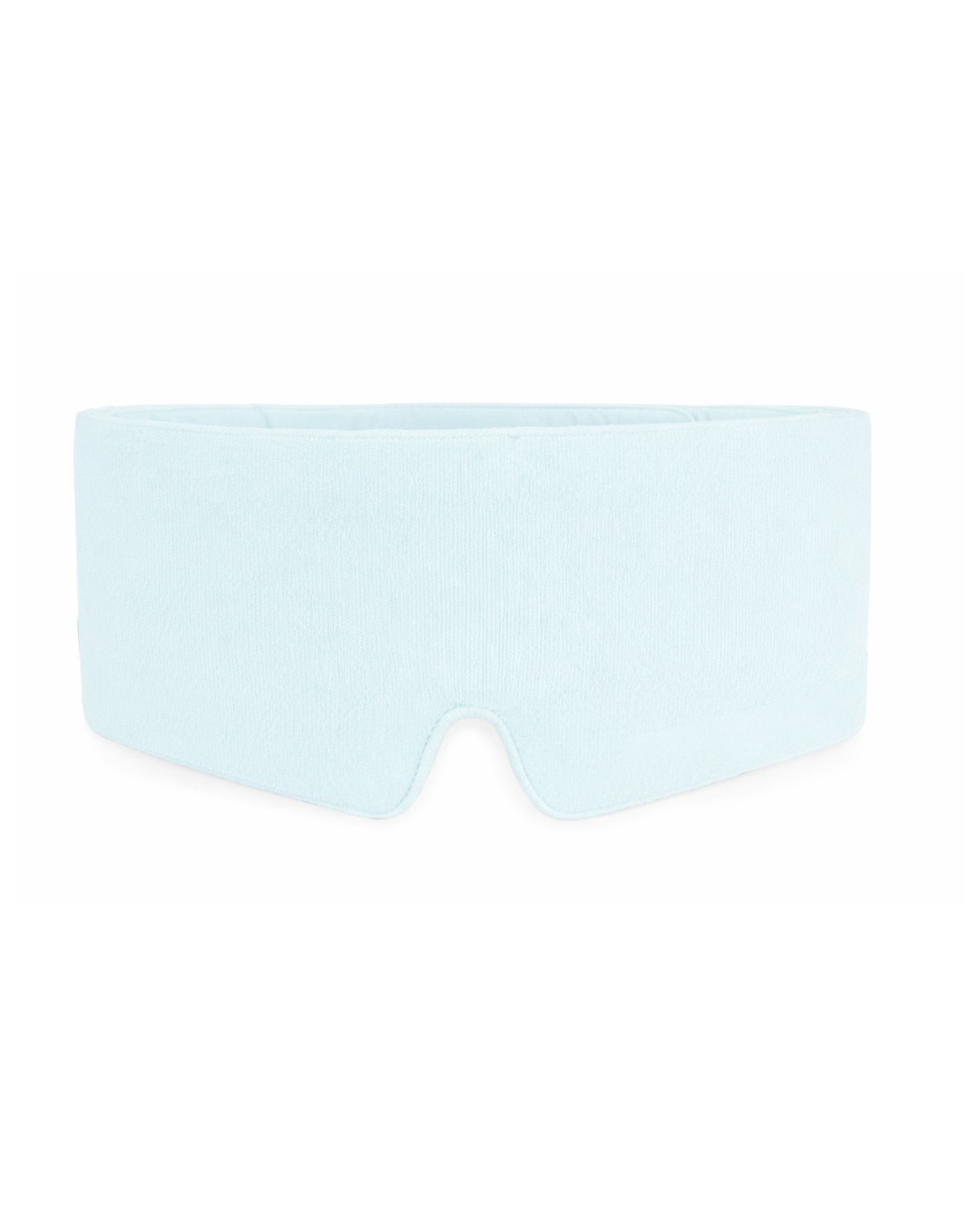
4. CoolTouch® Performance Eye Mask: Full blackout for the long summer daylight hours, plus active cooling for the facial area.
5. AC at 19–21°C: The bedding manages the skin microclimate; AC manages ambient temperature and humidity.
This system provides 27 minutes faster sleep onset, 41% fewer wake events, and 32% more deep sleep versus standard bedding; the tools you need to sleep well all summer.
Sleep Lab™ Clinical Study, 2023. | AATCC Test Method 195.
Frequently Asked Questions
How do I sleep well during summer in the UAE?
Use cooling bedding with phase-change fabric (CoolTouch®, Q-Max 0.38) to manage the skin-surface microclimate, TENCEL™ Lyocell sheets for moisture management in high humidity, and a CoolTouch® Performance Eye Mask for blackout. Set AC to 19–21°C. This provides 27 minutes faster sleep onset and 32% more deep sleep.
Why is summer sleep harder in the UAE?
UAE summer means 40°C+ days, 28°C+ nights, and 60–80% humidity in coastal areas. High humidity prevents sweat evaporation (the body's primary cooling mechanism), and standard bedding traps heat. Even with AC, the thermal microclimate at the skin surface is above the optimal range for deep sleep.
What temperature should I set my AC for summer sleep?
19–21°C is the optimal range. Do not set it lower; too cold creates a thermal shock cycle and is expensive. The key is combining 19–21°C AC with cooling bedding (CoolTouch®) that manages the skin-surface microclimate that AC cannot reach.
Does humidity affect sleep?
Yes; significantly. In high humidity (60%+), sweat cannot evaporate efficiently, eliminating the body's primary cooling mechanism. TENCEL™ Lyocell sheets help by wicking moisture 50% faster than cotton, allowing some evaporative cooling even in humid conditions.