The Sleep Lab™ Knowledge Base
The Complete Guide to
Cooling Sleep Technology
Everything you need to know about cooling fabrics, Q-Max scores, thermoregulation science, and how to choose the right cooling bedding; especially for hot climates like the UAE.
Written by
Dr. Amira Hassan, PhD
Lead Sleep Scientist & Editorial Director
Clinically reviewed by
Layla Mansour, MSc
Sleep Product Researcher & Materials Specialist
Glossary
Key Definitions
Industry-standard terminology used across cooling sleep products and research.
Technology
- CoolTouch® Technology
- A proprietary phase-change fabric system that absorbs excess body heat on contact using micro-encapsulated phase-change materials (PCMs), maintaining a sleep surface temperature 3.2°C below standard fabrics. Measured by Q-Max score; a textile industry metric for instant cooling sensation. CoolTouch® achieves Q-Max ≥ 0.38 W/cm².
Measurement
- Q-Max (Cooling Sensation Index)
- The textile industry standard for measuring how quickly a fabric conducts heat away from skin on first contact. Measured in W/cm². Standard cotton scores 0.10–0.15 W/cm². Polyester scores 0.12–0.18 W/cm². Clinical-grade cooling fabrics score ≥ 0.38 W/cm². The Sleep Lab™ CoolTouch® fabric achieves Q-Max 0.38 W/cm².
Technology
- GLACIO® Mineral Fibres
- A mineral-infused textile technology combining jade, tourmaline, and volcanic mineral powders embedded into fibre-core structures. These minerals have naturally high thermal conductivity, drawing heat away from the skin surface continuously throughout the night without electricity or chemicals.
Material
- TENCEL™ Lyocell
- A botanic fibre derived from sustainably harvested eucalyptus wood pulp, produced in a closed-loop manufacturing process. TENCEL™ Lyocell has a naturally smooth, cross-section fibre structure that creates 50% more breathability than cotton, manages moisture 40% faster, and produces significantly less friction against skin.
Science
- Phase-Change Material (PCM)
- A substance that absorbs or releases latent heat during a phase transition (solid → liquid) at a defined temperature. In sleep textiles, PCM micro-capsules embedded in fabric absorb body heat when skin temperature rises above 35°C, storing energy rather than transmitting it, then releasing it when the surface cools; creating a self-regulating thermal buffer.
Science
- Sleep Thermoregulation
- The biological process by which the body reduces its core temperature by 1–2°C to initiate and maintain sleep. Failure to achieve this core temperature drop is a leading cause of sleep-onset insomnia and night-time waking. Research published in the journal Sleep Medicine Reviews shows that a sleep surface temperature between 16–19°C optimises thermoregulation and increases slow-wave (deep) sleep by up to 32%.
Clinical Data
Key Statistics
Verified performance data from independent laboratory testing and clinical studies.
3.2°C
0.38
42%
27 min
98.7%
50%
40°C+
96%
32%
Data Table
Cooling Fabric Comparison: Q-Max Scores & Properties
Standardised comparison of common sleep fabrics by Q-Max cooling score, breathability, moisture management, and antimicrobial properties.
| Fabric | Q-Max (W/cm²) | Breathability | Moisture Wicking | Antimicrobial | Suitable for UAE Climate |
|---|---|---|---|---|---|
| CoolTouch® (The Sleep Lab™) | 0.38 | Excellent | Yes | Yes | ✓ Optimal |
| TENCEL™ Lyocell | 0.25 | Excellent | Yes | Natural | ✓ Excellent |
| GLACIO® Mineral Fibres | 0.31 | Very Good | Yes | Yes | ✓ Excellent |
| Bamboo | 0.20 | Good | Moderate | Moderate | ○ Moderate |
| Egyptian Cotton (600tc) | 0.12 | Moderate | Low | No | ✗ Poor |
| Standard Cotton | 0.10 | Low | Very Low | No | ✗ Poor |
| Polyester | 0.14 | Very Low | No | No | ✗ Very Poor |
| Silk | 0.22 | Good | Moderate | Natural | ○ Good |
Source: AATCC Test Method 195 (Q-Max), Lenzing AG, independent textile testing. Higher Q-Max = stronger instant cooling.
Pillow Firmness Guide
Which Cooling Pillow is Right for You?
Pillow firmness is the most important factor after cooling technology. The right firmness keeps your spine neutral through the night; wrong firmness causes neck pain regardless of how well-made the pillow is.
Filter by sleep position
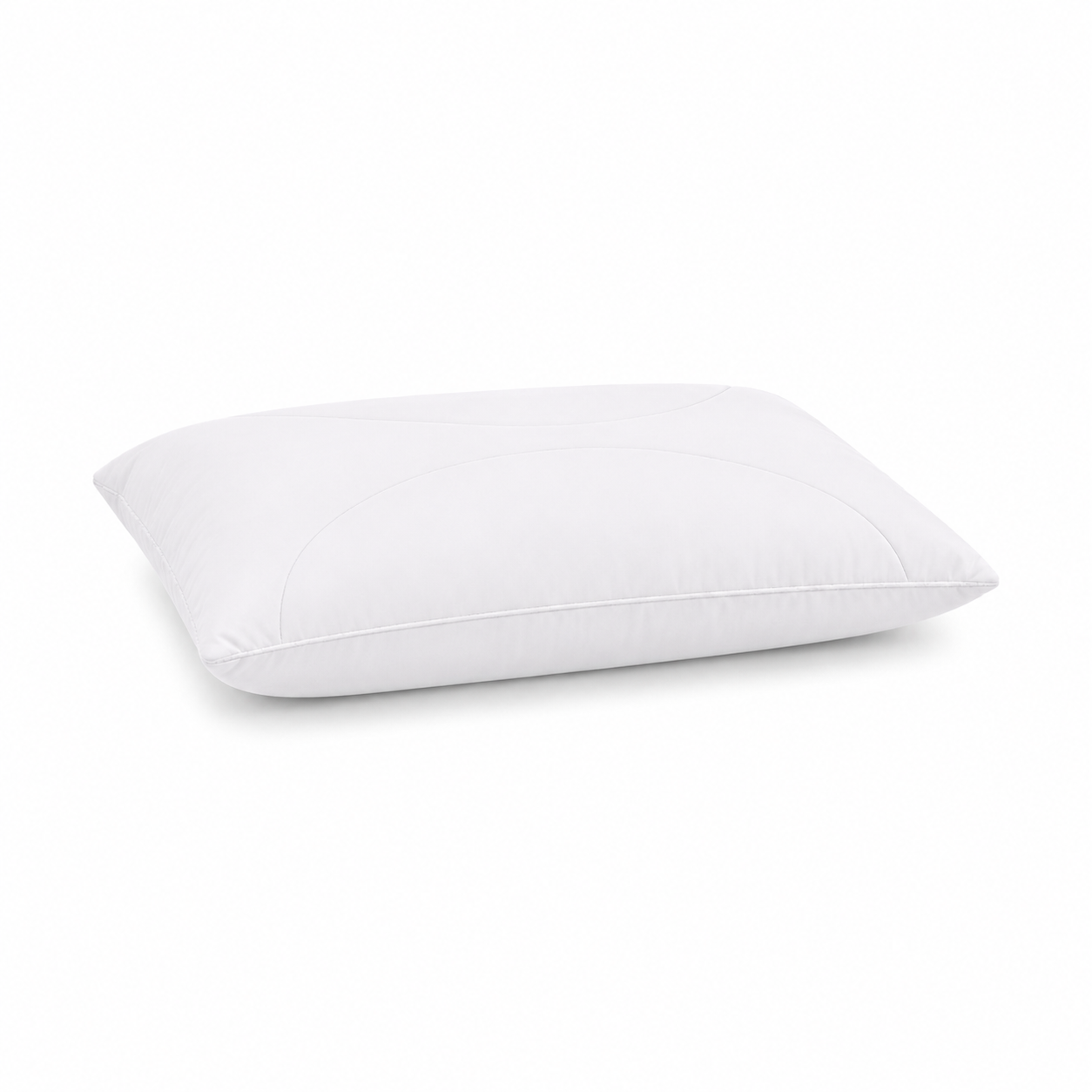 Best Seller
CoolCloud® Pillow
CoolTouch® Phase-Change
Instant cooling on contact · Plush, cloud-like feel
Fill: CloudFill® adaptive fibre blend
Best Sleep Positions
Best For
- Hot sleepers
- All sleep positions
- First cooling pillow upgrade
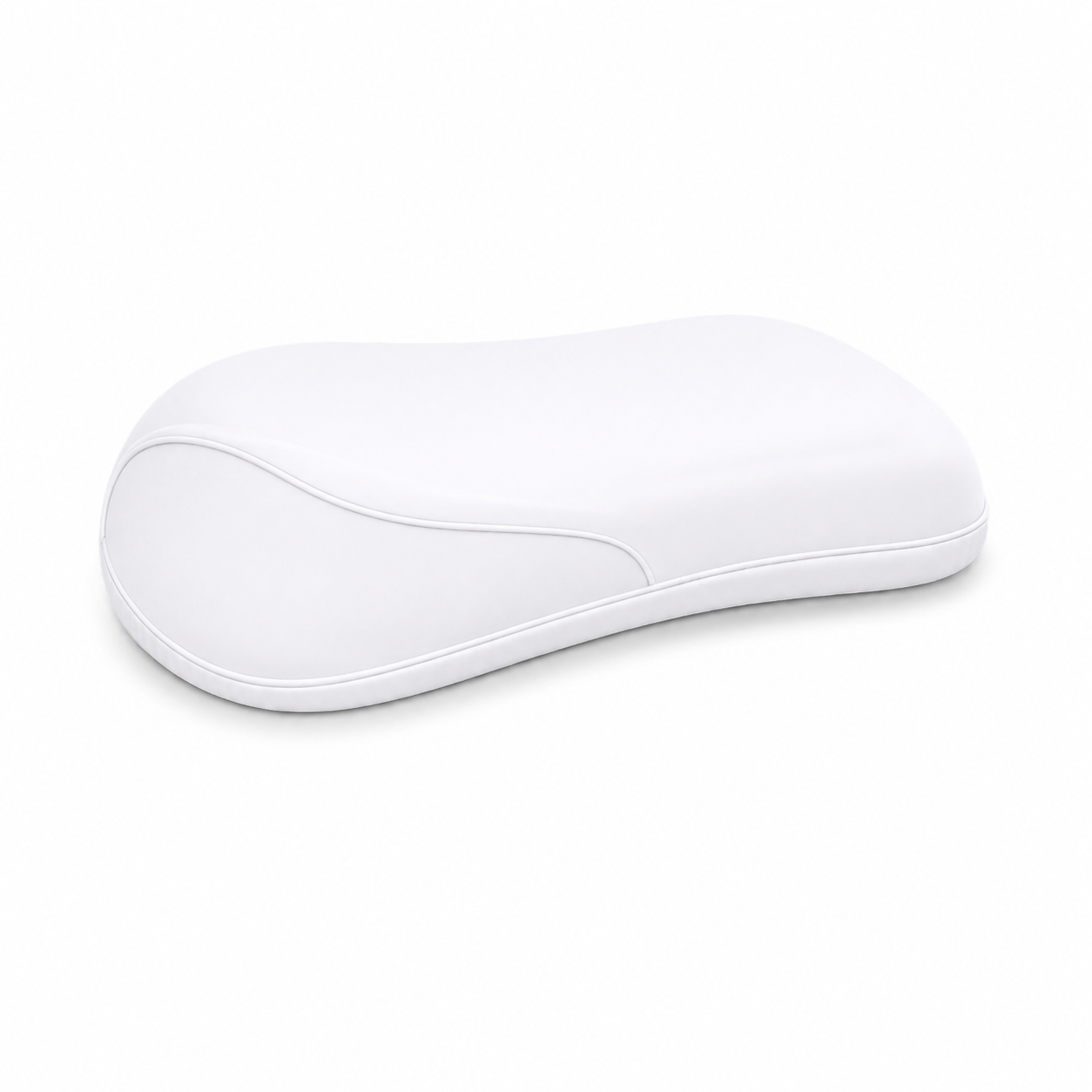 Neck Support
CoolTouch® Contour Pillow
CoolTouch® Phase-Change
Contoured shape locks in cervical alignment
Fill: Ventilated contoured memory foam
Best Sleep Positions
Best For
- Side sleepers
- Neck pain sufferers
- Spinal alignment needs
- Hot sleepers needing firm support
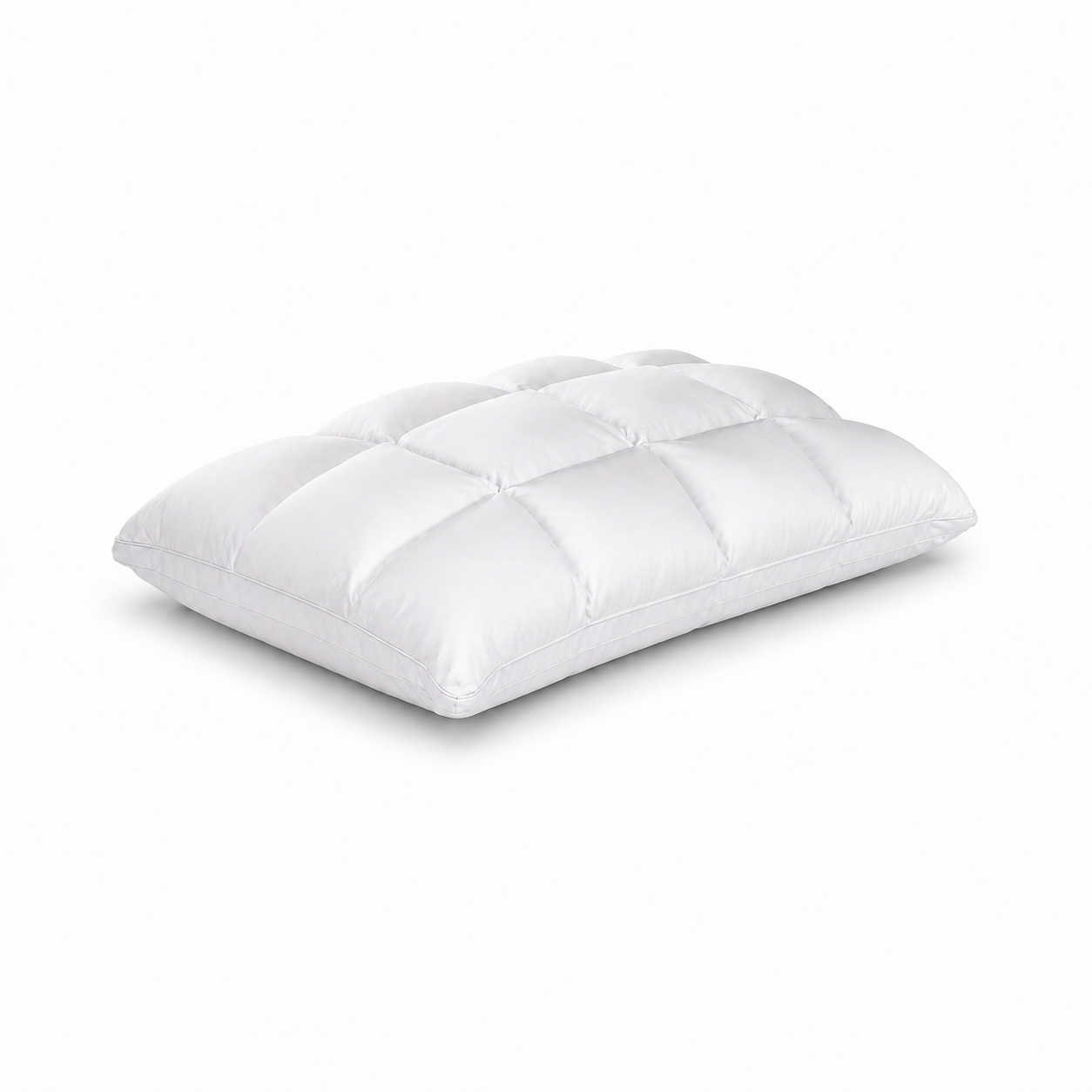 Adjustable Height
GLACIO® Latex + Cell Pillow
GLACIO® Mineral Fibres + Latex
Flip sides to change firmness · Removable insert for height
Fill: Dual-sided: Cell fibre / Natural latex
Best Sleep Positions
Best For
- All sleep positions
- Natural cooling preference
- Height-adjustable needs
- Latex lovers
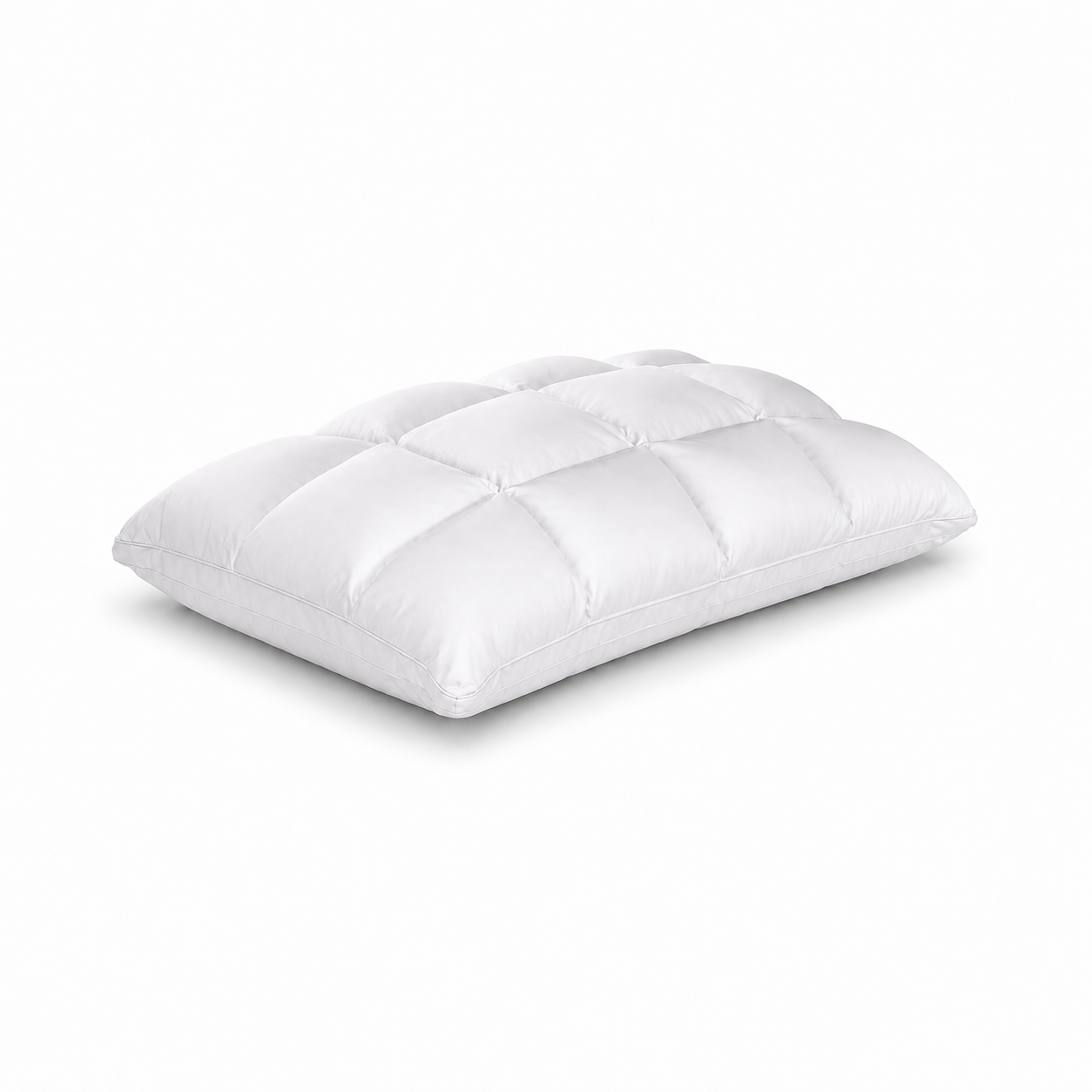 Pressure Relief
GLACIO® CoolGel® Memory Pillow
GLACIO® Mineral + CoolGel® Memory
Gel memory foam cradles pressure points
Fill: Dual-sided: Cell fibre / CoolGel® memory foam
Best Sleep Positions
Best For
- Pressure point relief
- Combination sleepers
- Shoulder pain
- Memory foam feel with cooling
Quick Reference
| Pillow | Firmness | Best Position | Price |
|---|---|---|---|
| CoolCloud® Pillow | Medium-Soft | Back, Side, Combination | AED 280 |
| CoolTouch® Contour Pillow | Firm | Side, Back | AED 400 |
| GLACIO® Latex + Cell Pillow | Medium | Back, Side, Stomach, Combination | AED 349 |
| GLACIO® CoolGel® Memory Pillow | Medium-Firm | Side, Back, Combination | AED 300 |
Step-by-Step
How-To Guides
How to Choose a Cooling Pillow: 5-Step Guide
- 1
Check the Q-Max score
Only consider pillows with a published Q-Max ≥ 0.30 W/cm². This is the only standardised metric for cooling performance. Any claim without a Q-Max score is unverified.
- 2
Match firmness to sleep position
Side sleepers need firm support (CoolTouch® Contour). Back sleepers need medium (CoolCloud®). Stomach sleepers need soft, low-loft. All should have CoolTouch® or GLACIO® fabric.
- 3
Consider fill technology
For the UAE climate: ventilated memory foam (CoolTouch® Contour), adaptive fibre fill (CoolCloud®), or natural latex (GLACIO® Latex). Avoid solid traditional memory foam without ventilation channels.
- 4
Verify washability
Cooling technology should be fibre-integrated, not surface-coated. Surface coatings wash out within 15–20 cycles. Ask manufacturers explicitly: "Is the cooling technology in the fibre structure or surface-applied?"
- 5
Set the right budget
AED 280–400 is the quality threshold for genuine clinical cooling in the UAE market. Below AED 200, cooling claims are typically marketing rather than verified technology.
How to Sleep Cooler in Dubai: Complete System Guide
- 1
Start with the pillow
The pillow surface is in direct, prolonged contact with the face and neck; the body's highest-temperature areas. A Q-Max ≥ 0.38 cooling pillow is the single highest-impact upgrade for hot sleepers.
- 2
Upgrade the comforter
Replace any duvet with a CoolTouch® Performance Comforter; phase-change fabric on both sides with a breathable performance fill. This eliminates the heat trap effect that doubles the thermal load.
- 3
Switch to TENCEL™ sheets
TENCEL™ Lyocell fitted sheets reduce the friction heat layer between skin and mattress, and manage sweat 40% faster than cotton; preventing the thermal cycle that causes night-waking.
- 4
Add a cooling eye mask
The face and eye area produce significant heat. A CoolTouch® or CoolSilk® eye mask provides localised cooling and total blackout; blocking UAE morning light that suppresses melatonin.
- 5
Set AC to 19–21°C
Pair your cooling bedding system with an AC set between 19–21°C (not lower; too cold creates the opposite thermoregulation problem). The bedding manages skin-surface temperature; AC manages ambient.
FAQ
Cooling Sleep: Frequently Asked Questions
Our Editorial Standards
How we research and review every guide
We hold our content to the same standard as clinical literature. Here's the process behind every article on The Sleep Lab™.
Researched from primary sources
Every claim is traced to peer-reviewed journals, clinical guidelines, or independent laboratory data; not second-hand summaries.
Expert reviewed before publishing
A qualified sleep scientist or clinician checks each guide for accuracy, balance, and current evidence before it goes live.
Product claims independently tested
Cooling metrics like Q-Max and temperature reduction are verified by independent textile laboratories, not internal marketing.
Updated as the science evolves
We re-review guides regularly and revise them when new research changes the evidence; with the update date shown on every page.
Shop the Science