Lifestyle Science
Sleep & Memory
You don't learn while studying; you learn while sleeping. Sleep is when the brain transfers information from short-term to long-term memory.
Sleep-Dependent Memory Consolidation
Memory consolidation is the process by which the brain transfers newly acquired information from short-term (hippocampal) storage to long-term (cortical) storage. This process occurs primarily during sleep; specifically during deep sleep (NREM Stage 3) for declarative memory (facts, information) and REM sleep for procedural memory (skills, motor patterns) and emotional memory. Without adequate sleep, new information is not effectively stored and is rapidly lost.
Key Research Data
20%
improvement in memory tasks after a night of sleep
Walker, M.P. et al. (2002). Neuron
40%
memory deficit in sleep-deprived individuals
Nature Neuroscience, 2004
25%
less deep sleep from a 1°C increase in sleep surface temperature
Harding et al., 2019
33%
improvement in creative problem-solving after REM-rich sleep
Cai et al., 2009; Nature
How Sleep Consolidates Memory
Memory is not formed when you learn something; it is formed when you sleep. The process has three stages:
1. Acquisition (while awake): You encounter new information, which is temporarily stored in the hippocampus (short-term memory).
2. Consolidation (during sleep): The brain replays the day's experiences, transferring information from the hippocampus to the cortex (long-term storage). This occurs primarily during deep sleep (for declarative memory; facts, information) and REM sleep (for procedural memory; skills, motor patterns).
3. Recall (while awake): You retrieve the stored information from long-term memory.
Without adequate sleep after learning, the consolidation step is impaired, and new information is rapidly lost. Research by Walker et al. (2002) published in Neuron showed that subjects who slept after learning a memory task performed 20% better than those who stayed awake.
Conversely, sleep deprivation impairs memory formation by up to 40%, according to research published in Nature Neuroscience (2004).
Walker, M.P. et al. (2002). Practice with sleep makes perfect. Neuron. | Nature Neuroscience (2004).
Deep Sleep vs REM: Different Memory Types
Different sleep stages consolidate different types of memory:
1. Deep sleep (NREM Stage 3): Consolidates declarative memory; facts, information, names, dates, concepts. During slow-wave sleep, the hippocampus replays the day's experiences to the cortex, transferring factual information to long-term storage. This is why studying before sleep is more effective than studying in the morning.
2. REM sleep: Consolidates procedural memory; skills, motor patterns, "how to" knowledge. If you're learning a physical skill (golf swing, piano piece, typing), REM sleep is when the neural pathways are strengthened. Research shows 33% improvement in creative problem-solving after REM-rich sleep.
3. REM and emotional memory: REM sleep processes emotional experiences, reducing their psychological charge while preserving the factual content. This is why "sleeping on it" helps with emotional decisions; REM provides overnight emotional processing.
Both deep sleep and REM are regulated by sleep surface temperature. A 1°C increase reduces deep sleep by 25%, and REM is uniquely vulnerable to heat (the brain cannot thermoregulate during REM).
Stickgold, R. (2005). Nature. | Cai, D.J. et al. (2009). Nature.
Cooling Bedding for Memory and Learning
Since memory consolidation depends on deep sleep and REM sleep, and both are regulated by temperature, cooling bedding directly supports cognitive function:
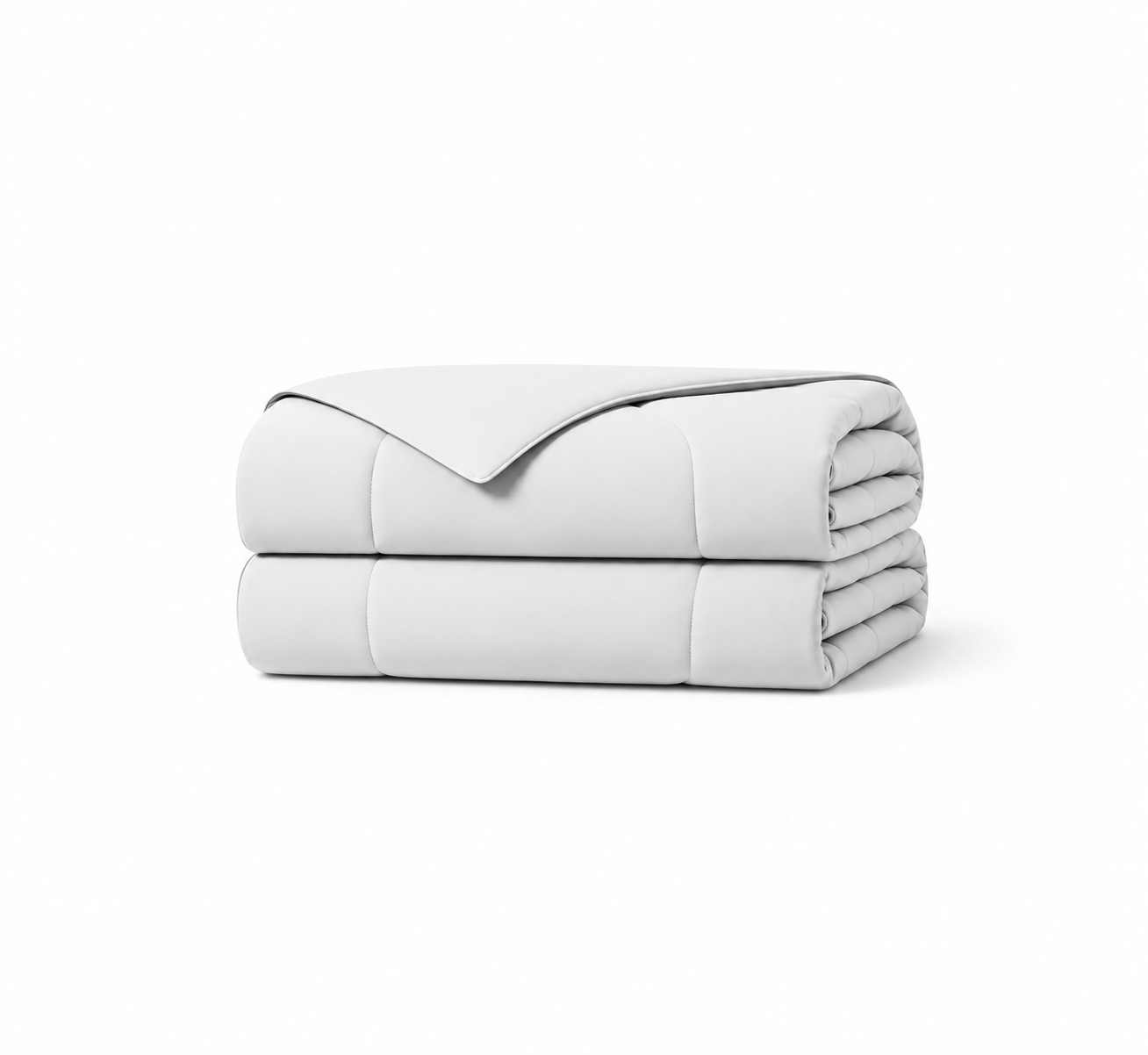
1. CoolTouch® Performance Comforter: Phase-change fabric (Q-Max 0.38) maintains the 16–19°C surface range needed for sustained deep sleep (declarative memory consolidation) and preserved REM (procedural memory consolidation, creative problem-solving).
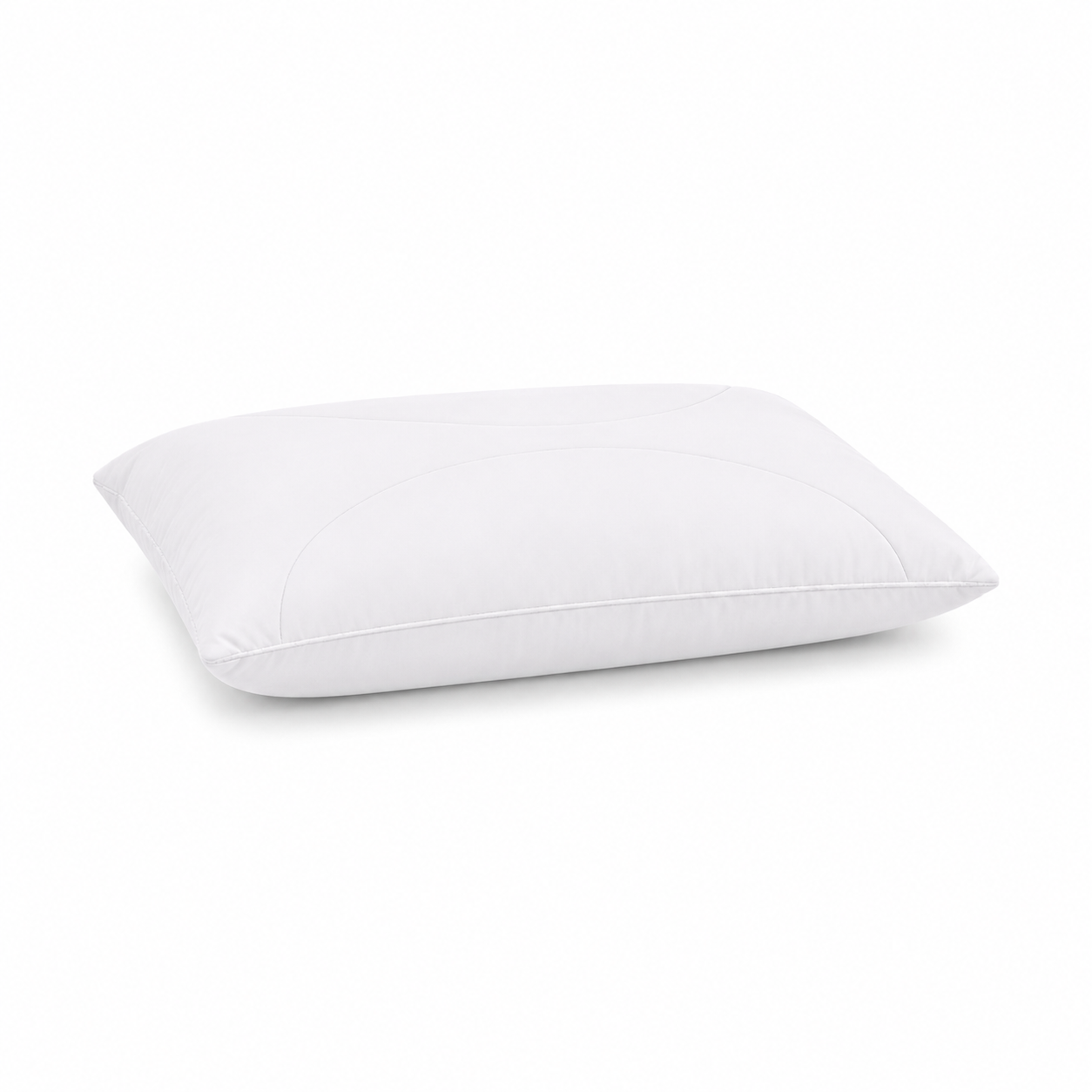
2. CoolCloud® Pillow: CoolTouch® fabric for head/neck cooling.
3. TENCEL™ Lyocell sheets: 50% more breathable than cotton, preventing heat-trapping that fragments both deep and REM sleep.
4. CoolTouch® Performance Eye Mask: Full blackout to support melatonin production and REM cycles.
Clinical testing showed 32% more deep sleep with this system; directly translating to improved memory consolidation and learning capacity. For students, professionals learning new skills, and anyone who needs to retain information, optimising sleep quality is as important as the learning itself.
Sleep Lab™ Clinical Study, 2023. | Harding, E.C. et al. (2019).
Frequently Asked Questions
Does sleep affect memory?
Yes. Memory consolidation; the process of transferring information from short-term to long-term storage; occurs during sleep. Deep sleep consolidates declarative memory (facts), and REM consolidates procedural memory (skills). Without adequate sleep, new information is rapidly lost.
How does sleep help learning?
You don't learn while studying; you learn while sleeping. The brain replays the day's experiences during deep sleep and REM, transferring information to long-term storage. Research shows 20% better memory performance after sleep, and 40% memory deficit when sleep-deprived.
Which sleep stage is most important for memory?
Both deep sleep and REM are essential. Deep sleep consolidates declarative memory (facts, information). REM consolidates procedural memory (skills, motor patterns) and processes emotional memory. Both are regulated by sleep surface temperature; thermal disruption impairs both.
Can cooling bedding improve memory?
Yes. Cooling bedding with phase-change fabric (CoolTouch®, Q-Max 0.38) provides 32% more deep sleep and preserves REM sleep. This directly supports memory consolidation; the process of transferring information from short-term to long-term storage. For students and professionals, optimising sleep is as important as the learning itself.