Problem Guide
Restless Sleep
Tossing and turning is not restlessness; it is your body's attempt to thermoregulate. Fix the temperature, and the restlessness often resolves.
Restless Sleep
Restless sleep; tossing, turning, frequent repositioning, and fragmented sleep; is often a thermoregulatory response. When the sleep surface traps heat, the body attempts to cool down by changing position to expose different skin surfaces to the air. Each position change is a microarousal that fragments sleep architecture. The root cause is not restlessness itself but the thermal discomfort that triggers it.
Key Research Data
25%
less deep sleep from a 1°C increase in sleep surface temperature
Harding et al., 2019
41%
reduction in wake-after-sleep-onset events with cooling bedding
Sleep Lab™ clinical data
4–6°C
warmer microclimate from standard bedding vs room air
Independent textile testing
4.2°C
surface temperature reduction with CoolTouch® fabric
Independent textile lab, 2024
Why You Toss and Turn
When you toss and turn at night, you are not being "restless"; your body is actively trying to solve a problem. In most cases, the problem is thermal.
Here's what happens: 1. Your bedding traps body heat, raising the skin surface temperature. 2. Your hypothalamus detects the elevated temperature and attempts to cool down. 3. The cooling mechanism: change position to expose a different skin surface (one that hasn't been pressed against warm bedding) to the air. 4. This position change is a microarousal; a partial waking that fragments sleep architecture. 5. The new position warms up, and the cycle repeats.
This is why "restless sleepers" often report flipping their pillow, kicking off covers, and changing positions throughout the night; each action is a thermoregulatory response to heat-trapping bedding.
Research shows that even a 1°C increase in sleep surface temperature reduces deep sleep by 25%, and the mechanism is primarily through the microarousals caused by thermal discomfort.
Harding, E.C. et al. (2019). Frontiers in Neuroscience.
The Microarousal Problem
Each time you toss and turn, you experience a microarousal; a brief shift from deeper sleep to lighter sleep or brief wakefulness. You may not remember these arousals, but they have a cumulative effect on sleep quality:
1. Reduced deep sleep: Each microarousal disrupts the progression into and maintenance of slow-wave sleep (NREM Stage 3). 2. Reduced REM sleep: Frequent position changes prevent sustained REM cycles. 3. Fragmented sleep architecture: Instead of cycling smoothly through sleep stages, the brain spends more time in light sleep (NREM Stage 1 and 2). 4. Non-restorative sleep: Despite spending 7–8 hours in bed, the fragmented architecture means you wake up feeling unrefreshed.
The key insight: restlessness is not the problem; it is the symptom. The problem is thermal discomfort caused by heat-trapping bedding. Fix the temperature, and the restlessness resolves.
Sleep Lab™ Clinical Study, 2023.
Stopping Restless Sleep with Cooling Bedding
To stop tossing and turning, you need to address the thermal discomfort that causes it:
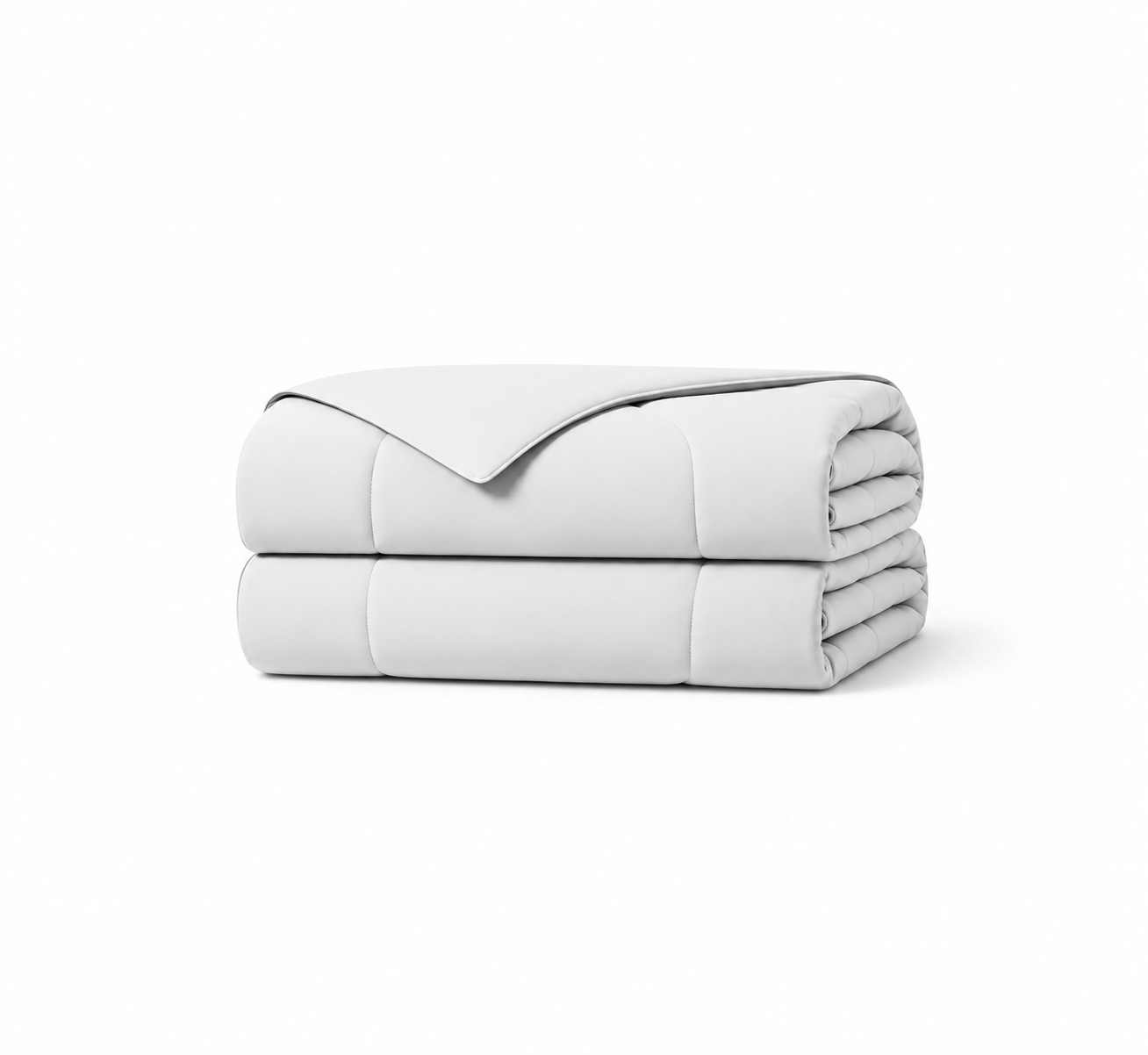
1. CoolTouch® Performance Comforter: Phase-change fabric (Q-Max 0.38) absorbs excess body heat, maintaining a stable, comfortable sleep surface temperature. No more kicking off covers because you're too hot.
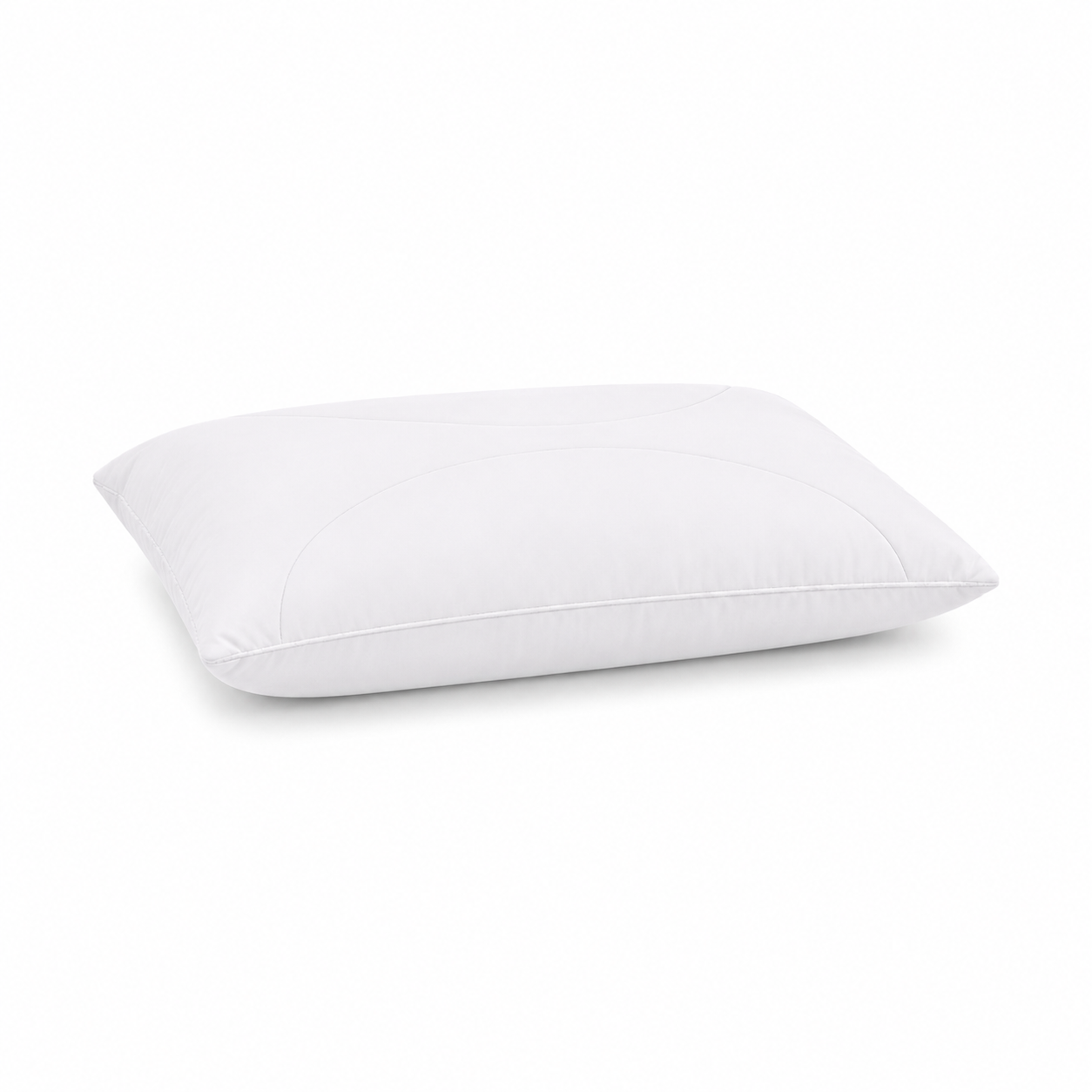
2. CoolCloud® Pillow: No more flipping the pillow to find the "cool side." CoolTouch® fabric maintains a consistent cool surface throughout the night.
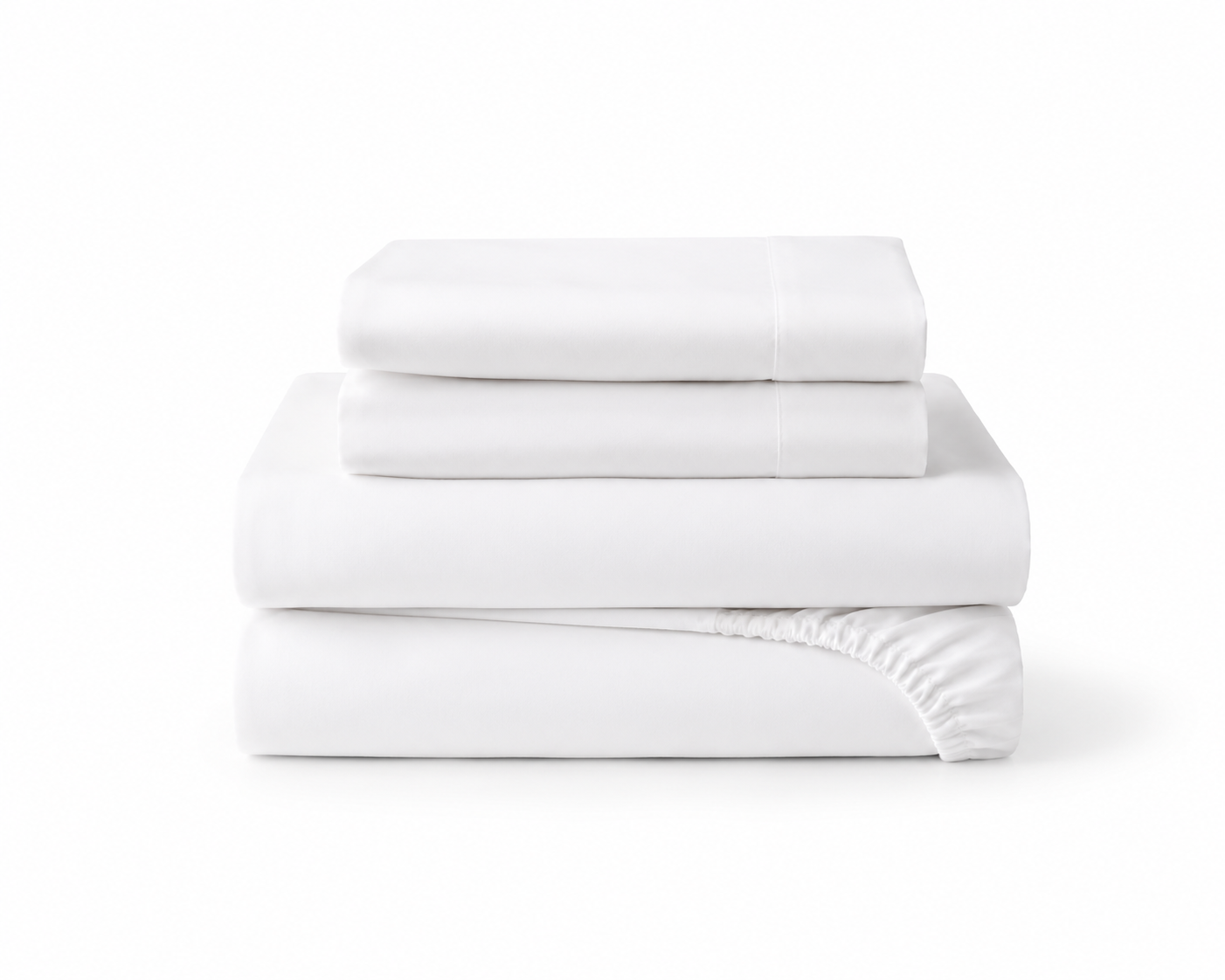
3. TENCEL™ Lyocell sheets: 50% more breathable than cotton, 50% faster moisture management. Prevents the damp-heat discomfort that triggers position changes.
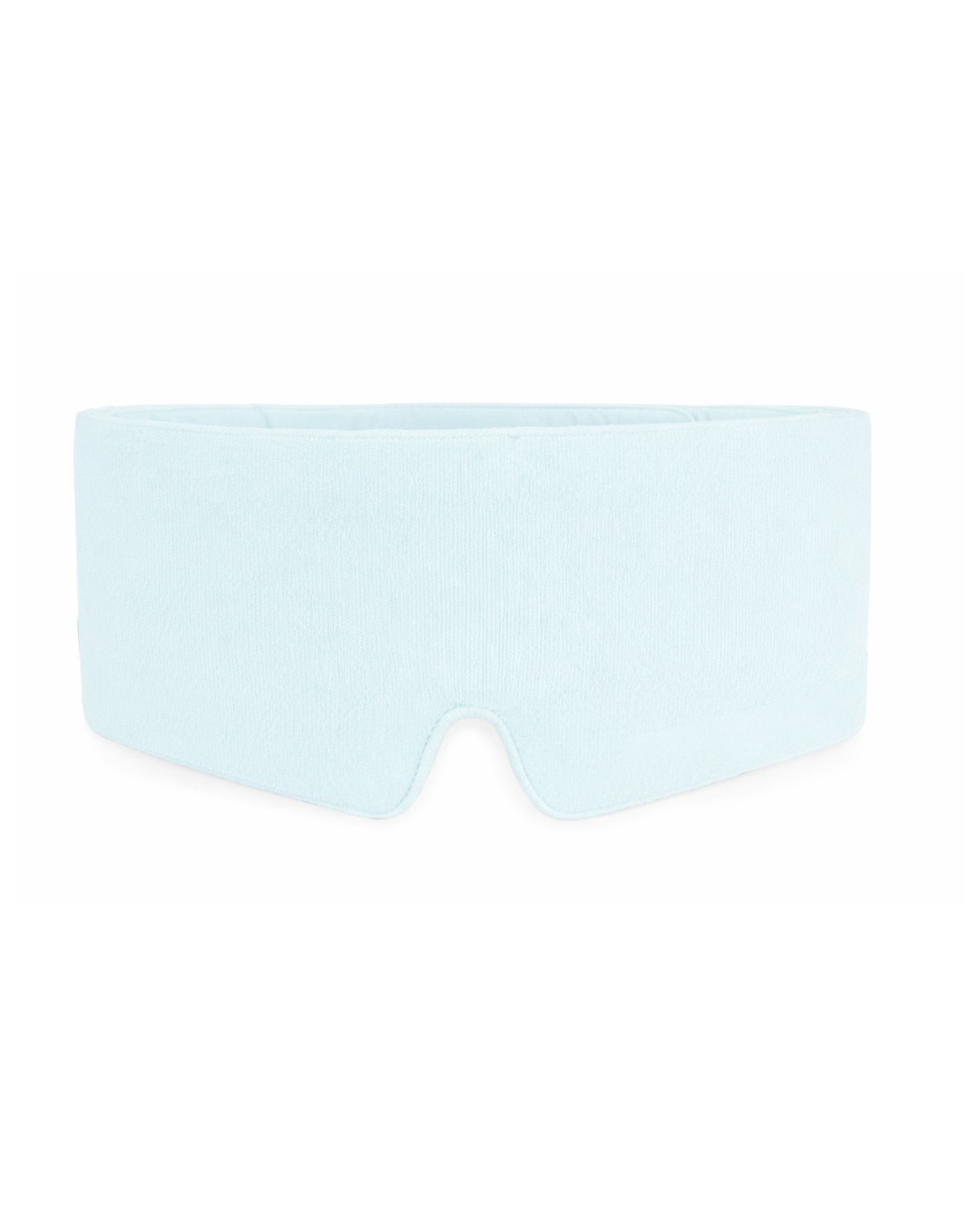
4. CoolTouch® Performance Eye Mask: Provides stable facial cooling and full blackout, reducing the sensory triggers that cause microarousals.
Clinical testing showed 41% reduction in wake-after-sleep-onset events with this system; meaning 41% less tossing and turning, and 41% more sustained, restorative sleep.
Sleep Lab™ Clinical Study, n=847, 2023. | AATCC Test Method 195.
Frequently Asked Questions
Why do I toss and turn at night?
Tossing and turning is usually a thermoregulatory response; your body is trying to cool down by exposing different skin surfaces to the air. Standard bedding traps body heat, triggering position changes that fragment sleep. Fix the temperature with cooling bedding, and the restlessness usually resolves.
How do I stop restless sleep?
Use cooling bedding with phase-change fabric (CoolTouch®, Q-Max 0.38) to maintain a stable sleep surface temperature, and TENCEL™ Lyocell sheets for moisture management. Clinical testing showed 41% reduction in wake events with this approach.
Does temperature cause restless sleep?
Yes; it is the most common cause. When bedding traps heat, the body attempts to cool down by changing position. Each position change is a microarousal that fragments sleep. Even a 1°C increase in sleep surface temperature reduces deep sleep by 25%.
Why do I keep flipping my pillow at night?
Flipping your pillow is a thermoregulatory response; you are seeking a cooler surface. Standard memory foam and cotton pillows trap heat, so each side warms up. The CoolCloud® Pillow with CoolTouch® fabric (Q-Max 0.38) maintains a consistent cool surface, eliminating the need to flip.