Women's Health
Pregnancy Sleeping Hot
Pregnancy raises your core temperature and narrows your cooling options. The right bedding makes a measurable difference.
Pregnancy-Related Overheating
Pregnancy-related overheating during sleep is caused by a 0.5–1°C increase in basal body temperature (driven by progesterone and increased metabolic rate), a 10–20% increase in blood volume (raising heat production), and the physical insulation of the growing uterus. Additionally, pregnant women are advised to avoid extreme heat exposure, making sleep surface temperature management the safest and most effective cooling strategy.
Key Research Data
+0.5–1°C
increase in basal body temperature during pregnancy
American College of Obstetricians and Gynecologists
10–20%
increase in blood volume during pregnancy, raising heat production
Journal of Physiology, 2019
78%
of pregnant women report sleep disturbance, including overheating
National Sleep Foundation Pregnancy Poll
3.2°C
surface temperature reduction with CoolTouch® fabric
Independent textile lab testing, 2024
Why Pregnancy Makes You Hot at Night
Pregnancy creates a perfect storm for sleep overheating. Progesterone; the dominant hormone during pregnancy; raises basal body temperature by 0.5–1°C. Blood volume increases by 10–20%, raising metabolic heat production. The growing uterus adds physical insulation that traps heat against the body.
Additionally, pregnant women experience increased night sweating as the body works harder to regulate temperature. The combination; higher heat production, higher baseline temperature, and reduced cooling efficiency; makes overheating during sleep one of the most common pregnancy complaints.
In the UAE, where ambient temperatures remain elevated even overnight, this challenge is compounded. Pregnant women are also advised to avoid extreme heat exposure and certain cooling medications, making sleep surface temperature management the safest and most effective cooling strategy.
American College of Obstetricians and Gynecologists. | Journal of Physiology (2019).
Safe Cooling Strategies During Pregnancy
During pregnancy, the safest cooling strategy is managing the sleep surface temperature; not the room temperature (which would require extreme AC settings) or medications. Phase-change cooling fabrics (CoolTouch®, Q-Max 0.38) absorb excess body heat at the skin surface without chemicals or electricity, maintaining the sleep surface at a comfortable 33–36°C.
TENCEL™ Lyocell is especially suitable for pregnancy: it is a botanically derived fibre from eucalyptus wood pulp, naturally hypoallergenic, and 50% more breathable than cotton. Its superior moisture management (50% faster than cotton) wicks pregnancy-related night sweat away from the skin rapidly, preventing the damp-heat cycle that worsens sleep quality.
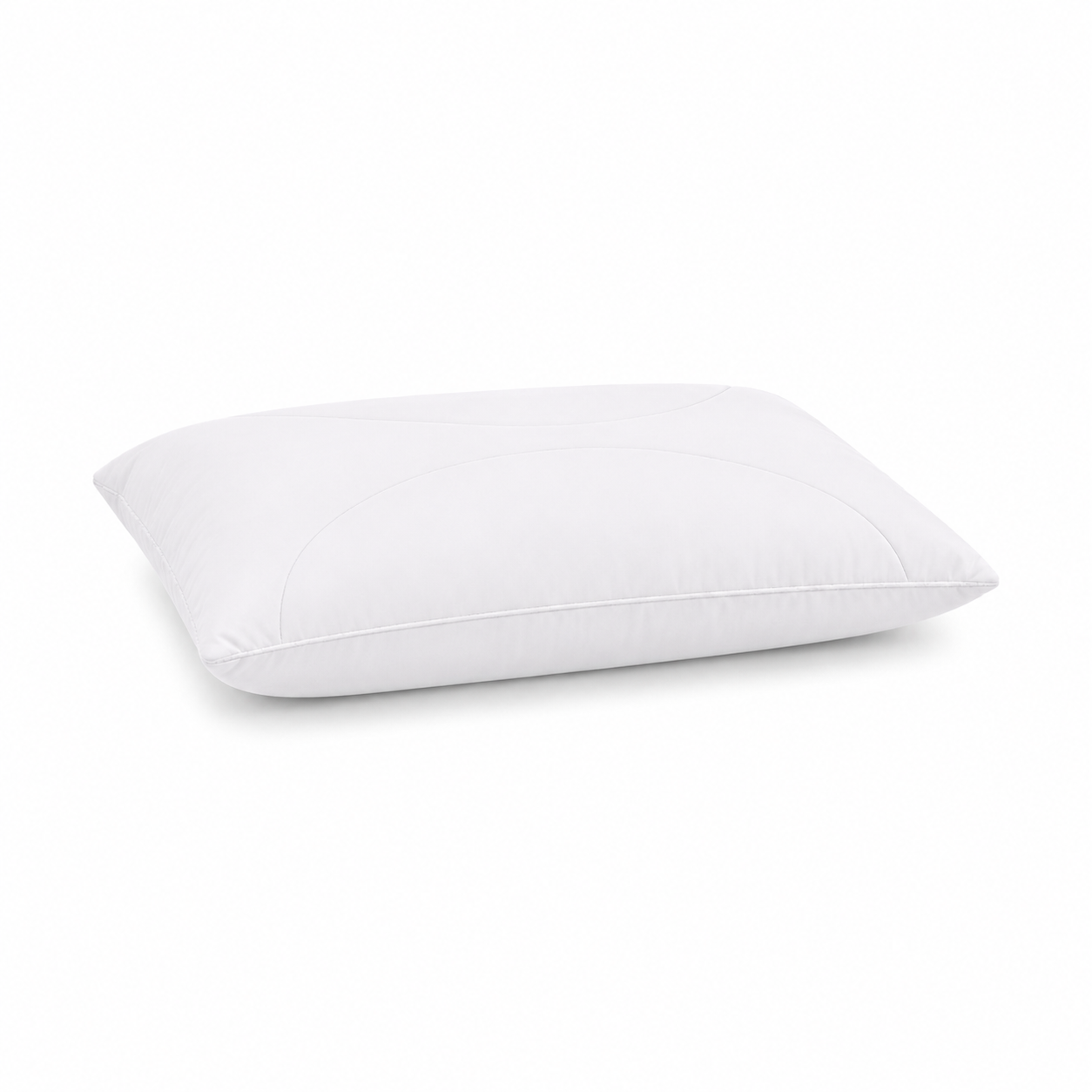
Avoid memory foam pillows without cooling technology; standard memory foam traps heat and can raise the sleep surface temperature by 3–4°C. The CoolCloud® Pillow uses CoolTouch® fabric combined with breathable CloudFill® fibre, providing cooling without heat retention.
Lenzing AG. TENCEL™ Technical Data, 2023.
The Pregnancy Cooling Sleep System
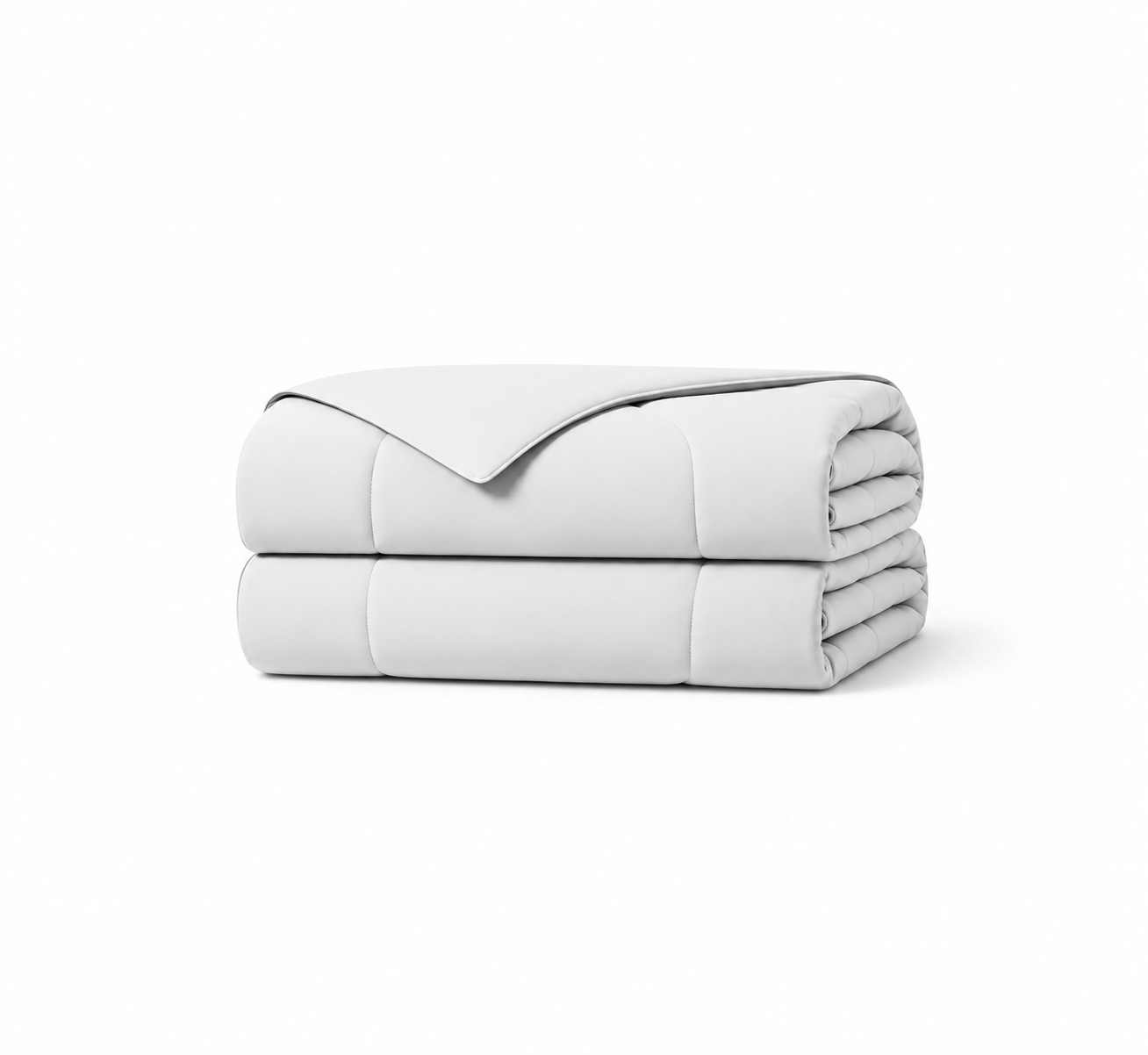
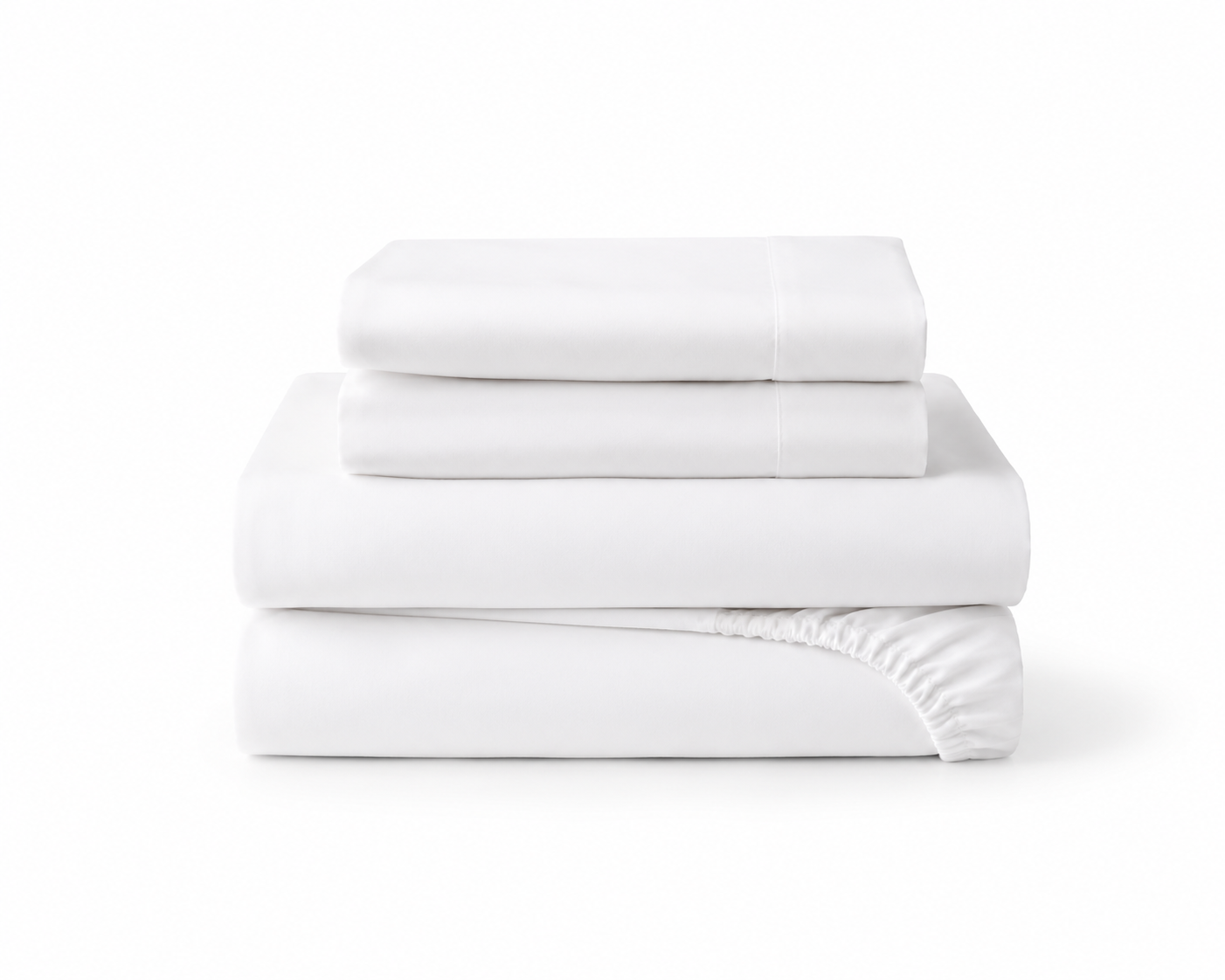
For pregnant women in the UAE, the recommended cooling sleep system includes: CoolCloud® Pillow (phase-change CoolTouch® fabric, Q-Max 0.38, hypoallergenic CloudFill®) for head and neck cooling; CoolTouch® Performance Comforter for body temperature management, and TENCEL™ Lyocell fitted sheets for moisture-wicking skin contact.
This system is safe throughout pregnancy; it uses no chemicals, no electricity, and no medications. The phase-change materials are embedded in the fibre structure (not surface-coated) and work by physically absorbing heat. TENCEL™ Lyocell is naturally hypoallergenic and suitable for sensitive pregnancy skin.
For side-sleeping support (recommended in the third trimester), the CoolCloud® Pillow's medium-soft fill provides adaptive support without the heat retention of memory foam.
Sleep Lab™ Product Safety Data. AATCC Test Method 195.
Frequently Asked Questions
Why do I sleep so hot during pregnancy?
Pregnancy raises basal body temperature by 0.5–1°C (driven by progesterone), increases blood volume by 10–20% (raising heat production), and the growing uterus adds physical insulation. Combined, these make overheating during sleep one of the most common pregnancy complaints.
Is it safe to use cooling bedding during pregnancy?
Yes. Phase-change cooling fabrics (CoolTouch®) and TENCEL™ Lyocell are safe throughout pregnancy; they use no chemicals, electricity, or medications. They work by physically absorbing heat at the skin surface. TENCEL™ is naturally hypoallergenic and suitable for sensitive pregnancy skin.
What is the best pillow for pregnancy?
The CoolCloud® Pillow is ideal for pregnancy: CoolTouch® fabric (Q-Max 0.38) provides active cooling, CloudFill® fibre is hypoallergenic and breathable (unlike heat-trapping memory foam), and the medium-soft fill provides adaptive support for side-sleeping (recommended in the third trimester).
How can I stay cool sleeping while pregnant in the UAE?
Use cooling bedding with phase-change fabric (CoolTouch® Performance Comforter) + TENCEL™ Lyocell sheets (50% more breathable than cotton) + CoolCloud® Pillow. Set AC to 19–21°C. Avoid standard memory foam (traps heat). This system manages the sleep surface temperature safely without medications or extreme AC.