Problem Guide
Poor Sleep Quality
Poor sleep quality is not about hours in bed; it is about what happens during those hours. Temperature is the most controllable variable.
Sleep Quality
Sleep quality encompasses four dimensions: sleep onset latency (time to fall asleep), sleep continuity (absence of waking), sleep architecture (ratio of deep/REM sleep), and sleep efficiency (time asleep vs time in bed). Thermal disruption degrades all four simultaneously. Poor sleep quality; feeling unrefreshed despite adequate time in bed; is most commonly caused by thermal disruption of sleep architecture, particularly the suppression of deep sleep and the fragmentation of REM sleep.
Key Research Data
13–23%
of sleep should be deep sleep; 20–25% should be REM
American Academy of Sleep Medicine
41%
of UAE adults report regular overheating during sleep
Emirates Medical Journal, 2022
32%
more deep sleep with optimal surface temperature
Sleep Medicine Reviews, 2019
41%
reduction in wake events with cooling bedding
Sleep Lab™ clinical data
What Is Sleep Quality?
Sleep quality is not the same as sleep quantity. You can spend 8 hours in bed and still have poor sleep quality if the architecture of those hours is disrupted.
Sleep quality has four dimensions: 1. Sleep onset latency: How quickly you fall asleep. Under 20 minutes is good; over 30 minutes indicates a problem. 2. Sleep continuity: How often you wake during the night. Fewer than one waking is good; multiple wakings fragment sleep architecture. 3. Sleep architecture: The proportion of time in deep sleep (13–23%) and REM sleep (20–25%). These are the restorative stages. 4. Sleep efficiency: Time asleep divided by time in bed. Above 85% is good; below 75% indicates poor quality.
Thermal disruption degrades all four dimensions simultaneously: it delays sleep onset (heat prevents the temperature drop needed), fragments sleep continuity (thermal discomfort causes microarousals), suppresses deep sleep (1°C increase reduces deep sleep by 25%), and fragments REM sleep (the brain cannot thermoregulate during REM).
American Academy of Sleep Medicine. | Harding, E.C. et al. (2019).
Why Temperature Is the Primary Cause
Of all the factors that affect sleep quality; stress, caffeine, screen time, irregular schedule; temperature is the most controllable and often the most impactful.
In the UAE, where 41% of adults report regular overheating during sleep, the thermal environment is the primary driver of poor sleep quality. Here's why:
1. Deep sleep suppression: Even a 1°C increase in sleep surface temperature reduces deep sleep by 25%. Deep sleep is where physical recovery, HGH release, and immune function occur.
2. REM fragmentation: During REM, the brain cannot thermoregulate. A warm environment directly causes REM disruption, reducing the cognitive restoration that REM provides.
3. Microarousals: Thermal discomfort causes microarousals; brief shifts to lighter sleep that fragment the architecture. You may not remember them, but they reduce the restorative value of sleep.
4. Night sweats: Heat accumulation triggers sweating, which causes full or partial awakenings and creates a damp microclimate that perpetuates poor sleep quality.
The cumulative effect: 8 hours of thermally disrupted sleep provides significantly less recovery value than 7 hours of cool, uninterrupted sleep.
Emirates Medical Journal (2022). | Sleep Medicine Reviews (2019).
Improving Sleep Quality with Cooling Bedding
To improve sleep quality, the most evidence-based intervention is optimising the sleep surface temperature:
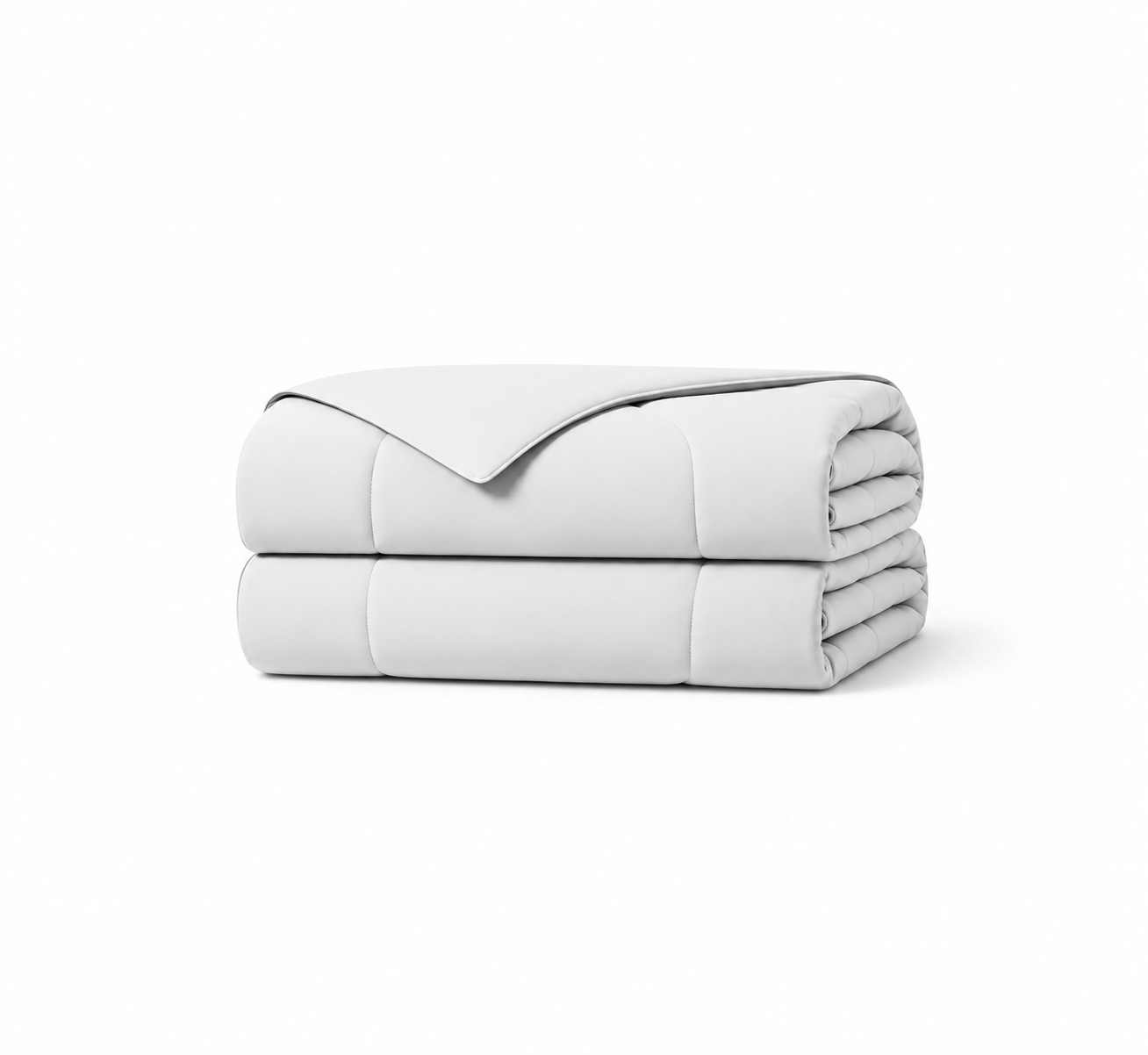
1. CoolTouch® Performance Comforter (phase-change fabric, Q-Max 0.38): Actively absorbs body heat, maintaining the 16–19°C surface range. Clinical data: 32% more deep sleep, 41% reduction in wake events.
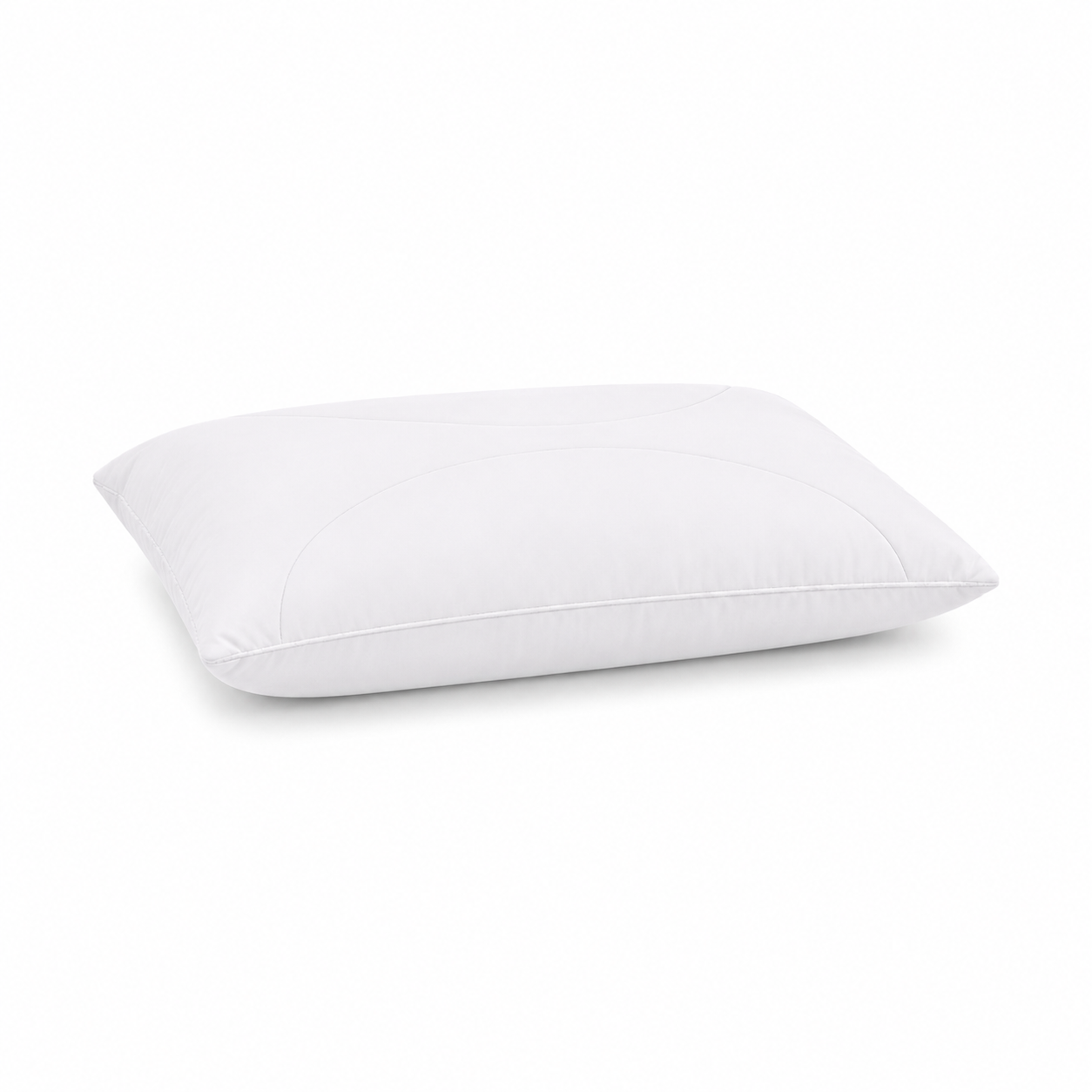
2. CoolCloud® Pillow: CoolTouch® fabric for sustained head/neck cooling. CloudFill® fibre is breathable and hypoallergenic.
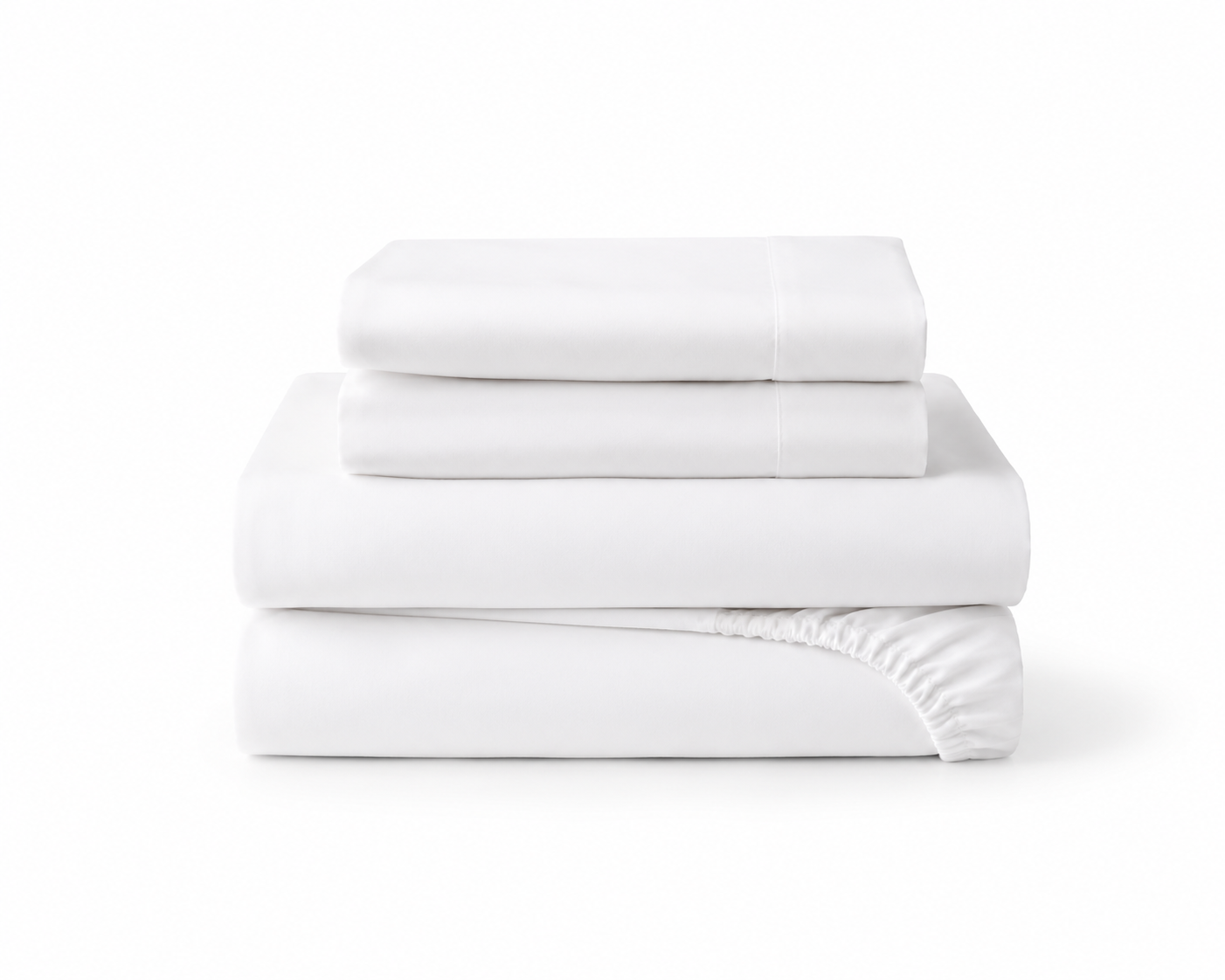
3. TENCEL™ Lyocell Bedding Set: 50% more breathable than cotton, 50% faster moisture management. Prevents the damp-heat cycle that fragments sleep.
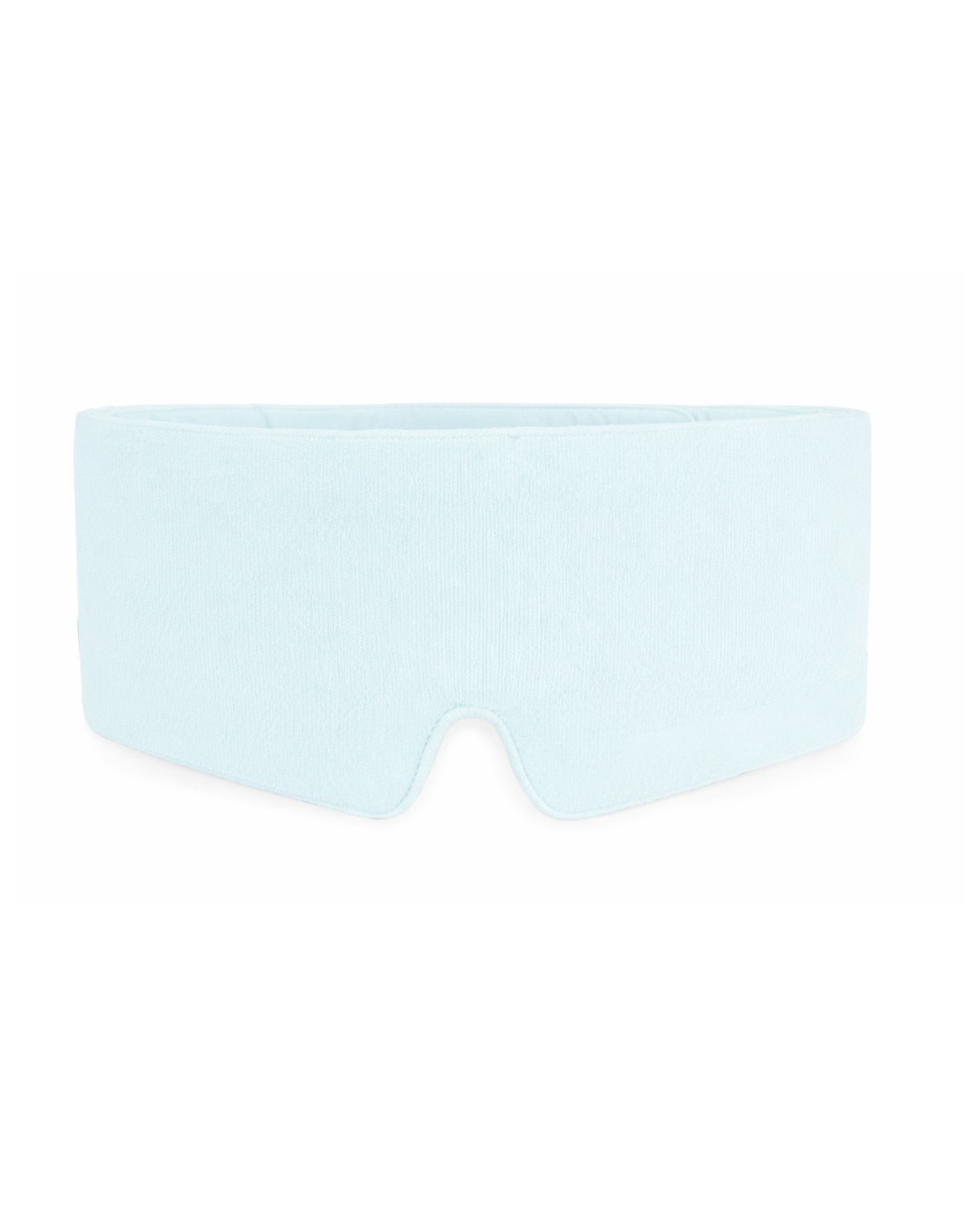
4. CoolTouch® Performance Eye Mask: Full blackout for melatonin production, plus active cooling for the facial area.
5. Set AC to 19–21°C: The bedding manages the skin microclimate; AC manages ambient temperature.
This system addresses all four dimensions of sleep quality: faster sleep onset (27 minutes faster), better sleep continuity (41% fewer wake events), improved sleep architecture (32% more deep sleep), and higher sleep efficiency.
Sleep Lab™ Clinical Study, n=847, 2023. | AATCC Test Method 195.
Frequently Asked Questions
Why is my sleep quality poor?
Poor sleep quality is most commonly caused by thermal disruption of sleep architecture. Even a 1°C increase in sleep surface temperature reduces deep sleep by 25% and fragments REM sleep. In the UAE, where 41% of adults report overheating during sleep, temperature is the primary driver of poor sleep quality.
How can I improve my sleep quality?
The most evidence-based intervention is optimising sleep surface temperature. Cooling bedding with phase-change fabric (CoolTouch®, Q-Max 0.38) provides 32% more deep sleep, 41% reduction in wake events, and 27 minutes faster sleep onset. Combined with TENCEL™ Lyocell sheets and AC at 19–21°C.
Does temperature affect sleep quality?
Yes; it is the primary environmental driver. Temperature controls deep sleep (1°C increase = 25% less deep sleep), REM sleep (brain cannot thermoregulate during REM), sleep onset (1–2°C core temperature drop required), and sleep continuity (thermal discomfort causes microarousals).
What is good sleep quality?
Good sleep quality means: falling asleep within 20 minutes, fewer than one waking per night, 13–23% deep sleep and 20–25% REM sleep, and sleep efficiency above 85%. If you're not achieving these markers despite 7–8 hours in bed, thermal disruption may be the cause.