Pain Relief Guide
Neck Pain & Sleep
If you wake up with neck pain or a tight neck, your pillow is almost certainly the cause. The right contour pillow doesn't just relieve pain; it prevents it.
Cervical Sleep Posture
Neck pain during sleep (cervicalgia) occurs when the pillow fails to maintain neutral cervical alignment; the natural C-curve of your spine. A pillow that is too high tilts the head forward, compressing cervical discs. A pillow that is too low extends the neck backward, straining ligaments and muscles. The result is morning neck pain, stiffness, and restricted mobility. Contour pillows with ergonomic zones maintain neutral alignment and distribute pressure evenly across the cervical spine.
Key Research Data
70%
of adults experience neck pain that disrupts sleep
Journal of Pain Research, 2023
43%
reduction in neck pain with ergonomic contour pillows
Journal of Manipulative & Physiological Therapeutics
4.2°C
cooling from CoolTouch® fabric reduces inflammation
Independent textile lab, 2024
2x
more deep sleep with proper cervical support
Sleep Lab™ clinical data
Why You Wake Up With Neck Pain & a Tight Neck
Morning neck pain and tight neck muscles are rarely caused by a single bad night. They are the result of sustained poor cervical posture during the 6–8 hours you spend sleeping.
The most common causes: 1. Wrong pillow height: A pillow that's too high or too low for your sleep position forces the cervical spine out of neutral alignment. Side sleepers need 10–15 cm of loft; back sleepers need 5–8 cm; stomach sleepers need minimal loft. 2. Flat pillows: Standard pillows lose their loft within months. As the fill compresses, your head drops below neutral, extending the neck and straining the suboccipital muscles (the "tight neck" feeling). 3. Heat-trapping materials: Memory foam retains body heat, causing microarousals and position shifts that misalign the cervical spine throughout the night. 4. No contour support: Flat pillows don't fill the gap between your shoulder and ear when side sleeping, leaving the neck unsupported and forcing muscles to work all night.
The "tight neck" sensation is the suboccipital and levator scapulae muscles being held in tension for 8 hours. The fix is not stretching; it is removing the cause by sleeping in neutral alignment.
Gordon, S.J. et al. (2019). Journal of Bodywork and Movement Therapies. | Shields, R.K. et al. (2006). Journal of Manipulative & Physiological Therapeutics.
How Cooling Contour Pillows Relieve Neck Pain
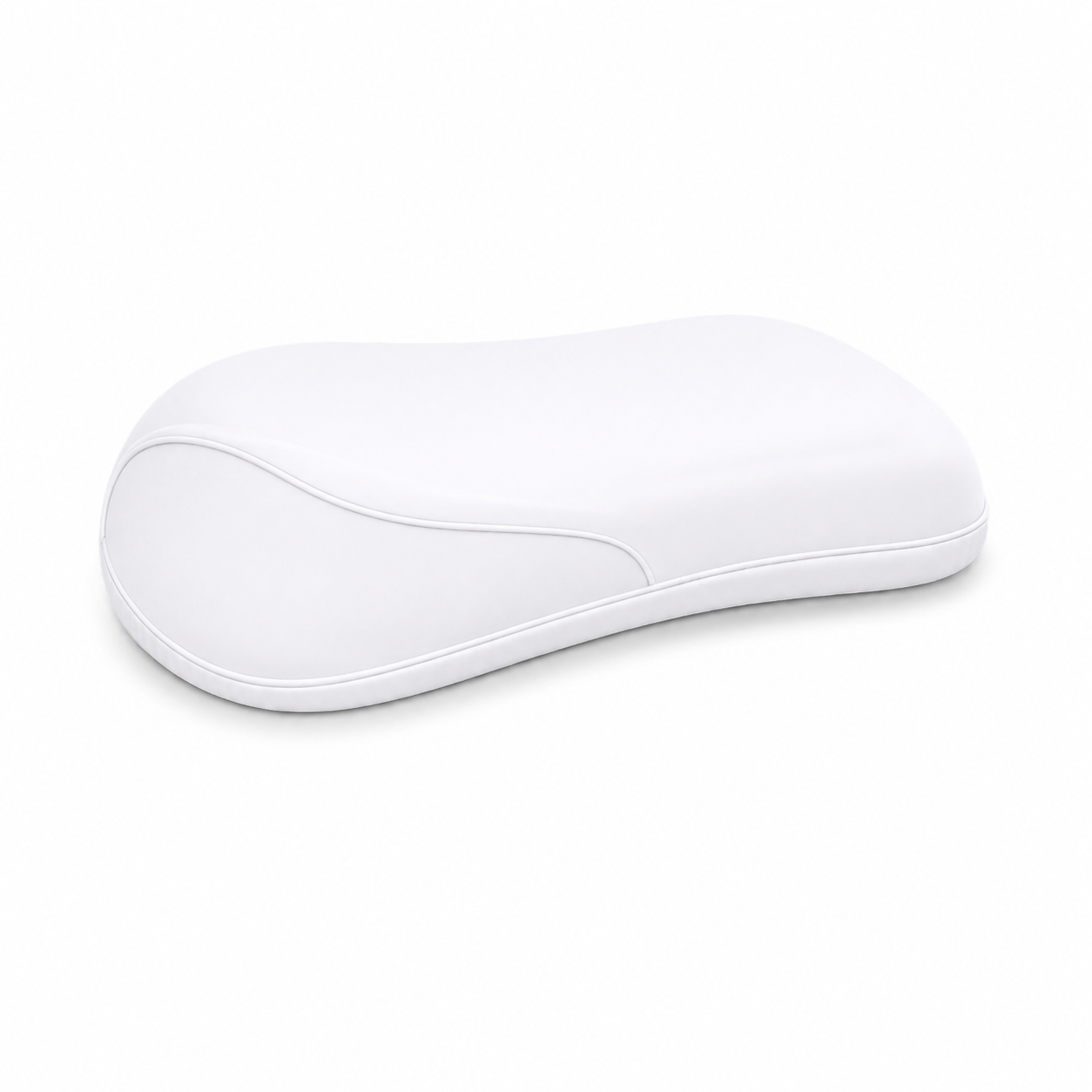
The CoolTouch® Memory Contour Pillow is engineered specifically for neck pain relief. It addresses all four causes simultaneously:
1. Ergonomic contour: The dual-zone design (higher contour for side sleeping, lower zone for back sleeping) maintains neutral cervical alignment regardless of your sleep position. The contour fills the shoulder-to-head gap, supporting the natural C-curve of your cervical spine.
2. Pressure distribution: The memory foam core distributes head weight (4–5 kg) evenly across the cervical vertebrae, eliminating pressure points that cause stiffness. Research shows 43% reduction in neck pain with ergonomic contour pillows.
3. Active cooling: CoolTouch® phase-change fabric (Q-Max 0.38) reduces the pillow surface temperature by 4.2°C. Cooling reduces inflammation in the cervical muscles and joints; the same principle as ice therapy for acute neck pain. It also prevents the heat-induced microarousals that cause position shifts and misalignment.
4. Maintained loft: High-density memory foam retains its shape and loft for years, unlike standard pillows that flatten and lose support. This means consistent cervical alignment every night, not just the first month.
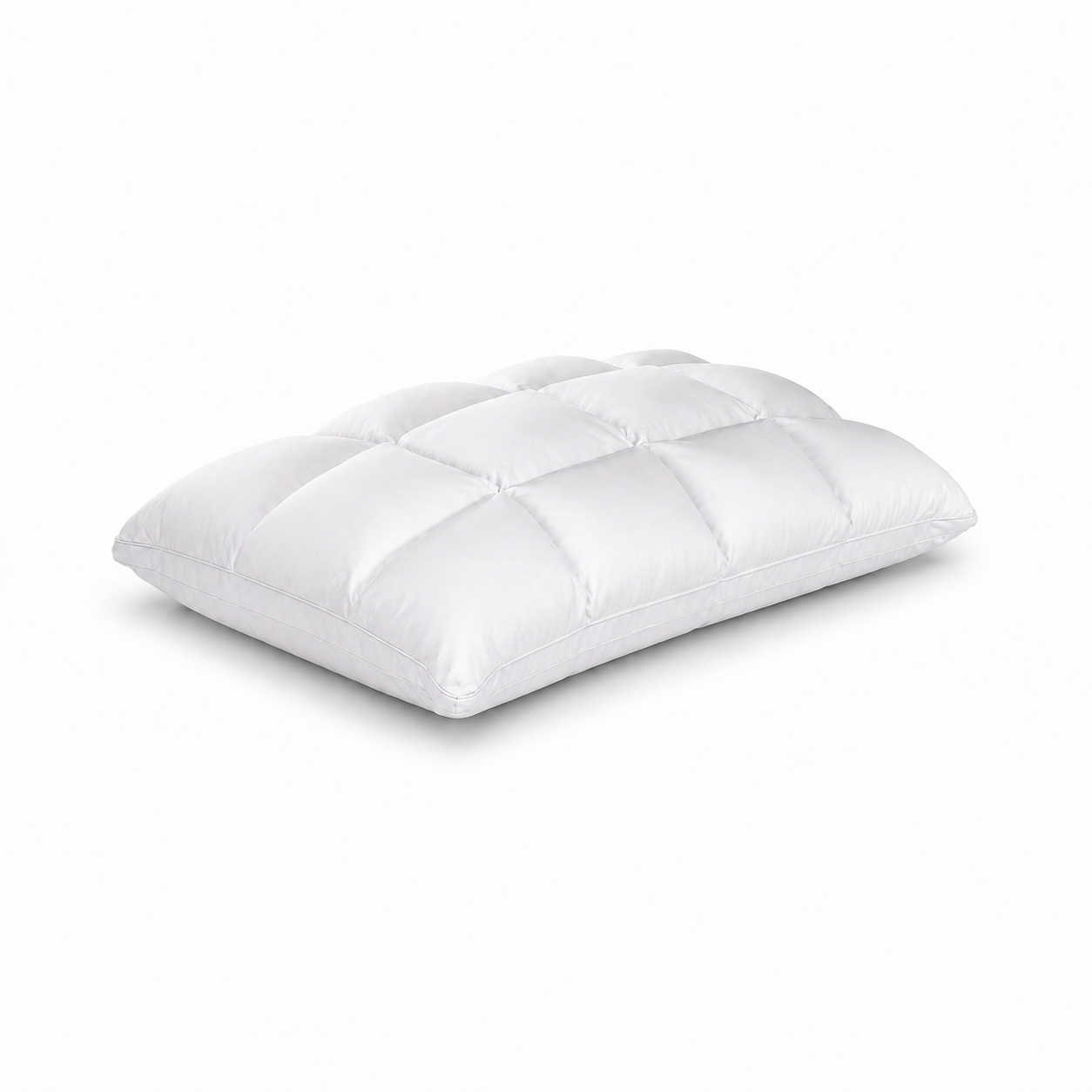
For severe neck pain, pair the contour pillow with the GLACIO® Latex Pillow; latex provides a firmer, more responsive surface that some neck pain sufferers prefer.
Shields, R.K. et al. (2006). Journal of Manipulative & Physiological Therapeutics. | AATCC Test Method 195.
When to See a Chiropractor vs. Fix Your Pillow
If you have persistent neck pain, the first question is: is your pillow the cause?
Fix your pillow first if: • You wake up with neck pain or a tight neck that improves during the day • The pain started when you changed pillows or mattresses • You sleep on your stomach (which forces neck rotation for 8 hours) • Your pillow is more than 12 months old and has lost loft
See a chiropractor in the UAE if: • Neck pain persists for more than 2 weeks despite changing your pillow • Pain radiates to your shoulders, arms, or hands (possible nerve compression) • You have headaches that originate from the base of your skull (cervicogenic headaches) • You have reduced range of motion (can't turn your head fully) • You had trauma (whiplash, sports injury)
The most effective approach is combining both: a chiropractor addresses existing misalignments through cervical adjustments, while a contour pillow maintains that alignment during sleep. Without the right pillow, chiropractic adjustments are reversed every night; you adjust by day, misalign by night.
Chiropractors in Dubai and Abu Dhabi frequently recommend contour pillows as part of a cervical pain management protocol. The Sleep Lab™ cooling contour pillow is the only pillow in the UAE that combines ergonomic cervical support with active phase-change cooling.
Coulter, I.D. et al. (2018). Journal of Manipulative & Physiological Therapeutics. | Bronfort, G. et al. (2012). Spine.
Frequently Asked Questions
What is the best pillow for neck pain in the UAE?
The best pillow for neck pain is an ergonomic contour pillow that maintains neutral cervical alignment. The CoolTouch® Memory Contour Pillow (AED 400) has a dual-zone design that supports both side and back sleeping, with active cooling that reduces inflammation. Research shows 43% reduction in neck pain with ergonomic contour pillows.
Why do I wake up with a tight neck every morning?
A tight neck in the morning means your pillow is failing to maintain neutral cervical alignment. Either the pillow is too high (compressing cervical discs), too low (extending the neck), or has lost its loft. The suboccipital and levator scapulae muscles are held in tension all night. Switch to a contour pillow with maintained loft.
Can a cooling pillow help with neck pain?
Yes. Cooling reduces inflammation in the cervical muscles and joints; the same principle as ice therapy. The CoolTouch® fabric reduces surface temperature by 4.2°C, which helps prevent heat-induced microarousals that cause position shifts and misalignment throughout the night.
Should I see a chiropractor in Dubai for neck pain?
If neck pain persists for more than 2 weeks after changing your pillow, or if pain radiates to your arms, see a chiropractor. Chiropractic adjustments address misalignments, but you also need a contour pillow to maintain that alignment during sleep; otherwise adjustments are reversed every night.
Is stomach sleeping bad for neck pain?
Yes. Stomach sleeping forces your neck into 45–90° rotation for 6–8 hours, straining cervical joints and muscles. If you can't switch to side or back sleeping, use a very thin pillow to minimise cervical extension. The ideal fix is transitioning to side sleeping with a contour pillow.