Material Science
Memory Foam
Excellent for pressure relief, notorious for heat trapping. Here is the science, and how cooling technology solves memory foam's biggest problem.
Memory Foam (Viscoelastic Polyurethane Foam)
Memory foam is a viscoelastic polyurethane foam that contours to the body in response to heat and pressure, distributing weight evenly and reducing pressure points. It was originally developed by NASA for aircraft seating. While memory foam is excellent for pressure relief and spinal alignment, standard memory foam has a critical flaw: it traps heat. The dense, low-conductivity foam acts as thermal insulation, raising the sleep surface temperature 3–4°C above ambient air.
Key Research Data
3–4°C
surface temperature increase from standard memory foam
University of Vermont Textile Science Lab, 2021
50%
better heat distribution with gel-infused memory foam
Journal of Cellular Plastics, 2020
0.38
Q-Max of CoolTouch® fabric that solves memory foam heat
AATCC Test Method 195
80W
body heat generated during sleep that memory foam traps
NIH Biomedical Research Data
The Benefits of Memory Foam
Memory foam offers several genuine benefits for sleep:
1. Pressure relief: Memory foam contours to the body, distributing weight evenly and reducing pressure points. This is especially beneficial for side sleepers who experience pressure on the shoulders and hips.
2. Spinal alignment: Contoured memory foam pillows support the natural curve of the neck, promoting spinal alignment and reducing neck pain.
3. Motion isolation: Memory foam absorbs movement, preventing motion transfer between sleep partners.
4. Durability: High-quality memory foam maintains its shape and support for years.
These benefits make memory foam an excellent material for comfort and support; the problem is not the support, it is the heat.
Berardi, U. & Gallardo, A. (2015). Journal of Building Engineering.
The Heat Trapping Problem
The same density that makes memory foam excellent for pressure relief also makes it terrible for temperature regulation. Memory foam is made from polyurethane; a dense, low-thermal-conductivity material.
During sleep, the body generates approximately 80 watts of heat. Standard memory foam absorbs this heat but cannot dissipate it efficiently. The foam acts as thermal insulation, creating a thermal microclimate at the skin surface that can be 3–4°C warmer than ambient air.
This heat trapping causes: • Night sweats: The elevated surface temperature triggers the body's sweating response. • Sleep fragmentation: Thermal discomfort causes microarousals that reduce deep and REM sleep. • Pillow flipping: The common behaviour of flipping the pillow to find the "cool side" is a direct result of memory foam's heat retention.
In the UAE's hot climate, where the body is already under thermal stress, memory foam's heat trapping is particularly problematic.
University of Vermont Textile Science Lab (2021). | NIH Biomedical Research Data.
How to Get Memory Foam Benefits Without the Heat
The Sleep Lab™ solves memory foam's heat problem through three approaches:
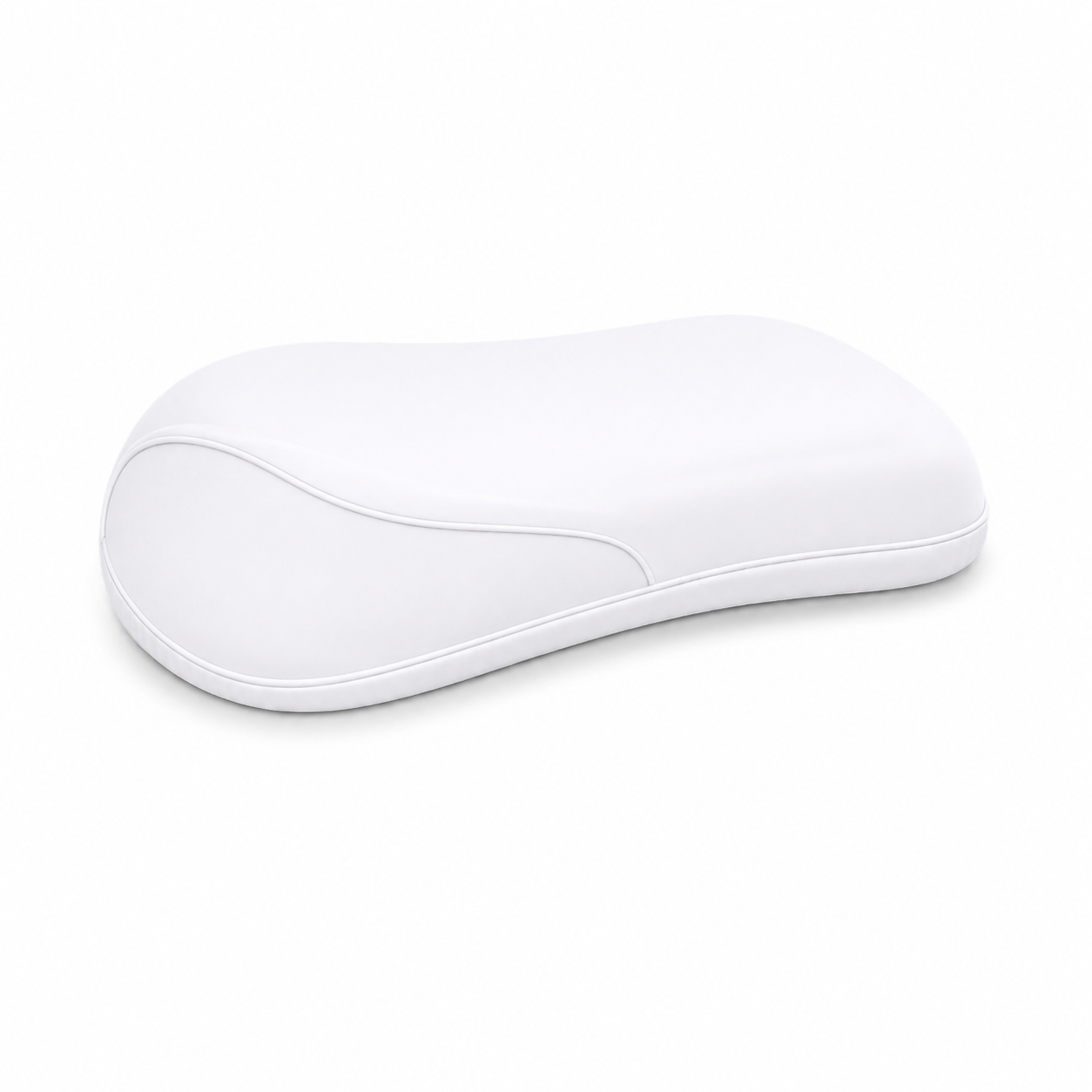
1. Ventilated Memory Foam: The CoolTouch® Memory Contour Pillow uses ventilated contour memory foam; air channels are built into the foam structure, promoting airflow through the pillow and preventing heat accumulation.
2. CoolTouch® Fabric Cover: The CoolTouch® Memory Contour Pillow wraps the memory foam in CoolTouch® phase-change fabric (Q-Max 0.38). This fabric absorbs excess heat on contact, preventing it from reaching the foam and providing instant cooling at the skin surface.
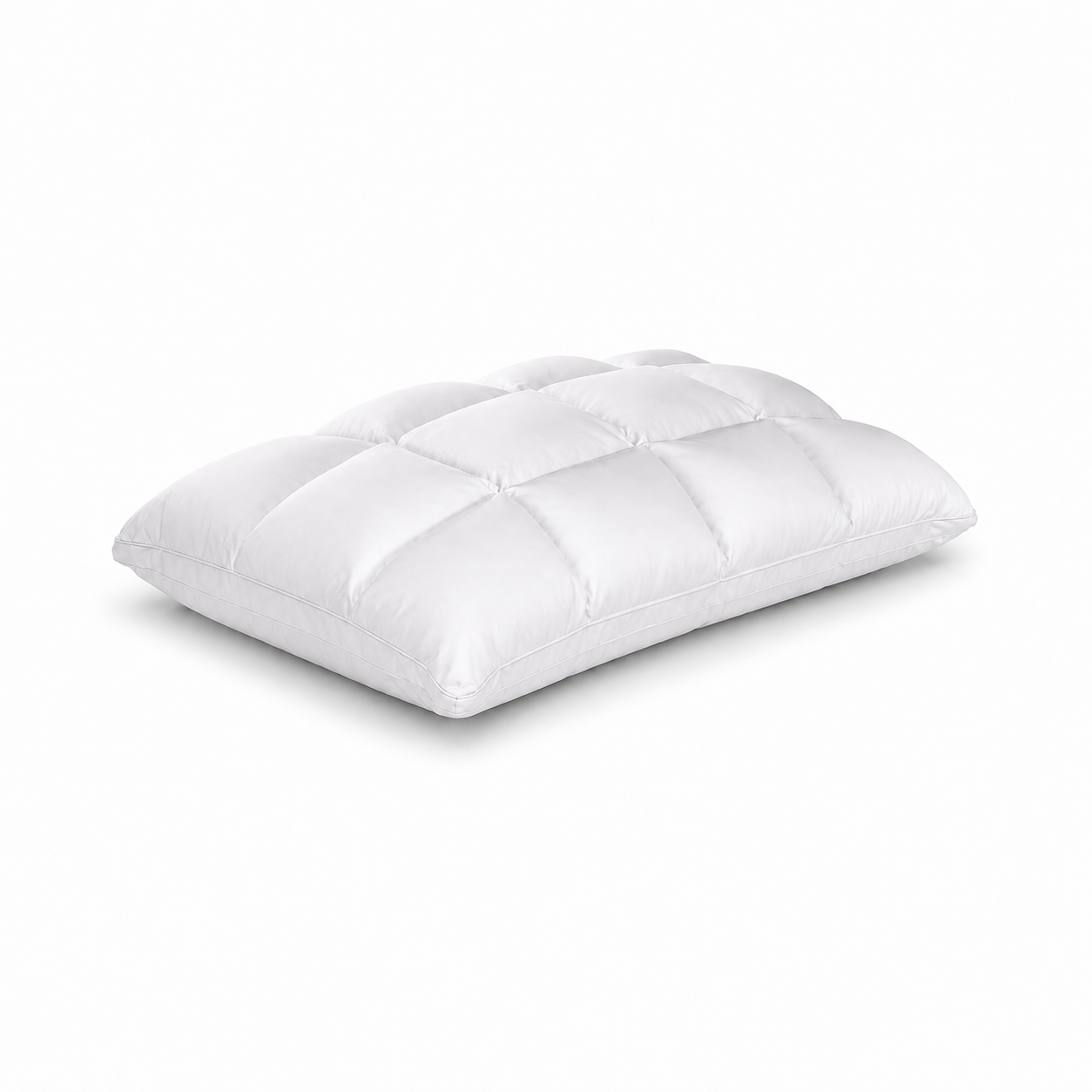
3. Gel Infusion: The GLACIO® CoolGel® Memory + Cell Pillow uses gel-infused memory foam where gel particles provide 50% better heat distribution than standard memory foam, combined with GLACIO® mineral fibre cover (Q-Max 0.31).
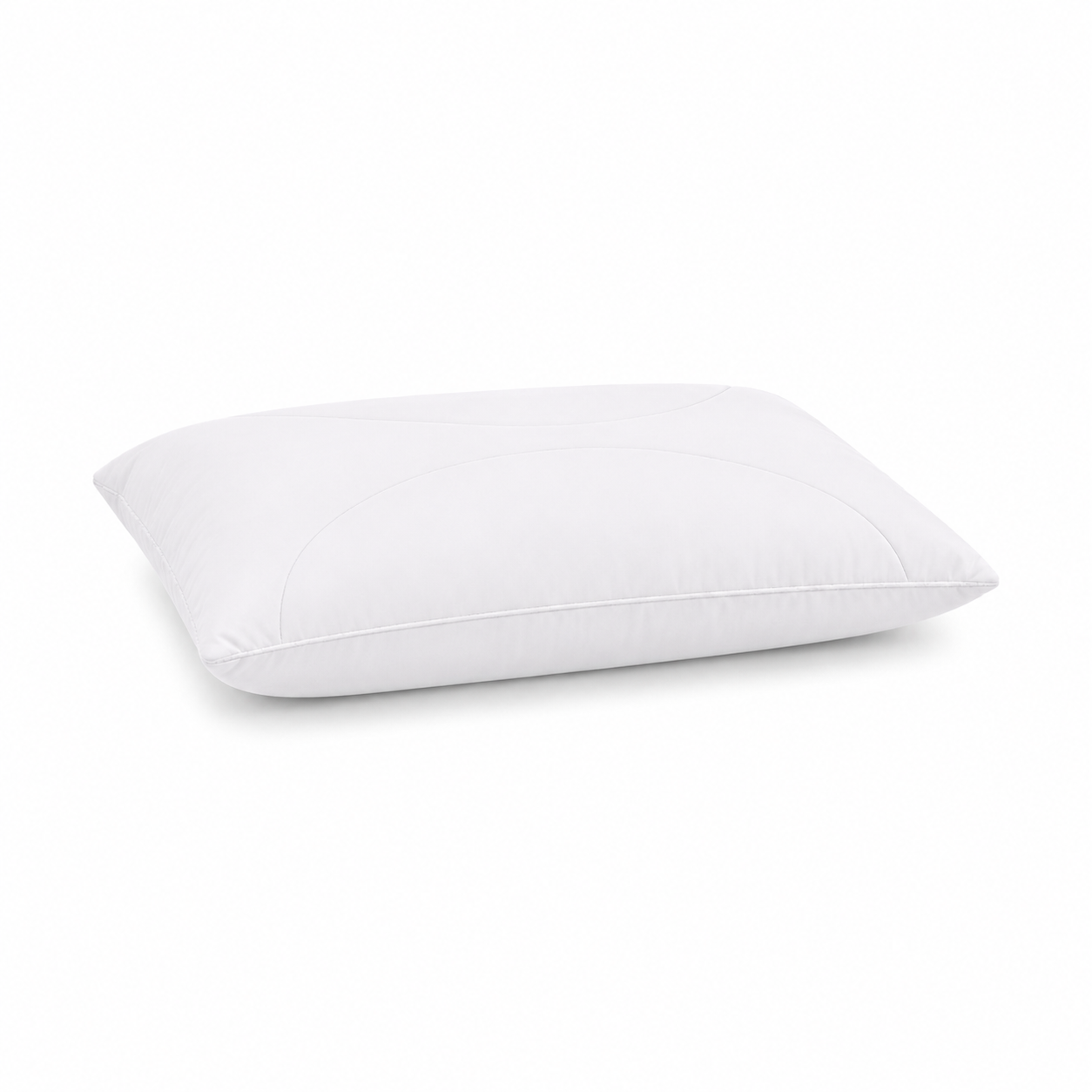
4. Alternative Fill: For those who want to avoid memory foam entirely, the CoolCloud® Pillow uses CloudFill® fibre blend; a breathable, hypoallergenic fill that provides adaptive support without any heat trapping.
The result: you get the pressure relief and spinal alignment of memory foam without the heat that makes standard memory foam pillows unbearable for hot sleepers.
AATCC Test Method 195. | Journal of Cellular Plastics (2020).
Frequently Asked Questions
Is memory foam good for sleep?
Memory foam is excellent for pressure relief, spinal alignment, and motion isolation. However, standard memory foam traps heat, raising the pillow surface 3–4°C above ambient air. For hot sleepers, this heat trapping causes night sweats and sleep fragmentation.
Why does memory foam get so hot?
Memory foam is made from dense polyurethane with low thermal conductivity. It absorbs body heat but cannot dissipate it efficiently, acting as thermal insulation. The body generates 80W of heat during sleep; standard memory foam traps all of it at the skin surface.
Can memory foam be cooling?
Yes; through ventilation (air channels in the foam), gel infusion (50% better heat distribution), and phase-change fabric covers (CoolTouch® Q-Max 0.38 absorbs heat on contact). The Sleep Lab™ CoolTouch® Memory Contour Pillow combines all three approaches.
What is the best cooling memory foam pillow?
The CoolTouch® Memory Contour Pillow uses ventilated contour memory foam wrapped in CoolTouch® phase-change fabric (Q-Max 0.38). This provides the pressure relief and spinal alignment of memory foam with active cooling that prevents heat trapping. For gel-infused memory foam, the GLACIO® CoolGel® Pillow combines gel foam with mineral fibre cooling.