Material Science
Latex Pillows
Natural latex is responsive, durable, and more breathable than memory foam. Combined with mineral fibres, it creates a naturally cooling pillow with adjustable height.
Natural Latex
Natural latex is a rubber material derived from the sap of rubber trees. In pillows, latex provides a responsive, bouncy support that instantly recovers its shape when pressure is removed; unlike memory foam, which slowly returns to shape. Natural latex is inherently more breathable than memory foam, naturally antimicrobial, resistant to dust mites, and highly durable (often lasting 10+ years). When combined with mineral-infused fibres, latex creates a naturally cooling sleep surface.
Key Research Data
10+ years
typical lifespan of a natural latex pillow
International Sleep Products Association
0.31
Q-Max of GLACIO® mineral fibres combined with latex
AATCC Test Method 195
50%
more breathable than memory foam
Journal of Cellular Plastics, 2020
Naturally
antimicrobial and dust mite resistant
International Sleep Products Association
Why Latex Is Different from Memory Foam
Natural latex and memory foam are fundamentally different materials with different properties:
1. Responsiveness: Latex is responsive; it instantly pushes back when compressed, providing a bouncy, supportive feel. Memory foam is slow-responding; it slowly contours to the body and slowly returns to shape.
2. Breathability: Natural latex has an open-cell structure that allows air to circulate through the material, making it approximately 50% more breathable than memory foam.
3. Heat retention: Latex does not trap heat the way memory foam does. Its open-cell structure and natural thermal properties allow heat to dissipate.
4. Durability: Natural latex is extremely durable, often lasting 10+ years without significant degradation. Memory foam typically lasts 5–7 years.
5. Antimicrobial: Natural latex is inherently antimicrobial and resistant to dust mites, mould, and mildew; making it naturally hypoallergenic without chemical treatments.
For hot sleepers, latex is a superior material to standard memory foam because it provides support and pressure relief without the heat trapping that makes memory foam problematic.
International Sleep Products Association. | Journal of Cellular Plastics (2020).
Latex and Cooling: Natural Breathability
Natural latex provides cooling through its material structure:
1. Open-cell structure: The cellular structure of natural latex includes interconnected air channels that allow air to circulate through the material. This is fundamentally different from memory foam's closed-cell structure that traps air (and heat).
2. Natural thermal properties: Rubber, the base material of latex, has moderate thermal conductivity; better than polyurethane foam (memory foam) but not as high as mineral-infused fibres.
3. Moisture management: Natural latex does not absorb moisture the way memory foam does. Perspiration passes through the latex structure rather than being trapped in it.
While natural latex provides good natural cooling, it does not provide the instant cool-to-touch sensation of phase-change fabrics (CoolTouch® Q-Max 0.38). This is why the GLACIO® Latex Pillow combines latex with GLACIO® mineral fibres (Q-Max 0.31) and TENCEL™ Lyocell for multi-layer cooling.
AATCC Test Method 195. | Berardi, U. & Gallardo, A. (2015).
The GLACIO® Latex + Cell Pillow
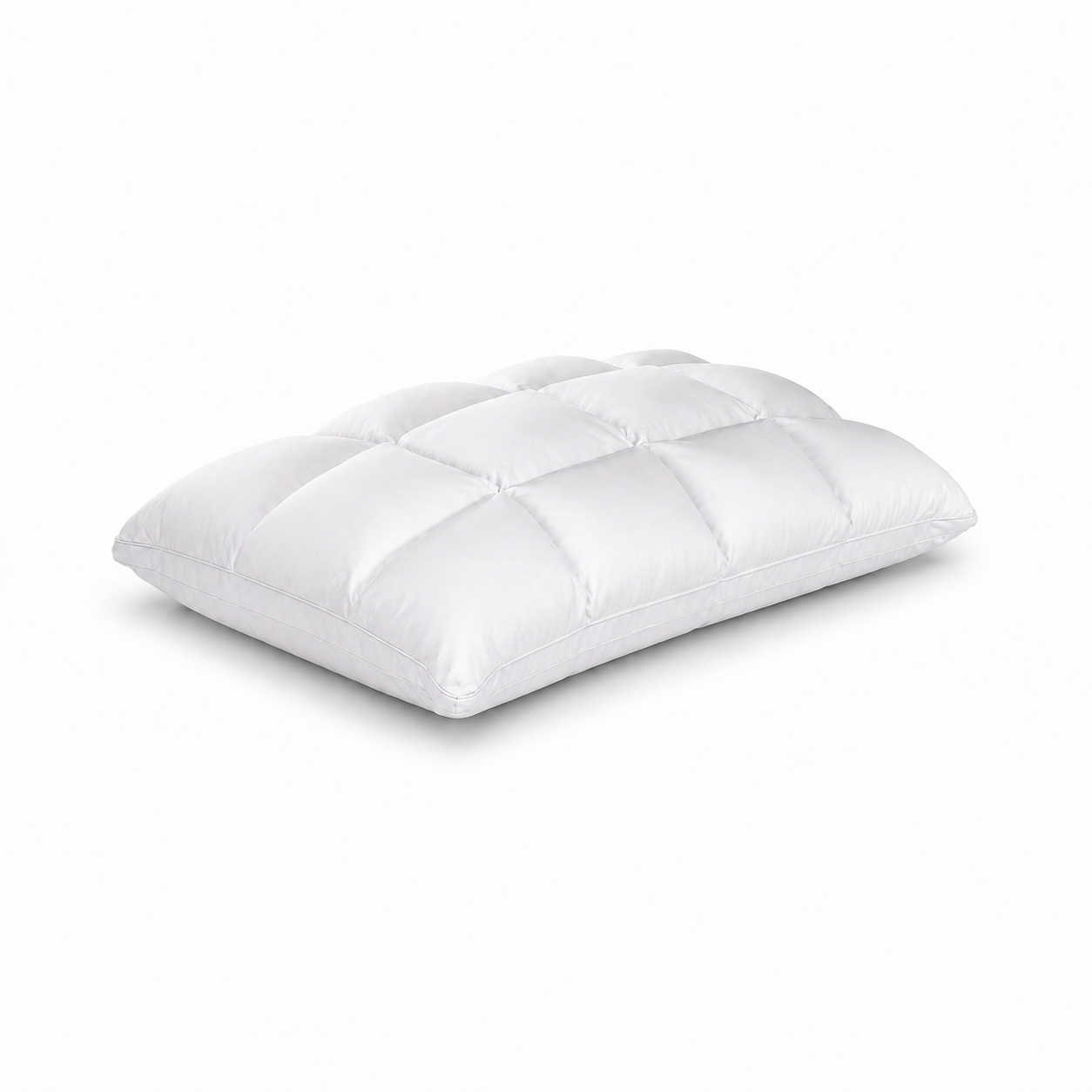
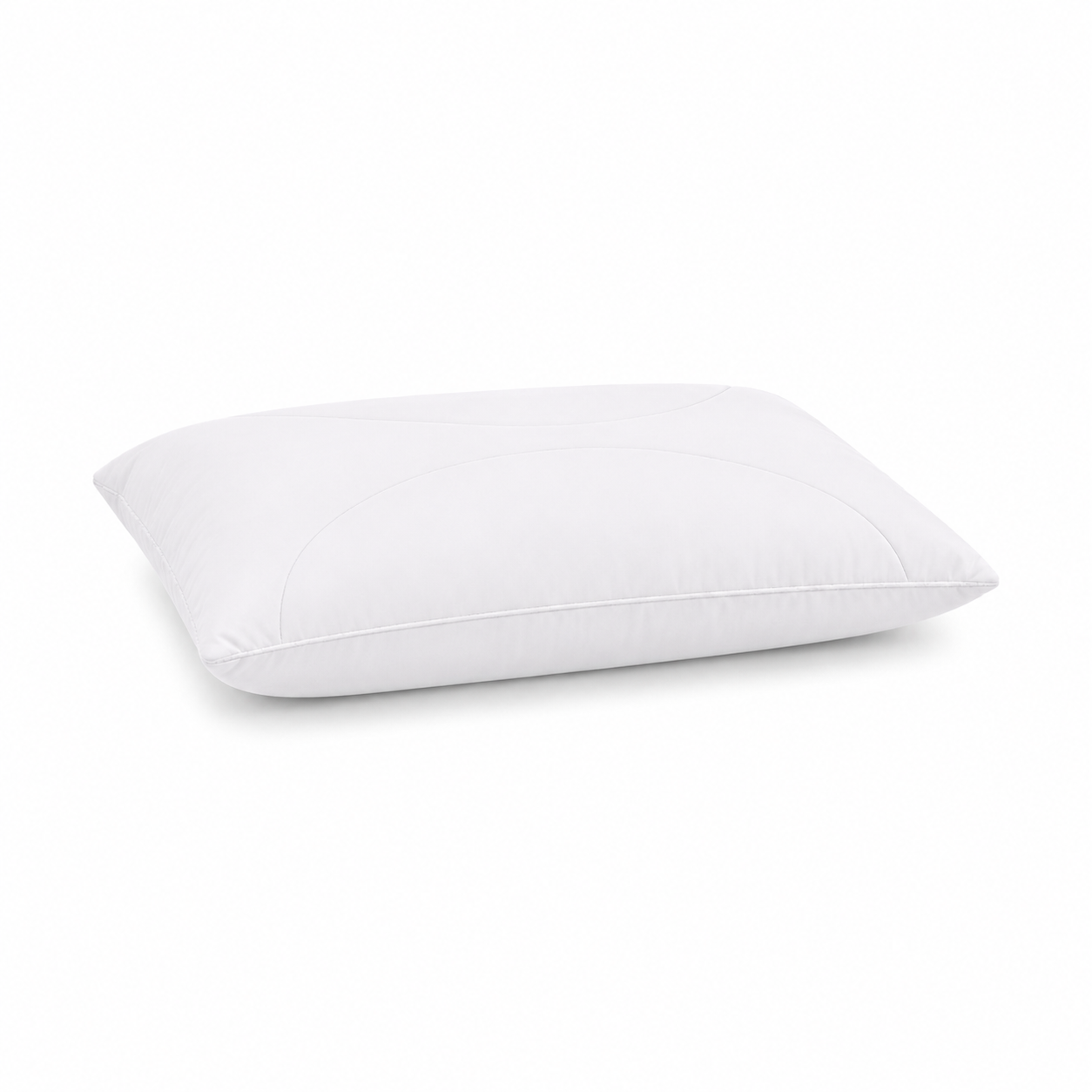
The Sleep Lab™ GLACIO® Latex + Cell Pillow (AED 349) combines natural latex with complementary cooling technologies:
1. GLACIO® Mineral Fibres: The cover uses mineral-infused fibres (jade, tourmaline, volcanic minerals) with naturally high thermal conductivity (Q-Max 0.31), drawing heat away from the skin surface continuously.
2. Natural Latex Core: Provides responsive, bouncy support with natural breathability. The latex core is more breathable than memory foam and does not trap heat.
3. TENCEL™ Lyocell Cover: 50% more breathable than cotton, 50% faster moisture management, naturally hypoallergenic.
4. Dual-Sided Design: The softer Cell side offers a plush, cushioned feel. The latex side offers a firmer, more responsive feel with enhanced ventilation. Flip to either side based on your preference.
5. Adjustable Height: Simply unzip the cover and remove or add the inner insert to customise the pillow height and firmness to suit your sleep position.
This multi-layer approach provides natural latex's support and breathability combined with mineral fibre cooling and TENCEL™ moisture management; the most comprehensive natural cooling pillow available.
AATCC Test Method 195. | Lenzing AG. TENCEL™ Technical Data.
Frequently Asked Questions
Is a latex pillow good for hot sleepers?
Yes. Natural latex is approximately 50% more breathable than memory foam and does not trap heat. Its open-cell structure allows air to circulate through the material. Combined with GLACIO® mineral fibres (Q-Max 0.31) and TENCEL™ Lyocell, it creates a naturally cooling pillow.
Is latex better than memory foam?
For hot sleepers, latex is superior: 50% more breathable, does not trap heat, naturally antimicrobial, and more durable (10+ years vs 5–7 for memory foam). Memory foam provides better pressure relief and motion isolation. The GLACIO® Latex Pillow combines latex's benefits with mineral fibre cooling.
How long does a latex pillow last?
Natural latex pillows typically last 10+ years without significant degradation; significantly longer than memory foam (5–7 years) or polyester fibre pillows (1–3 years). This makes latex pillows a long-term investment in sleep quality.
Is natural latex hypoallergenic?
Yes. Natural latex is inherently antimicrobial and resistant to dust mites, mould, and mildew; without chemical treatments. This makes it naturally hypoallergenic and suitable for allergy sufferers. The GLACIO® Latex Pillow uses a TENCEL™ Lyocell cover for additional hypoallergenic properties.