Material Science
Down Bedding
Down is luxurious and soft, but it is also one of the most heat-trapping materials in bedding. For hot sleepers, there are better options.
Down
Down is the soft, fluffy undercoating beneath the feathers of ducks and geese. It is an exceptional natural insulator; which is why it is used in winter jackets and cold-climate bedding. However, this same insulating property makes down one of the worst materials for hot sleepers: it traps body heat at the sleep surface, preventing the thermoregulation needed for deep sleep. In hot climates like the UAE, down bedding is particularly problematic.
Key Research Data
5°C+
thermal microclimate warming from down comforters
Independent textile testing, 2023
4.2°C
surface temperature reduction with CoolTouch® fabric
Independent textile lab testing, 2024
0.10
Q-Max of cotton (down's typical cover fabric)
AATCC Test Method 195
0.38
Q-Max of CoolTouch® (alternative to down)
AATCC Test Method 195
Why Down Traps Heat
Down is nature's insulator. The three-dimensional structure of down clusters creates thousands of tiny air pockets that trap air, and trapped air is one of the best thermal insulators known. This is why down is used in Arctic expeditions and winter jackets.
In bedding, this insulating property is excellent for cold climates; it keeps you warm by trapping body heat. But for hot sleepers, and especially in hot climates like the UAE, this same property is a major problem.
During sleep, the body generates approximately 80 watts of heat. Down bedding traps this heat, creating a thermal microclimate that can be 5°C+ warmer than room air. This prevents the 1–2°C core body temperature drop needed for deep sleep, suppressing slow-wave sleep and causing night sweats.
The problem is compounded by the cotton covers typically used on down bedding; cotton has a Q-Max of only 0.10–0.15, providing minimal cooling at the skin surface.
Independent textile testing, 2023. | NIH Biomedical Research Data.
Why Down Is Unsuitable for the UAE
In the UAE, where ambient temperatures regularly exceed 40°C during the day and remain above 28°C at night, down bedding is particularly problematic. The body is already under thermal stress from the environment, and down bedding prevents the heat dissipation needed for thermoregulation during sleep.
Even with air conditioning, down bedding creates a trapped heat microclimate that prevents the core temperature drop needed for deep sleep. This is why many UAE residents who purchase down bedding (often imported from European brands designed for cold climates) find it unbearably hot; the product was designed for a completely different climate.
For the UAE, the appropriate bedding actively dissipates heat rather than trapping it. Phase-change fabrics (CoolTouch® Q-Max 0.38) and TENCEL™ Lyocell (Q-Max 0.25, 50% more breathable than cotton) are the materials designed for hot climates.
UAE National Centre for Meteorology. Annual Climate Report, 2024.
Cooling Alternatives to Down
For the comfort and luxury of down without the heat trapping, The Sleep Lab™ offers several alternatives:
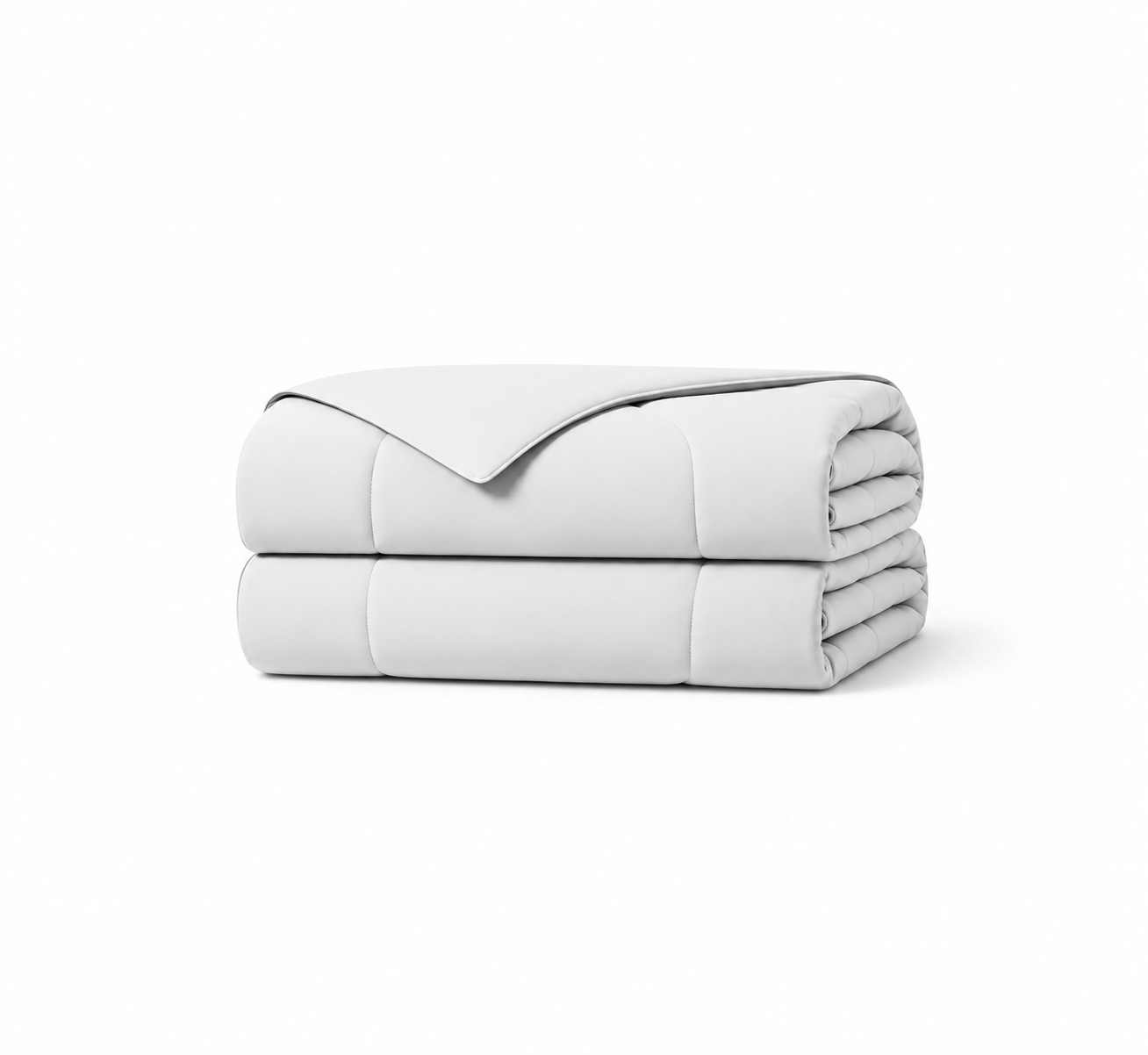
1. CoolTouch® Performance Comforter (from AED 589): Replaces down comforters with phase-change fabric (Q-Max 0.38) and breathable performance fill. Provides the lightweight, luxurious feel of a premium comforter while actively dissipating heat rather than trapping it.
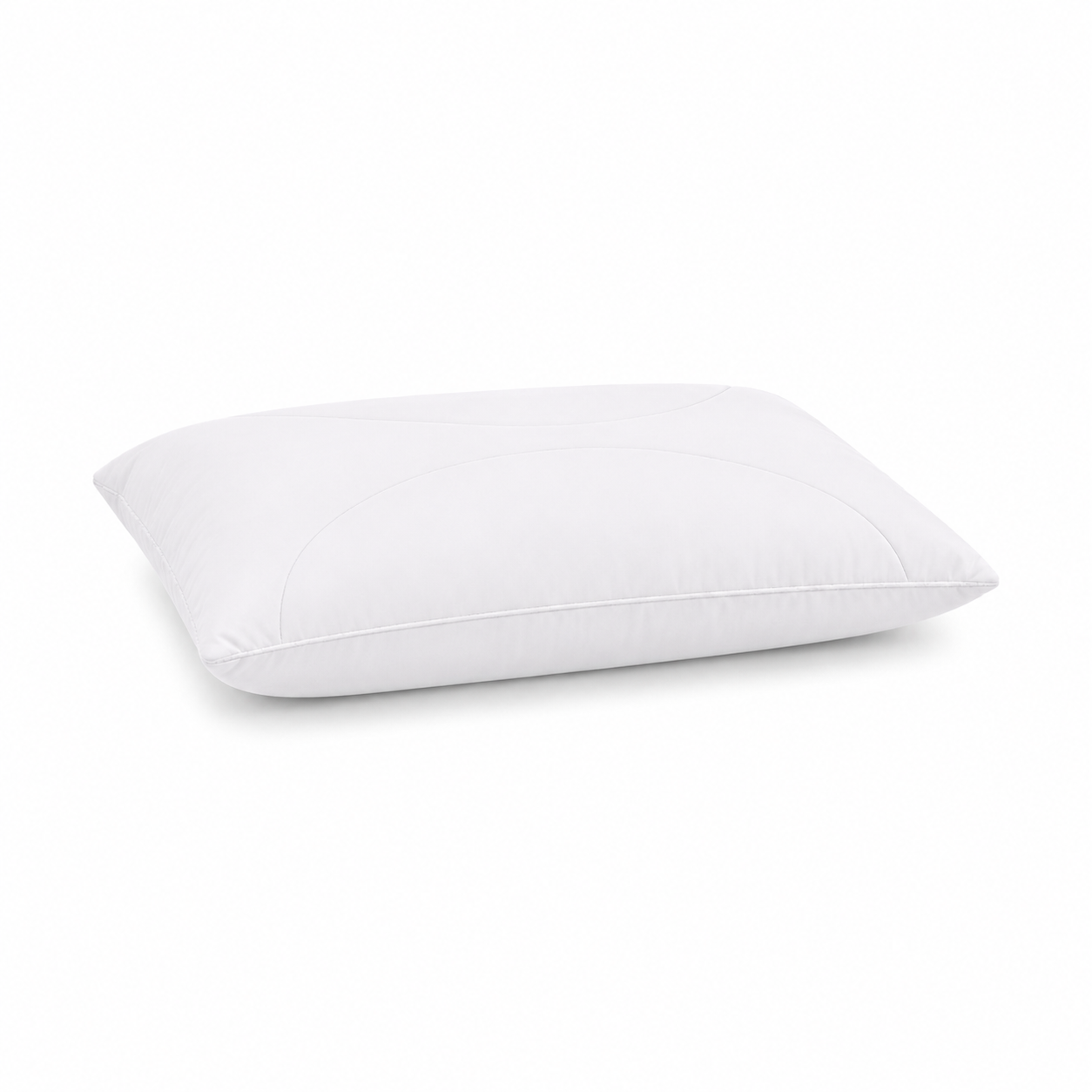
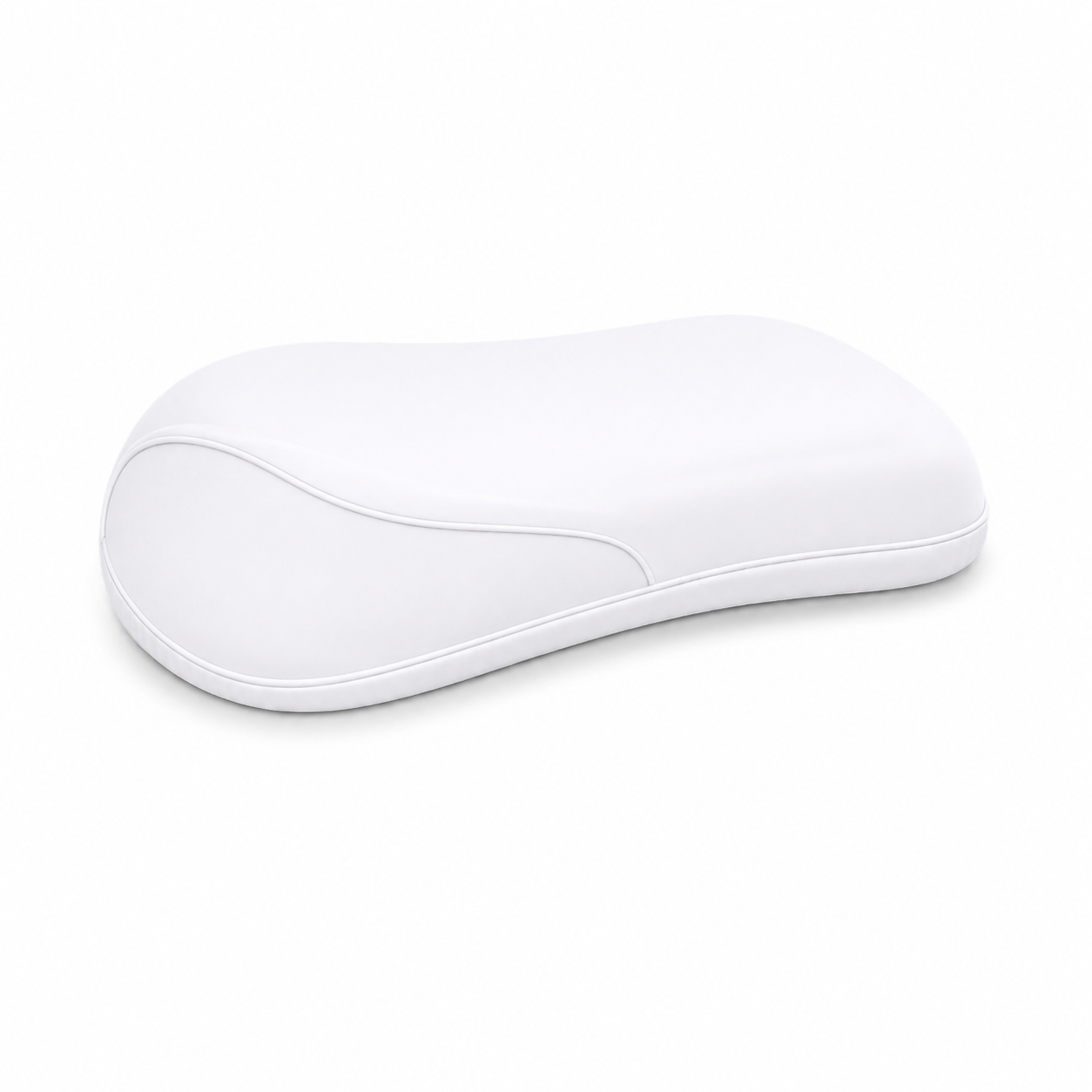
2. CoolCloud® Pillow (AED 280): Replaces down pillows with CoolTouch® fabric and CloudFill® fibre blend. CloudFill® provides the soft, adaptive feel of down with the breathability and hypoallergenic properties that down lacks.
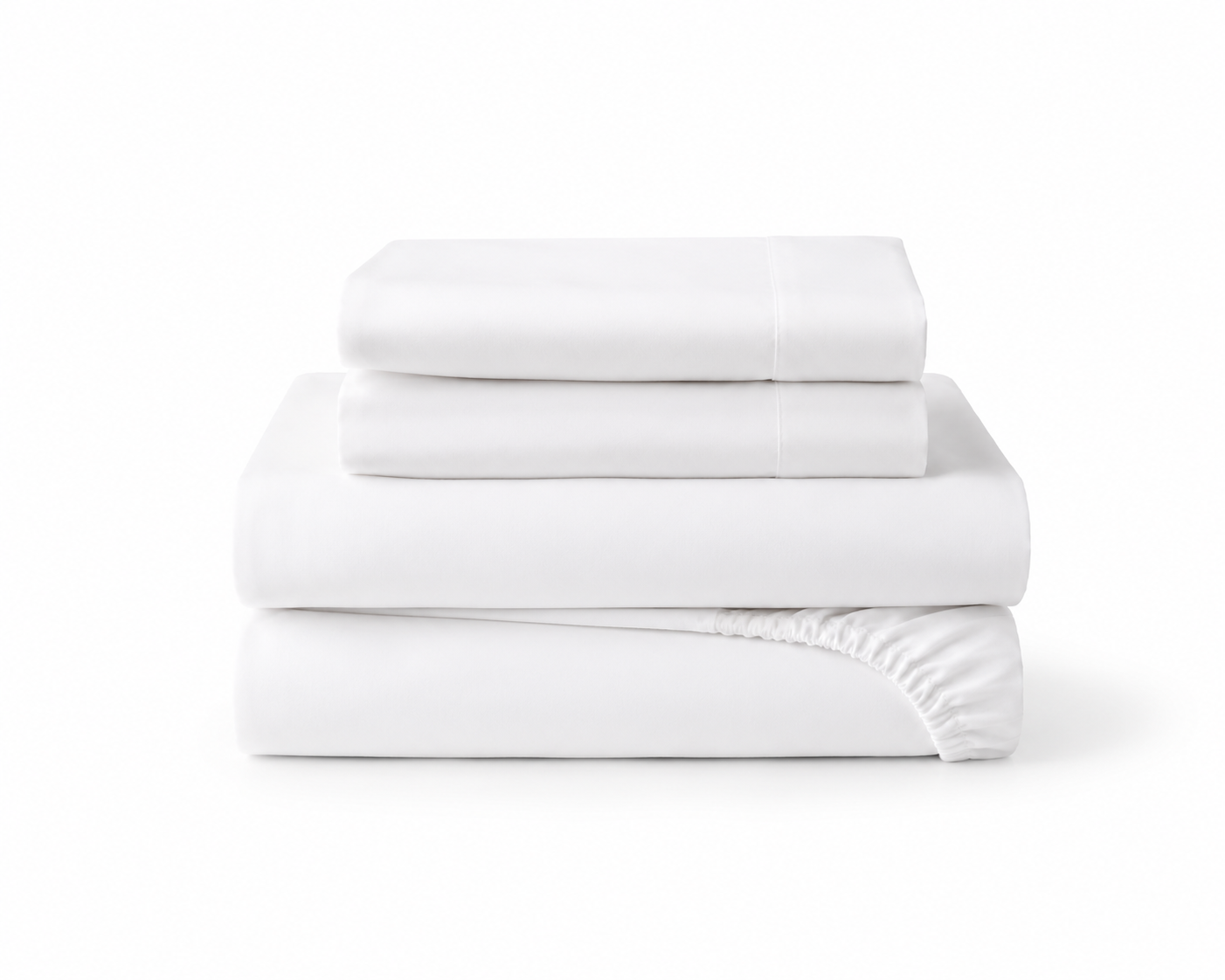
3. TENCEL™ Lyocell Bedding Set (from AED 849): Replaces cotton percale sheets (typically used with down bedding) with TENCEL™ Lyocell; 50% more breathable, 50% faster moisture management, naturally hypoallergenic.
These alternatives provide the comfort associated with down bedding while being specifically engineered for hot climates; active heat dissipation rather than heat retention.
AATCC Test Method 195. | Sleep Lab™ Product Data.
Frequently Asked Questions
Is down good for hot sleepers?
No. Down is nature's insulator; it traps body heat to keep you warm. For hot sleepers, this heat trapping prevents the core temperature drop needed for deep sleep and causes night sweats. In hot climates like the UAE, down bedding is particularly problematic.
Why does down bedding make me hot?
Down clusters create thousands of tiny air pockets that trap air, and trapped air is an excellent thermal insulator. Down bedding traps the 80W of heat your body generates during sleep, creating a thermal microclimate 5°C+ warmer than room air. This prevents the thermoregulation needed for deep sleep.
What is a good alternative to down bedding?
The CoolTouch® Performance Comforter (phase-change fabric, Q-Max 0.38) provides the lightweight, luxurious feel of a premium comforter while actively dissipating heat. The CoolCloud® Pillow with CloudFill® fibre provides the soft, adaptive feel of down with better breathability and hypoallergenic properties.
Is down bedding suitable for the UAE?
No. Down bedding is designed for cold climates. In the UAE, where ambient temperatures exceed 40°C, down bedding prevents the heat dissipation needed for sleep. Use bedding with phase-change fabric (CoolTouch®) and TENCEL™ Lyocell; materials specifically engineered for hot climates.