Material Science
Cotton Bedding
Cotton is the default bedding material, and it is not good enough for hot sleepers. Here is the science, and what to use instead.
Cotton
Cotton is a natural fibre from the cotton plant. It is the most common bedding material due to its affordability, availability, and familiarity. However, cotton has poor cooling properties: its Q-Max rating of 0.10–0.15 W/cm² is among the lowest of any sleep fabric, it absorbs moisture but releases it slowly, and its irregular fibre surface creates friction against skin. For hot sleepers, and especially in hot climates like the UAE; cotton bedding is insufficient for effective thermoregulation during sleep.
Key Research Data
0.10–0.15
Q-Max of cotton (minimal cooling)
AATCC Test Method 195
4–6°C
warmer thermal microclimate with cotton bedding vs room air
Independent textile testing
50%
more breathable: TENCEL™ vs cotton
Lenzing AG, 2023
0.38
Q-Max of CoolTouch® (3× better than cotton)
AATCC Test Method 195
The Limitations of Cotton for Sleep
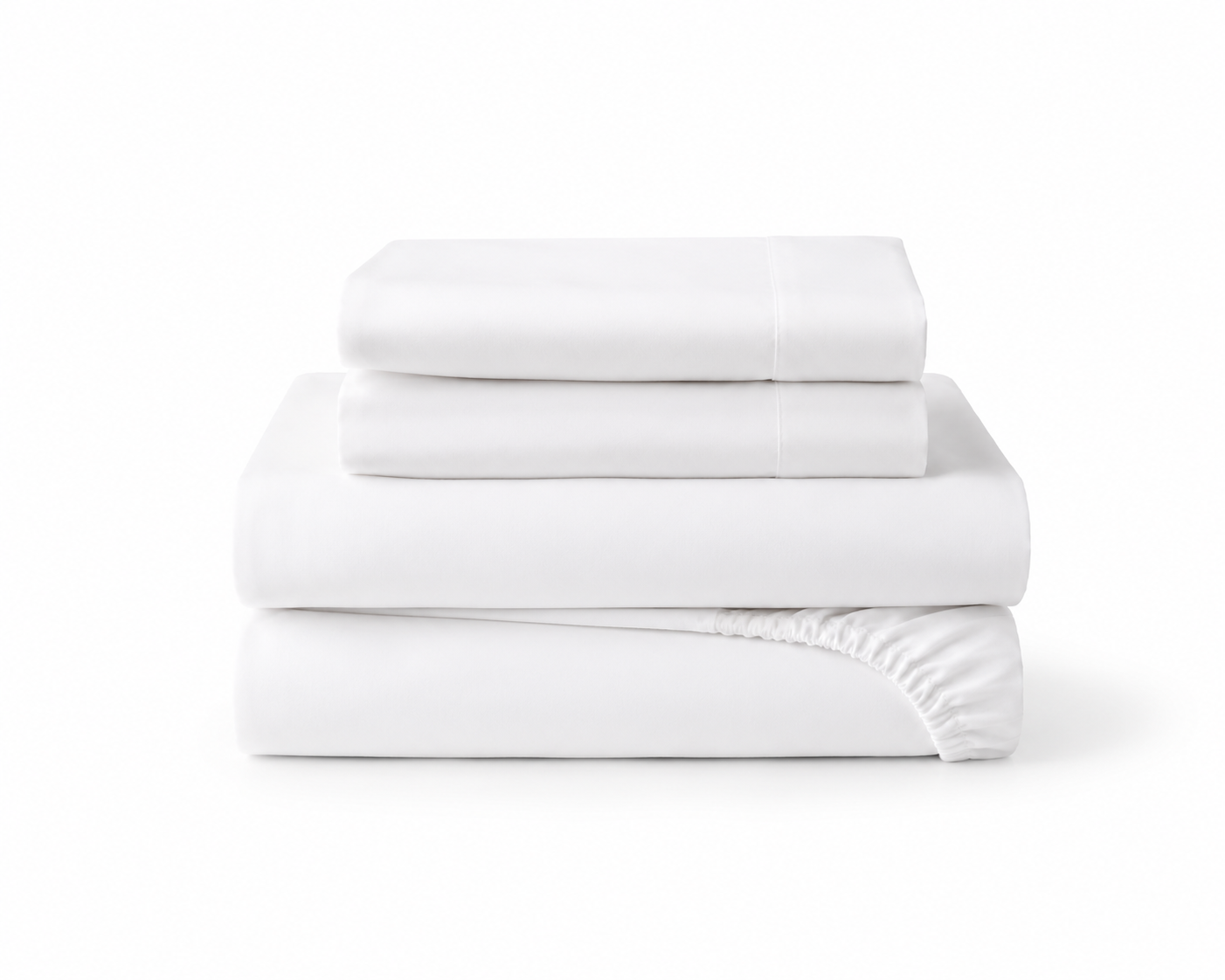
Cotton is the default bedding material, but its properties are not well-suited for hot sleepers:
1. Low cooling: Cotton's Q-Max of 0.10–0.15 W/cm² means it provides almost no instant cooling sensation on skin contact. Compare this to CoolTouch® phase-change fabric (Q-Max 0.38) which provides 3× the cooling.
2. Poor moisture management: Cotton absorbs moisture (sweat) readily but releases it slowly. This means that during night sweats, cotton bedding becomes damp and stays damp; creating a wet thermal microclimate that perpetuates the sweat-cool-chill cycle.
3. Heat trapping: While not as extreme as memory foam or down, cotton bedding creates a thermal microclimate that can be 4–6°C warmer than room air. This is because the dense weave of cotton sheets and the multiple layers of cotton in typical bedding trap the 80W of heat the body generates during sleep.
4. Friction: Cotton's irregular fibre surface creates friction against skin, which can cause sleep creases and skin irritation; particularly for people with sensitive skin.
5. Weight: Cotton bedding (especially high-thread-count cotton) is heavy and dense, which can feel oppressive for hot sleepers.
AATCC Test Method 195. | Independent textile testing, 2023.
Why "Egyptian Cotton" Is Not the Answer
Egyptian cotton is often marketed as the premium bedding choice, but it does not solve cotton's fundamental limitations for hot sleepers. Egyptian cotton has longer staple fibres, which produce smoother, stronger yarn; this means a softer feel and greater durability. However, Egyptian cotton has the same Q-Max (0.10–0.15), the same moisture management properties, and the same heat trapping characteristics as regular cotton.
The premium feel of Egyptian cotton is a comfort and luxury benefit, not a cooling benefit. For hot sleepers, Egyptian cotton is marginally better than regular cotton (smoother surface, less friction) but fundamentally the same material with the same thermal limitations.
Thread count is another marketing focus that does not address cooling. Higher thread count means a denser weave; which actually reduces breathability. A 600-thread-count cotton sheet is less breathable than a 300-thread-count one because the tighter weave restricts air circulation.
For hot sleepers, the material matters more than the thread count. TENCEL™ Lyocell at any thread count is more cooling than Egyptian cotton at any thread count.
Lenzing AG. Fibre Comparison Data, 2023.
Better Alternatives to Cotton
For hot sleepers, several materials are measurably better than cotton:
1. CoolTouch® Phase-Change Fabric (Q-Max 0.38): 3× the cooling of cotton. Actively absorbs body heat through phase-change micro-capsules. Sustained cooling across 8-hour sleep cycle.
2. TENCEL™ Lyocell (Q-Max 0.25): 50% more breathable than cotton, 50% faster moisture management, naturally hypoallergenic, smoother surface. The best natural fibre alternative.
3. GLACIO® Mineral Fibres (Q-Max 0.31): Mineral-infused fibres with high thermal conductivity. Strong, sustained cooling.
4. Silk (Q-Max 0.22): Naturally smooth, temperature-regulating, hypoallergenic.
The Sleep Lab™ uses these materials across its product range, providing measurable cooling performance that cotton cannot match. For the UAE climate, where effective thermal management during sleep is critical, these materials are not luxuries; they are necessities.
AATCC Test Method 195. | Lenzing AG. TENCEL™ Technical Data.
Frequently Asked Questions
Is cotton good for hot sleepers?
No. Cotton has a Q-Max of 0.10–0.15 W/cm² (minimal cooling), absorbs moisture but releases it slowly (creating a damp microclimate), and traps heat (4–6°C warmer than room air). For hot sleepers, better alternatives include CoolTouch® (Q-Max 0.38) and TENCEL™ Lyocell (Q-Max 0.25, 50% more breathable than cotton).
Is Egyptian cotton better for cooling?
No. Egyptian cotton is smoother and more durable than regular cotton, but it has the same Q-Max (0.10–0.15), same moisture management, and same heat trapping. The premium feel is a comfort benefit, not a cooling benefit. TENCEL™ Lyocell at any thread count is more cooling than Egyptian cotton at any thread count.
Does thread count affect cooling?
Higher thread count means a denser weave, which actually reduces breathability. A 600-thread-count sheet is less breathable than a 300-thread-count one. For cooling, the material matters more than thread count. TENCEL™ Lyocell is more cooling than cotton regardless of thread count.
What is better than cotton for sleep?
CoolTouch® phase-change fabric (Q-Max 0.38, 3× the cooling of cotton), TENCEL™ Lyocell (Q-Max 0.25, 50% more breathable), GLACIO® mineral fibres (Q-Max 0.31), and silk (Q-Max 0.22) are all measurably better than cotton for hot sleepers.