Sleep Science
Cooling During Sleep
Your body needs to cool down to sleep deeply. Most bedding prevents this. Here is the science and the solution.
Cooling During Sleep
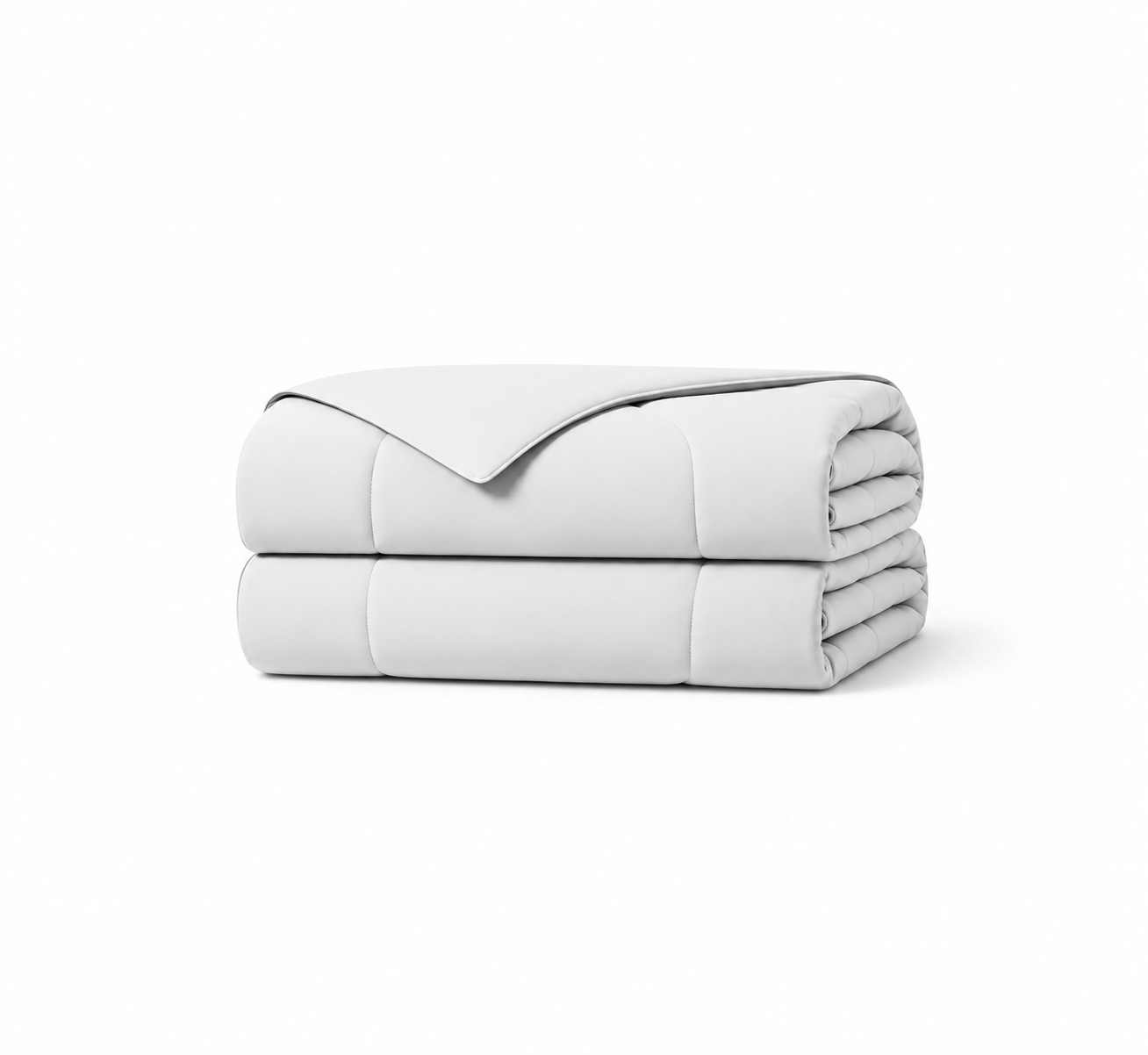
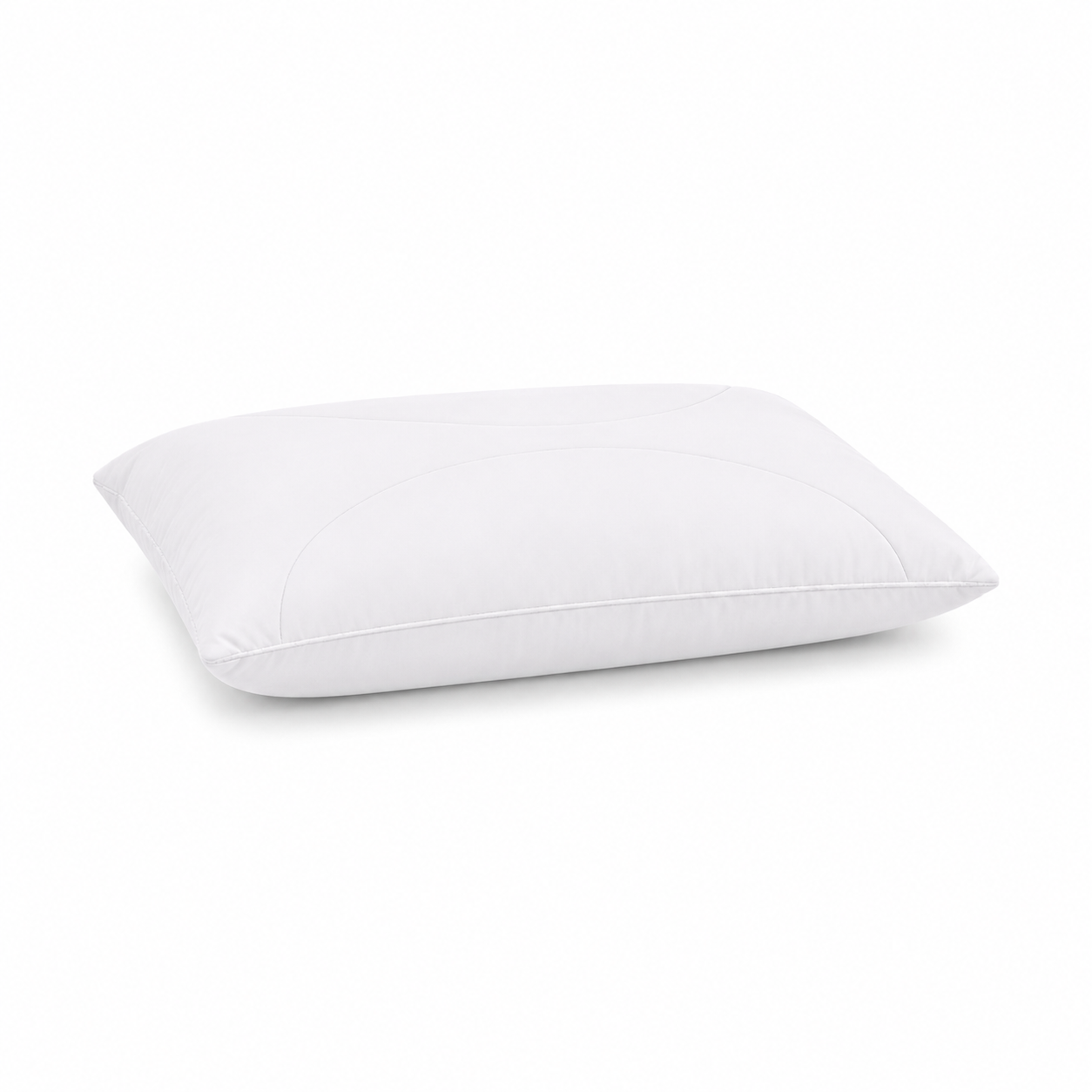
Cooling during sleep refers to the body's natural thermoregulatory process of reducing core body temperature by 1–2°C to initiate and maintain deep sleep. This process requires effective heat dissipation through the skin surface. Standard bedding materials trap heat, preventing this cooling and disrupting sleep architecture. Active cooling bedding (phase-change fabrics, Q-Max ≥ 0.38) facilitates this process by absorbing and dissipating body heat.
Key Research Data
1–2°C
core body temperature drop required for deep sleep onset
Harvard Medical School, Division of Sleep Medicine
32%
more deep sleep with optimal surface temperature (16–19°C)
Sleep Medicine Reviews, 2019
4.2°C
surface temperature reduction with CoolTouch® fabric
Independent textile lab testing, 2024
27 min
faster sleep onset with cooled sleep surface
Journal of Sleep Research
Why Your Body Needs to Cool During Sleep
Core body temperature follows a circadian rhythm; peaking at approximately 37.4°C in the late afternoon and dropping to its nadir of 36.4°C in the early morning hours. This 1–2°C drop is not a consequence of sleep; it is a prerequisite for it.
The preoptic area of the hypothalamus detects falling ambient temperature through skin thermoreceptors, triggering vasodilation of peripheral blood vessels to radiate heat away from the core. When bedding traps this heat; as standard cotton, polyester, and memory foam do; the thermoregulation process fails, and deep sleep is suppressed.
Research from the University of California, Berkeley found that even a 1°C increase in sleep environment temperature reduced deep sleep duration by up to 25%.
Harding, E.C. et al. (2019). Frontiers in Neuroscience. | Walker, M. (2017). Why We Sleep.
How Active Cooling Bedding Works
Phase-change materials (PCMs) embedded in cooling bedding fabrics absorb excess body heat as they change from solid to liquid state at a calibrated temperature; typically just above normal skin temperature (35°C). This absorption actively prevents heat buildup at the sleep surface, facilitating the body's natural thermoregulatory cooling process.
The key metric is Q-Max; how quickly the fabric draws heat away from skin on contact. CoolTouch® fabric achieves Q-Max 0.38 W/cm² (compared to 0.10–0.15 for standard cotton), providing a sustained 3.2°C surface temperature advantage across an 8-hour sleep cycle.
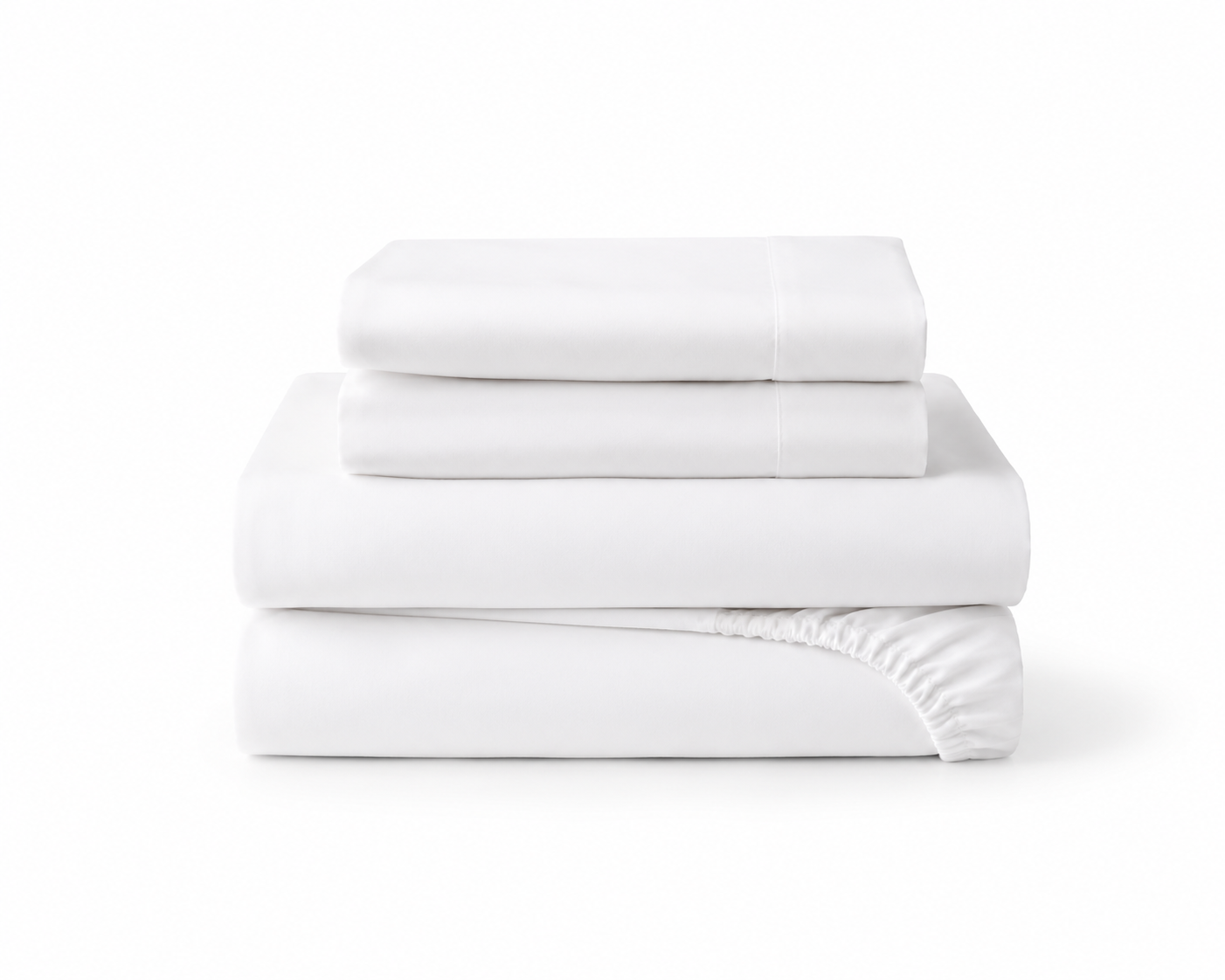
TENCEL™ Lyocell fibres support cooling through a different mechanism: high moisture transport capacity (50% more than cotton) that removes perspiration from the skin surface rapidly, reducing evaporative heat load.
AATCC Test Method 195. Independent textile laboratory testing, 2023. | Lenzing AG. TENCEL™ Technical Data.
The UAE Cooling Challenge
In the UAE, summer ambient temperatures exceed 40°C by day and remain above 28°C at night. Air conditioning manages ambient temperature but cannot address the trapped microclimate between body and bedding; which can be 4–6°C warmer than room air.
This microclimate prevents the skin from radiating heat efficiently, impairing thermoregulation. The result is delayed sleep onset, frequent night-waking, and suppressed deep sleep. Standard cotton bedding with low breathability compounds this by trapping sweat against the skin.
Active cooling bedding breaks this cycle by managing the thermal microclimate directly; maintaining the skin surface in the 33–36°C range required for efficient core temperature drop.
UAE National Centre for Meteorology. Annual Climate Report, 2024.
Frequently Asked Questions
Why do I need to cool down during sleep?
Your body must drop its core temperature by 1–2°C to initiate and maintain deep sleep. This temperature drop is the physiological trigger for sleep onset and slow-wave sleep. If bedding traps heat and prevents this cooling, deep sleep is suppressed by up to 25%.
How does cooling bedding work?
Cooling bedding uses phase-change materials (PCMs) that absorb excess body heat at the surface, preventing heat accumulation. The Q-Max rating measures how quickly fabric draws heat away from skin; CoolTouch® fabric achieves Q-Max 0.38, compared to 0.10–0.15 for standard cotton.
Does air conditioning cool you during sleep?
AC cools room air but not the thermal microclimate between body and bedding, which can be 4–6°C warmer than room temperature. Active cooling bedding is needed to manage the skin-surface microclimate that AC cannot reach.
What is the best cooling bedding for the UAE?
Look for bedding with phase-change fabric (Q-Max ≥ 0.38) like CoolTouch®, combined with moisture-wicking TENCEL™ Lyocell fibres. This combination maintains the sleep surface at 16–19°C while managing perspiration; the two requirements for effective cooling during sleep.