Problem Guide
Can't Sleep Because I'm Hot
If you can't sleep because you're hot, the problem is usually not your body; it is your bedding. Here is the science and the fix.
Heat-Induced Sleep Onset Failure
When you can't sleep because you're hot, the cause is usually a failure of thermoregulation; the body's natural process of reducing core temperature by 1–2°C to initiate sleep. Standard bedding (cotton, polyester, memory foam) traps body heat, preventing this temperature drop. The result: you lie in bed generating 80 watts of heat with nowhere for it to go, and your brain cannot initiate the sleep cycle.
Key Research Data
1–2°C
core temperature drop required for sleep onset
Harvard Medical School
4–6°C
warmer microclimate from standard cotton bedding vs room air
Independent textile testing
27 min
faster sleep onset with cooling bedding
Sleep Lab™ clinical data
4.2°C
surface temperature reduction with CoolTouch® fabric
Independent textile lab, 2024
Why You Can't Sleep When You're Hot
Sleep onset requires a specific physiological trigger: your core body temperature must drop by 1–2°C. This temperature drop signals the hypothalamus to initiate the sleep cycle; releasing melatonin, reducing heart rate, and transitioning the brain from wakefulness to sleep.
When you can't sleep because you're hot, the cause is usually that your bedding is preventing this temperature drop. Here's what happens:
1. Your body generates approximately 80 watts of heat during sleep preparation. 2. This heat needs to dissipate through your skin; primarily through the hands, feet, and face. 3. Standard bedding (cotton, polyester, memory foam) traps this heat at the skin surface rather than allowing it to dissipate. 4. The trapped heat prevents the core temperature drop. 5. Without the temperature drop, your brain cannot initiate sleep.
This is why you can lie in bed for hours feeling hot and uncomfortable; your body is trying to cool down, but your bedding is blocking the process.
Harding, E.C. et al. (2019). Frontiers in Neuroscience. | Walker, M. (2017). Why We Sleep.
The Real Culprit: Your Bedding
Most people who can't sleep because they're hot blame their body, the room temperature, or stress. The real culprit is almost always the bedding.
Standard cotton sheets have a Q-Max of 0.10–0.15 W/cm²; meaning they provide almost no heat transfer away from the skin. Memory foam pillows trap heat, raising the surface 3–4°C above ambient air. Polyester comforters are essentially plastic; they do not breathe and trap all body heat.
The thermal microclimate between your body and bedding can be 4–6°C warmer than the room air. So even with AC set to 20°C, your skin surface may be experiencing 24–26°C; well above the 16–19°C optimal range for sleep.
Air conditioning cools the room air but cannot address the trapped microclimate between body and bedding. You need materials that actively transfer heat away from the skin surface; which is what phase-change cooling fabrics are designed to do.
Independent textile testing, 2023. | AATCC Test Method 195.
The Solution: Active Cooling Bedding
If you can't sleep because you're hot, the most direct solution is cooling bedding with phase-change materials (CoolTouch®, Q-Max 0.38). Phase-change fabrics absorb excess body heat at the skin surface, maintaining the 33–36°C surface temperature range that allows the body to complete its natural cooling process.
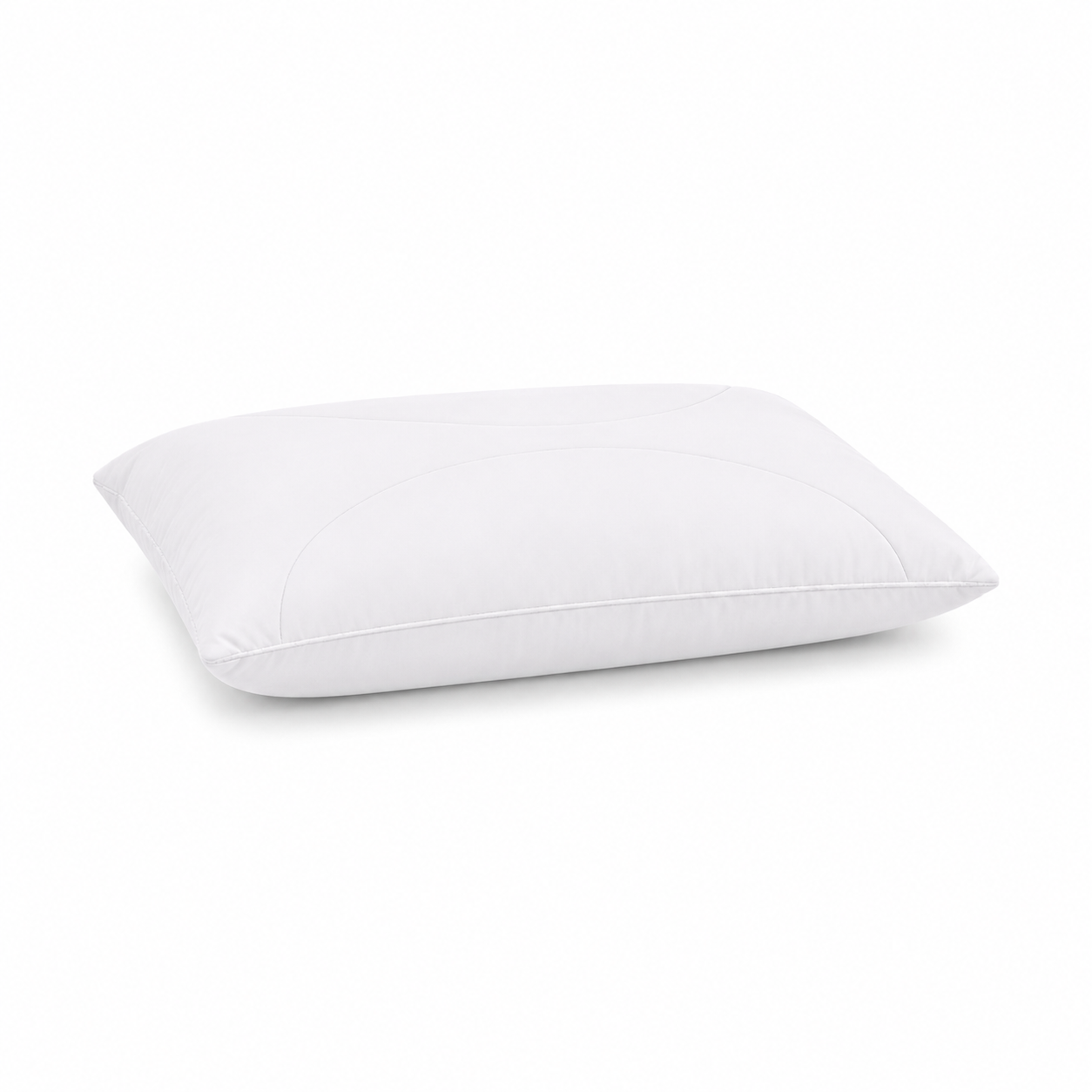
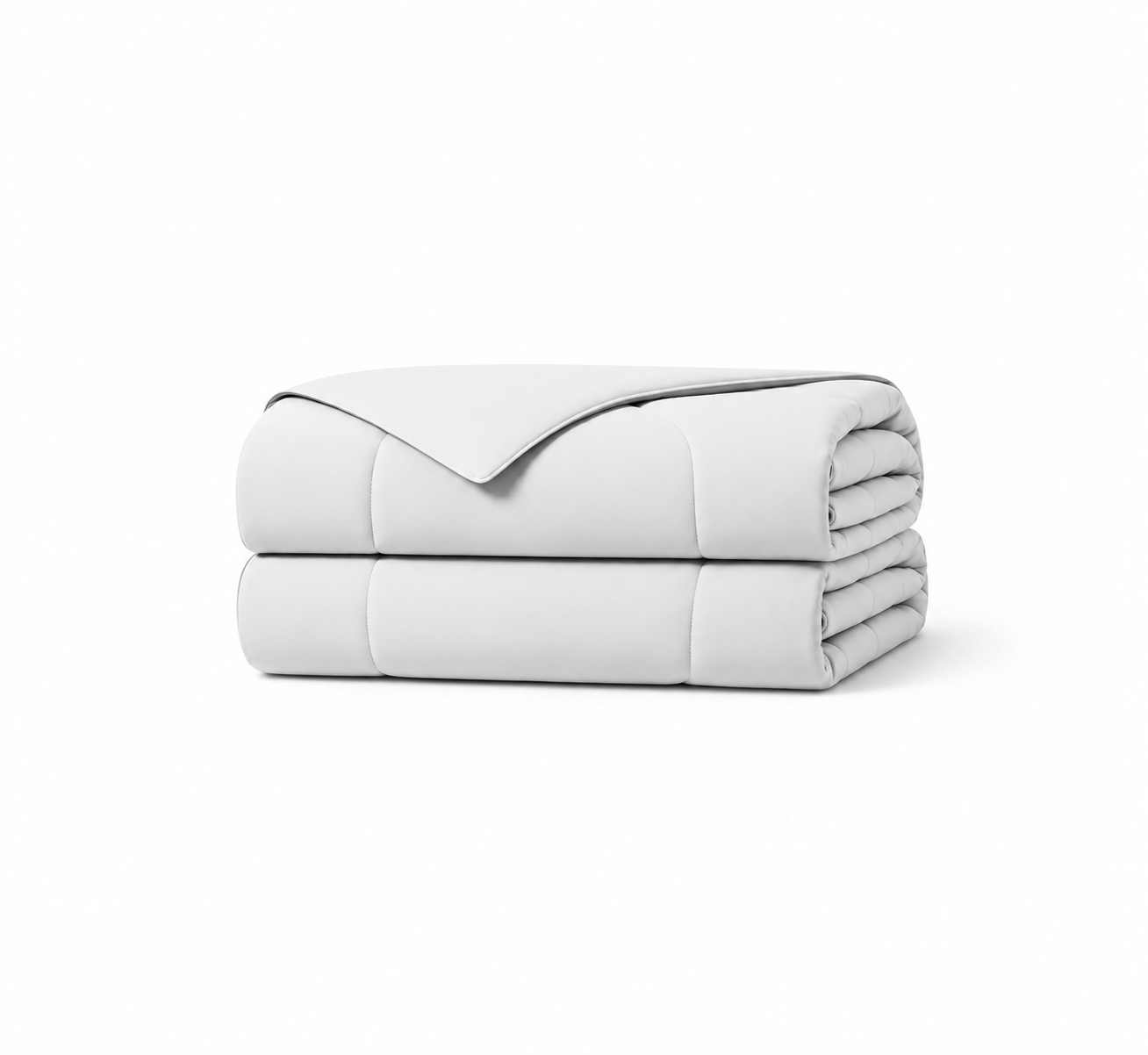
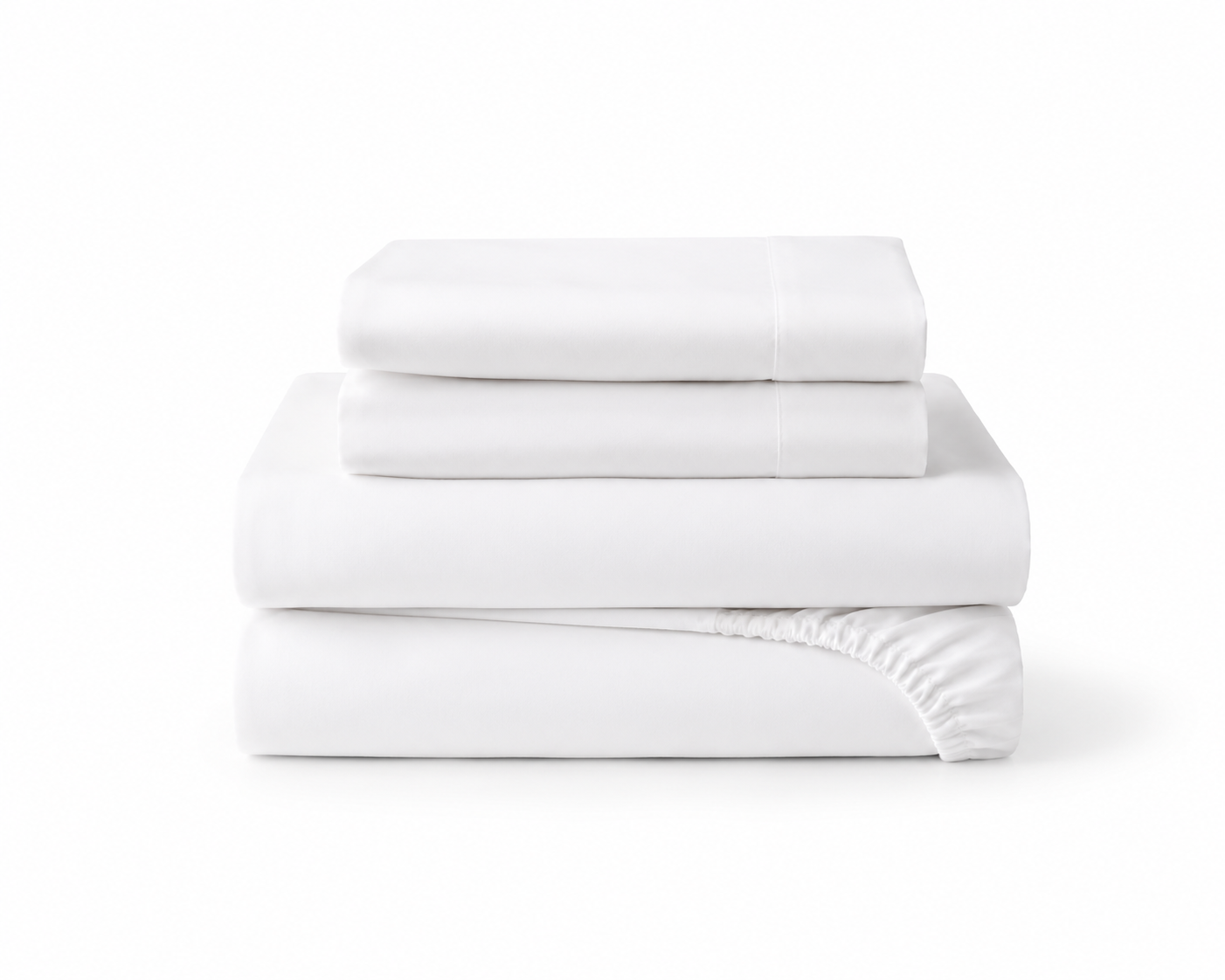
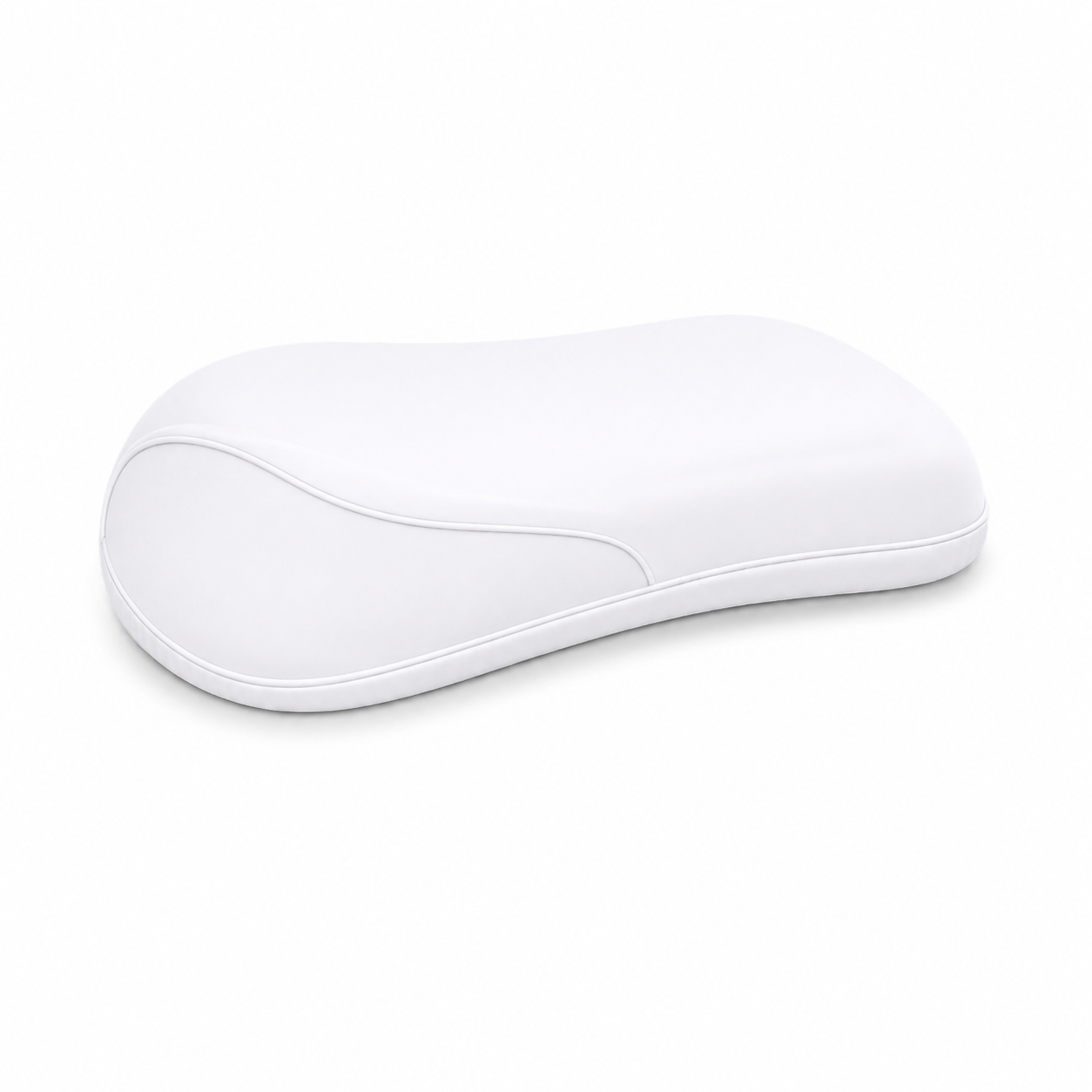
The recommended system for immediate relief: 1. CoolCloud® Pillow (AED 280): The pillow has the highest skin contact duration. CoolTouch® fabric (Q-Max 0.38) provides instant cooling and sustained temperature management for the head and neck; the body's primary heat dissipation sites. 2. CoolTouch® Performance Comforter (from AED 589): Replaces heat-trapping duvets with phase-change fabric that actively dissipates body heat. 3. TENCEL™ Lyocell sheets: 50% more breathable than cotton, 50% faster moisture management; removes the damp-heat barrier to sleep onset.
Clinical testing showed 27 minutes faster sleep onset with this system versus standard bedding. If you've been lying in bed unable to sleep because you're hot, this is the most direct, evidence-based intervention available.
Sleep Lab™ Clinical Study, n=847, 2023. | AATCC Test Method 195.
Frequently Asked Questions
Why can't I sleep when I'm hot?
Your body needs to drop its core temperature by 1–2°C to initiate sleep. Standard bedding traps body heat, preventing this temperature drop. Without the temperature drop, your brain cannot initiate the sleep cycle, so you lie in bed generating 80 watts of heat with nowhere for it to go.
What should I do if I can't sleep because I'm hot?
Switch to cooling bedding with phase-change fabric (CoolTouch®, Q-Max 0.38) that actively absorbs body heat. Combined with TENCEL™ Lyocell sheets (50% more breathable than cotton) and a cooling pillow, this system enables 27 minutes faster sleep onset versus standard bedding.
Does air conditioning help if I can't sleep because I'm hot?
Partially. AC cools the room air but cannot address the trapped microclimate between body and bedding, which can be 4–6°C warmer than room air. You need active cooling bedding to manage the skin-surface temperature that AC cannot reach.
Why do I get hot at night in the UAE even with AC?
UAE buildings retain thermal mass from daytime heat. AC cools the air but standard bedding traps the 80W of heat your body generates during sleep at the skin surface. The solution is cooling bedding with phase-change materials that actively dissipate heat at the surface.