Buying Guide
Best Pillow for Hot Sleepers
Hot sleepers need a pillow that actively cools; not just "feels cool." Here is the definitive guide to the best pillow for hot sleepers.
Hot Sleeper Pillow
A pillow for hot sleepers must actively dissipate body heat from the head and neck; areas responsible for 25–30% of total body heat dissipation. The pillow has the highest skin contact duration of any sleep product, making it the single highest-impact individual upgrade for hot sleepers. The best hot sleeper pillows use phase-change fabric (Q-Max ≥ 0.38) combined with breathable fill (not memory foam, which traps heat).
Key Research Data
25–30%
of body heat dissipated through the head and neck
NIH Biomedical Research Data
0.38
Q-Max of CoolTouch® fabric (best for hot sleepers)
AATCC Test Method 195
3–4°C
surface temperature increase from standard memory foam pillows
University of Vermont Textile Science Lab, 2021
4.2°C
surface temperature reduction with CoolTouch® fabric
Independent textile lab, 2024
Why Hot Sleepers Need a Specialized Pillow
The head and neck are primary heat dissipation sites; responsible for 25–30% of total body heat loss during sleep. The pillow surface is in direct, prolonged contact with these areas for 7–8 hours per night, making it the single highest-impact individual upgrade for hot sleepers.
However, most pillows actively make the problem worse:
• Standard memory foam: Dense foam that traps heat, raising the surface 3–4°C above ambient air. The most common pillow material for hot sleepers is also the worst. • Down/feather pillows: Down is an insulator, designed to trap heat. Down pillows create a warm microclimate around the head. • Polyester pillows: Essentially plastic. No breathability, no moisture management, traps all heat. • "Cooling" pillows with surface coatings: Feel cool initially but the coating washes out within 15–20 cycles, after which the pillow performs like standard bedding.
For hot sleepers, the pillow must use active cooling technology (phase-change fabric, Q-Max ≥ 0.38) and breathable fill. Anything else is a compromise that will leave you flipping the pillow all night.
NIH Biomedical Research Data. | University of Vermont Textile Science Lab (2021). | AATCC Test Method 195.
What to Look for in a Hot Sleeper Pillow
When choosing a pillow for hot sleepers, check these criteria:
1. Published Q-Max rating: The Q-Max must be ≥ 0.30 W/cm² for clinically significant cooling. CoolTouch® fabric achieves Q-Max 0.38; the highest verified rating. If a brand doesn't publish their Q-Max, the cooling claim is unverified.
2. Fibre-integrated cooling (not surface-coated): The cooling technology must be embedded in the fibre structure, not applied as a surface coating. Surface coatings wash out within 15–20 cycles. Ask manufacturers: "Is the cooling in the fibre or a coating?"
3. Breathable fill: The fill must allow air circulation. Avoid solid memory foam (traps heat). Look for: ventilated memory foam, breathable fibre fills (CloudFill®), or natural latex (50% more breathable than memory foam).
4. Moisture-wicking cover: The cover should wick sweat away from the skin. TENCEL™ Lyocell is 50% faster at moisture management than cotton. Silk is naturally smooth and temperature-regulating.
5. Hypoallergenic: Hot sleepers often sweat more, creating conditions for allergens. Look for hypoallergenic fills and naturally antimicrobial materials (TENCEL™, latex, silk).
6. Sleep position match: Side sleepers need firm, high-loft support. Back sleepers need medium support. Stomach sleepers need soft, low-loft. The cooling technology should be combined with appropriate support.
AATCC Test Method 195. | Lenzing AG. TENCEL™ Technical Data.
The Best Pillow for Hot Sleepers
Based on Q-Max ratings, fill technology, and clinical testing, the best pillow for hot sleepers is:
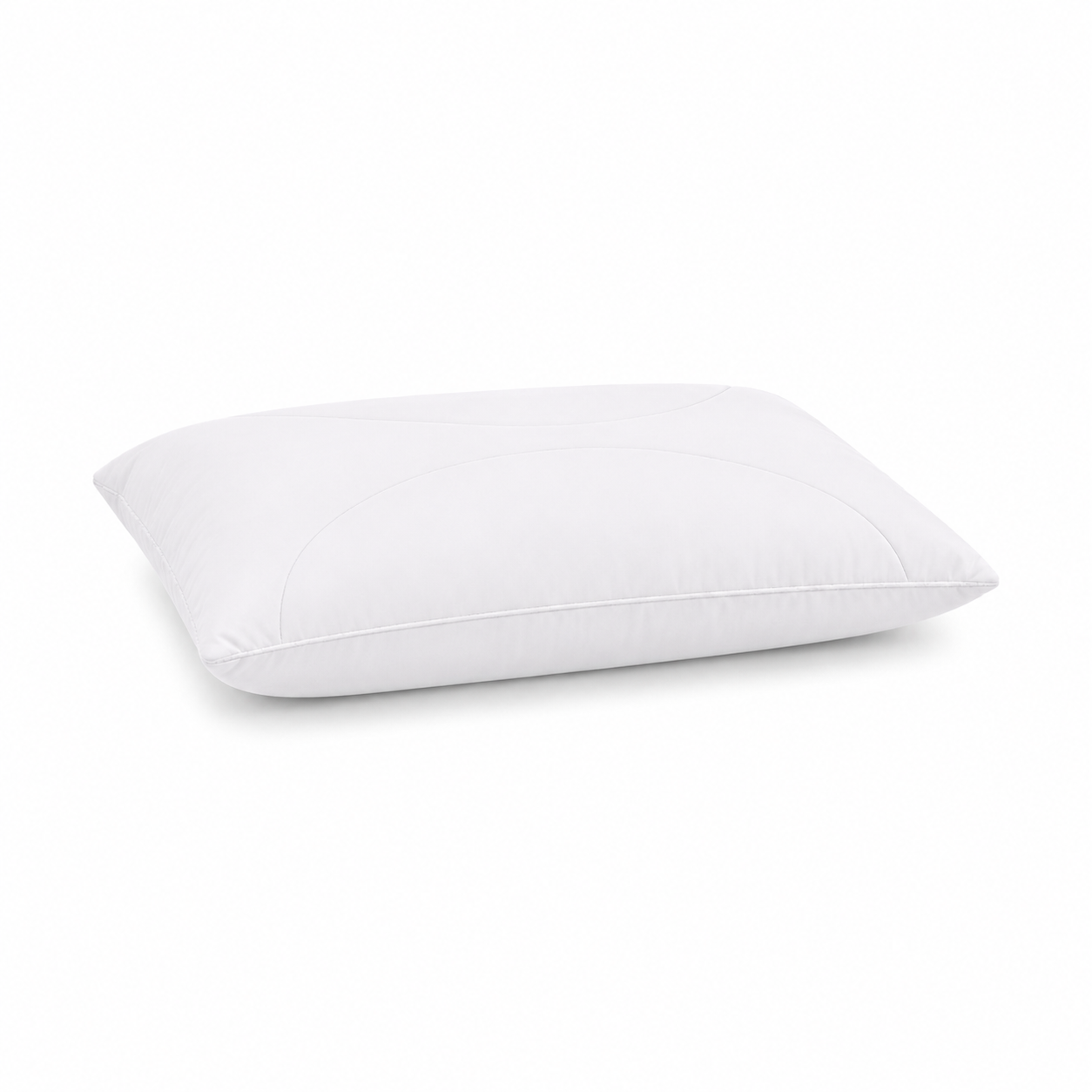
CoolCloud® Pillow (AED 280); Best Overall for Hot Sleepers • CoolTouch® phase-change fabric (Q-Max 0.38; highest verified rating) • CloudFill® fibre blend (breathable, hypoallergenic, no heat trapping) • Medium-soft firmness, suitable for back and side sleepers • TENCEL™ Lyocell blend cover (50% more breathable than cotton) • No more flipping the pillow; CoolTouch® maintains a consistent cool surface
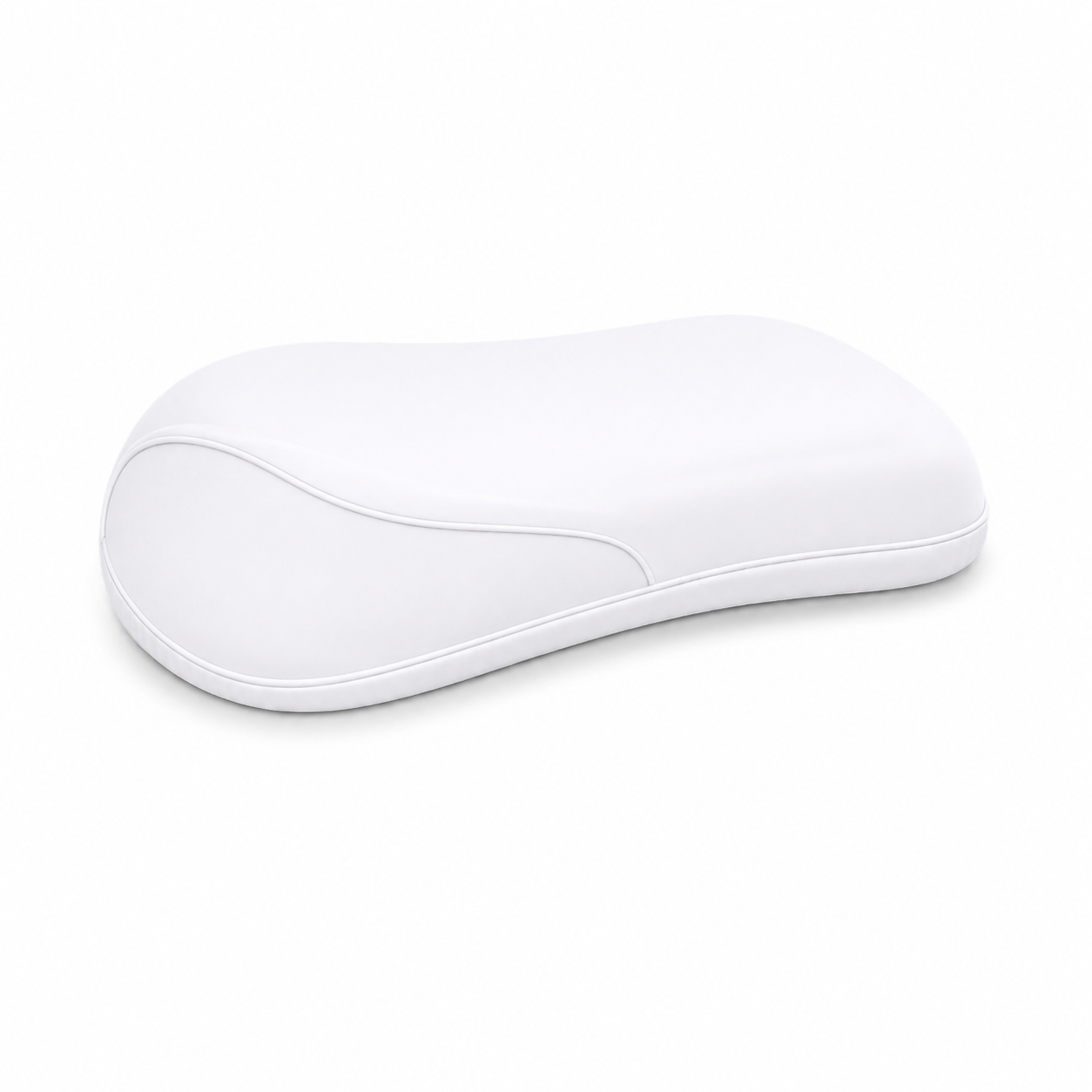
For hot sleepers who need firmer support or have neck pain: CoolTouch® Memory Contour Pillow (AED 400) • CoolTouch® fabric (Q-Max 0.38) wrapping ventilated contour memory foam • Ventilated memory foam allows airflow (unlike solid memory foam) • Firm support for spinal alignment and cervical support • Best for side sleepers and back sleepers with neck pain
Both pillows provide the Q-Max 0.38 cooling that hot sleepers need; the highest independently verified cooling rating available. Combined with the CoolTouch® Performance Comforter and TENCEL™ Lyocell sheets, they create the complete cooling system that clinical testing showed provides 32% more deep sleep and 41% fewer wake events.
Sleep Lab™ Clinical Study, n=847, 2023.
Frequently Asked Questions
What is the best pillow for hot sleepers?
The CoolCloud® Pillow (AED 280) is the best pillow for hot sleepers: CoolTouch® phase-change fabric (Q-Max 0.38; highest verified rating), breathable CloudFill® fibre (no heat trapping), and TENCEL™ Lyocell cover. For firmer support, the CoolTouch® Memory Contour Pillow (AED 400) adds ventilated memory foam.
Why do I keep flipping my pillow at night?
Flipping your pillow is a thermoregulatory response; you're seeking a cooler surface. Standard memory foam and cotton pillows trap heat, so each side warms up. The CoolCloud® Pillow with CoolTouch® fabric (Q-Max 0.38) maintains a consistent cool surface, eliminating the need to flip.
What should hot sleepers avoid in a pillow?
Avoid standard memory foam (traps heat, raises surface 3–4°C), down/feather pillows (insulator, traps heat), polyester pillows (no breathability), and "cooling" pillows with surface coatings (wash out in 15–20 cycles). Look for phase-change fabric (Q-Max ≥ 0.38) with breathable fill.
Does a cooling pillow really help hot sleepers?
Yes. The pillow is in contact with the head and neck; responsible for 25–30% of body heat dissipation; for 7–8 hours per night. A cooling pillow with Q-Max 0.38 maintains the surface 4.2°C below standard pillows. Clinical testing showed 27 minutes faster sleep onset and 41% fewer wake events with cooling pillows.