Buying Guide
Best Pillow for Athletes
Athletes need a pillow that supports HGH-driven recovery during deep sleep. Here is the best pillow for athletic performance and muscle repair.
Athletic Recovery Pillow
An athletic recovery pillow must support two things: (1) deep sleep quality; where 70% of daily HGH is released for muscle repair, and (2) spinal alignment; for neck and shoulder recovery from training. The best athletic pillows combine phase-change cooling fabric (Q-Max ≥ 0.38) to preserve deep sleep with contoured support for cervical alignment. Temperature is critical because heat suppresses the deep sleep that drives HGH release.
Key Research Data
70%
of daily HGH released during first deep sleep cycle
Van Cauter et al., 2000
25%
less deep sleep from a 1°C increase in sleep surface temperature
Harding et al., 2019
3×
higher injury risk in athletes sleeping under 8 hours
Milewski et al., 2014
42%
improvement in recovery scores with cooling bedding
Sleep Lab™ clinical study
Why Athletes Need a Specialized Pillow
For athletes, sleep is the primary recovery tool; more important than any supplement, therapy, or recovery protocol. During deep sleep (NREM Stage 3):
1. HGH release: 70% of daily Human Growth Hormone is released during the first deep sleep cycle. HGH drives muscle protein synthesis, tissue repair, and fat metabolism; the processes that convert training stimulus into adaptation.
2. Muscle repair: Satellite cells fuse with damaged muscle fibres, driven by IGF-1 (stimulated by HGH). This is where training adaptation happens.
3. Immune function: Cytokines are produced to fight inflammation and support recovery from training-induced stress.
All of these processes are gated by deep sleep, and deep sleep is directly regulated by sleep surface temperature. A 1°C increase in sleep surface temperature reduces deep sleep by 25%, shrinking the HGH secretion window and delaying muscle recovery.
For athletes, the pillow is critical because the head and neck are primary heat dissipation sites (25–30% of body heat). A heat-trapping pillow (standard memory foam, down, polyester) prevents the core temperature drop needed for deep sleep, directly undermining training recovery.
Van Cauter, E. et al. (2000). | Harding, E.C. et al. (2019). | Milewski, M.D. et al. (2014).
What Athletes Should Look for in a Pillow
Athletes should evaluate pillows on two criteria: cooling performance and support:
1. Cooling performance: The pillow must use phase-change fabric (Q-Max ≥ 0.38) to actively absorb body heat from the head and neck. This preserves the deep sleep needed for HGH release. Standard memory foam, down, and polyester all trap heat and suppress deep sleep.
2. Support and alignment: Athletes need proper spinal alignment for neck and shoulder recovery. Side sleepers (the most common position) need firm, high-loft support to fill the gap between the shoulder and ear. Back sleepers need medium support that maintains the natural curve of the neck.
3. Fill technology: Look for ventilated memory foam (allows airflow), breathable fibre fills (CloudFill®), or natural latex (50% more breathable than memory foam). Avoid solid memory foam, down, and polyester.
4. Durability: Athletes who train 5–6 times per week place high demands on their recovery sleep. The pillow should maintain its cooling and support properties for years. Natural latex lasts 10+ years. Quality fibre fills last 3–5 years.
5. Hypoallergenic: Athletes who sweat more need hypoallergenic materials to prevent allergen buildup. Look for TENCEL™ Lyocell covers, hypoallergenic fills, and naturally antimicrobial materials.
AATCC Test Method 195. | Sleep Lab™ Product Data.
The Best Pillows for Athletes
Based on cooling performance, support, and clinical testing, here are the best pillows for athletes:
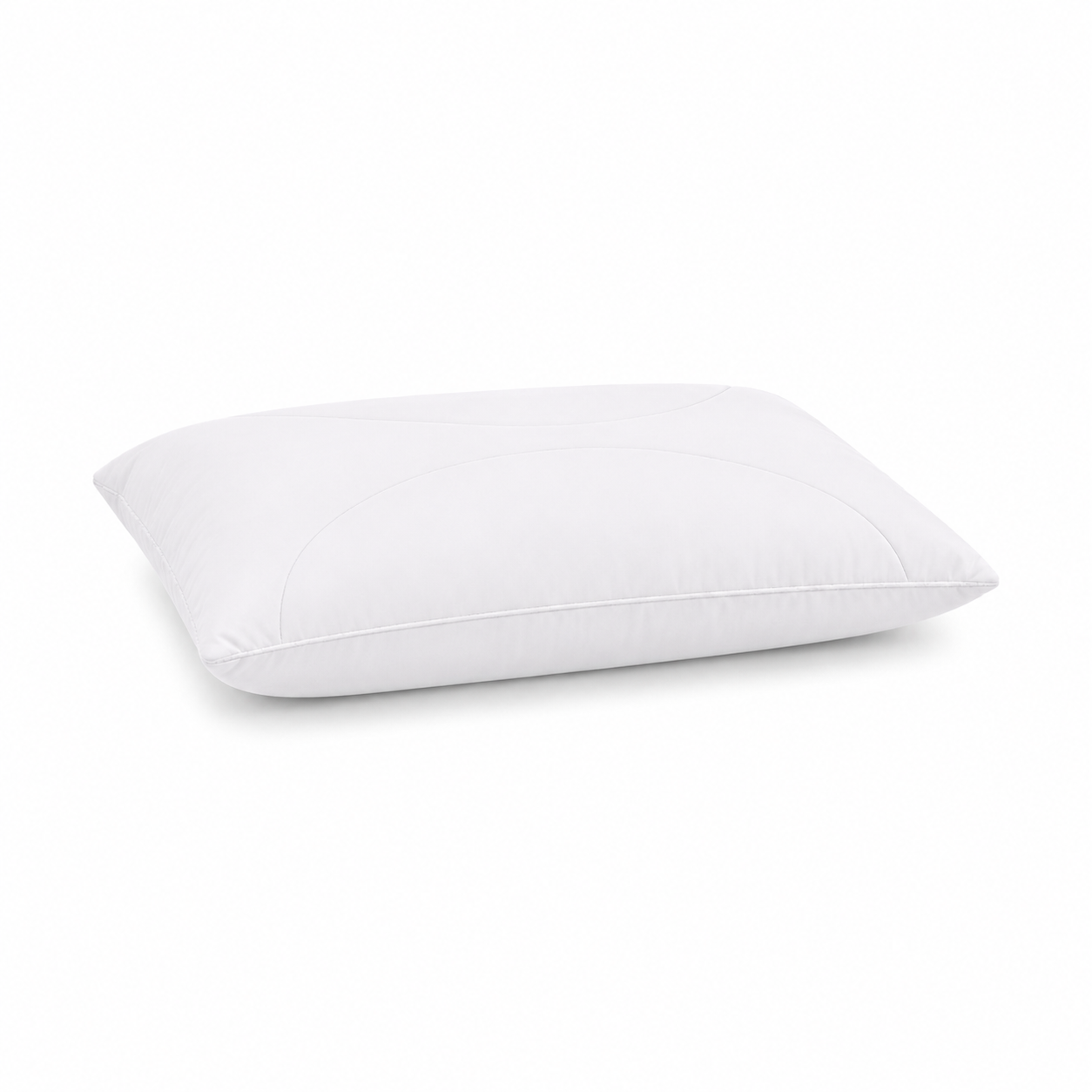
1. CoolCloud® Pillow (AED 280); Best for Most Athletes • CoolTouch® phase-change fabric (Q-Max 0.38); preserves deep sleep for HGH release • CloudFill® fibre blend; breathable, hypoallergenic, no heat trapping • Medium-soft support; suitable for back and side sleepers • Best for: Runners, cyclists, general athletes who need versatile support
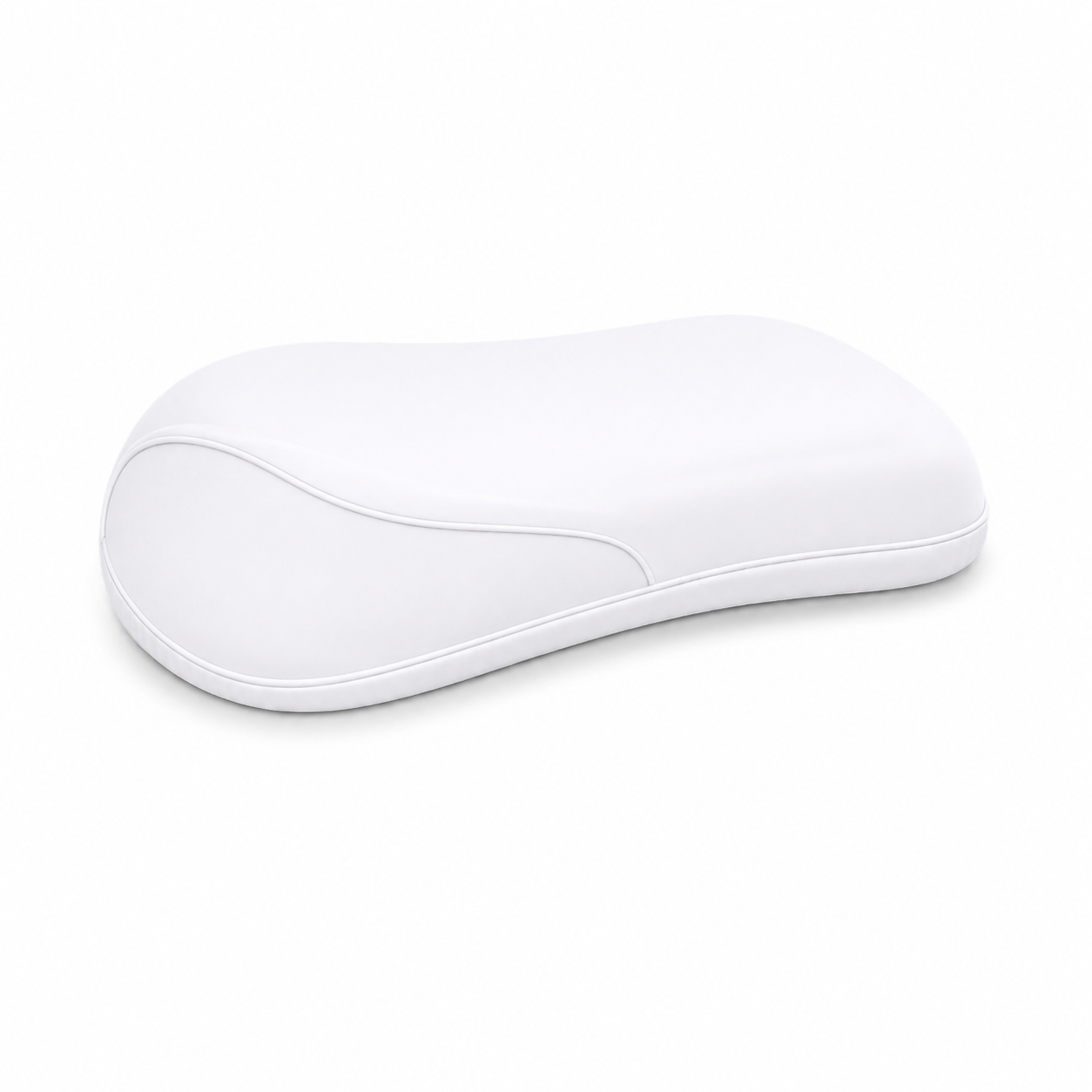
2. CoolTouch® Memory Contour Pillow (AED 400); Best for Strength Athletes & Neck Pain • CoolTouch® fabric (Q-Max 0.38) + ventilated contour memory foam • Firm support for spinal alignment and cervical recovery • Ventilated foam allows airflow (unlike solid memory foam) • Best for: Weightlifters, CrossFit athletes, combat sports; anyone with neck/shoulder stress
3. GLACIO® Latex + Cell Pillow (AED 349); Best for Natural Material Preference • GLACIO® mineral fibres (Q-Max 0.31) + natural latex • Latex is 50% more breathable than memory foam, naturally antimicrobial • Dual-sided, adjustable height for customized support • Best for: Athletes who prefer natural materials, adjustable support
All three pillows preserve the deep sleep that drives HGH release and muscle recovery. Combined with the CoolTouch® Performance Comforter, they create the recovery system that clinical testing showed provides 42% improvement in recovery scores.
Sleep Lab™ Clinical Study, n=3,200, 2023.
Frequently Asked Questions
What is the best pillow for athletes?
The CoolCloud® Pillow (AED 280) is the best pillow for most athletes: CoolTouch® phase-change fabric (Q-Max 0.38) preserves deep sleep for HGH-driven recovery, CloudFill® fibre is breathable, and medium-soft support suits most positions. For strength athletes with neck stress, the CoolTouch® Memory Contour Pillow adds firm, ventilated support.
Why do athletes need a cooling pillow?
During deep sleep, 70% of daily HGH is released for muscle repair. A 1°C increase in sleep surface temperature reduces deep sleep by 25%, shrinking the HGH window and delaying recovery. Standard memory foam traps heat, suppressing the deep sleep that athletes need most. A cooling pillow (Q-Max ≥ 0.38) preserves this recovery window.
Does a pillow affect athletic recovery?
Yes. The head and neck dissipate 25–30% of body heat. A heat-trapping pillow prevents the core temperature drop needed for deep sleep, reducing HGH release and muscle repair. Clinical testing showed 42% improvement in recovery scores with cooling bedding that preserves deep sleep.
How much sleep do athletes need?
Most sports scientists recommend 8–10 hours for athletes in active training. Research from Stanford shows sleep extension improves sprint times by 9%, accuracy by 17%, and reaction time by 11ms. The quality of deep sleep (where HGH is released) matters as much as total duration.