Problem Guide
Bedroom Too Warm
A warm bedroom prevents sleep. But the real problem is not the room temperature; it is the thermal microclimate your bedding creates. Here is how to fix both.
Bedroom Thermal Environment
The bedroom thermal environment has two components: ambient room temperature (controlled by AC) and the sleep surface microclimate (controlled by bedding). Research recommends 16–19°C for ambient temperature and 33–36°C for the skin-surface microclimate. In the UAE, where ambient temperatures are elevated, the bedding microclimate becomes the critical variable; standard bedding can create a microclimate 4–6°C warmer than room air.
Key Research Data
16–19°C
optimal ambient bedroom temperature for sleep
National Sleep Foundation
33–36°C
optimal skin-surface temperature during sleep
Harvard Medical School
4–6°C
warmer microclimate from standard bedding vs room air
Independent textile testing
19–21°C
recommended AC setting for UAE with cooling bedding
The Sleep Lab™ recommendations
Two Temperatures That Matter
When your bedroom feels too warm for sleep, you need to understand that there are two temperatures at play:
1. Ambient room temperature: The air temperature in the room, controlled by air conditioning. Research recommends 16–19°C for optimal sleep quality. In the UAE, 19–21°C is a practical balance between sleep quality and energy cost.
2. Sleep surface microclimate: The temperature between your body and your bedding; what your skin actually experiences. The optimal range is 33–36°C at the skin surface. This is the temperature that matters most for sleep quality.
The critical insight: these two temperatures can differ by 4–6°C. Standard bedding (cotton, polyester, memory foam, down) traps body heat, creating a microclimate significantly warmer than room air. So even if your AC is set to 20°C, your skin surface may be at 24–26°C; above the optimal range.
This is why reducing the AC temperature further doesn't solve the problem: you're cooling the air but not the microclimate. The solution is bedding that actively dissipates heat at the skin surface.
National Sleep Foundation. | Harvard Medical School, Division of Sleep Medicine.
How to Cool Your Bedroom Properly
To create a bedroom that is genuinely cool enough for quality sleep, address both temperatures:
1. Set AC to 19–21°C: This is the optimal ambient temperature for UAE sleep. Do not set it lower; below 18°C, the body shifts into heat conservation mode, which disrupts sleep. Setting AC extremely low is also extremely expensive and creates a thermal shock cycle when entering or leaving the room.
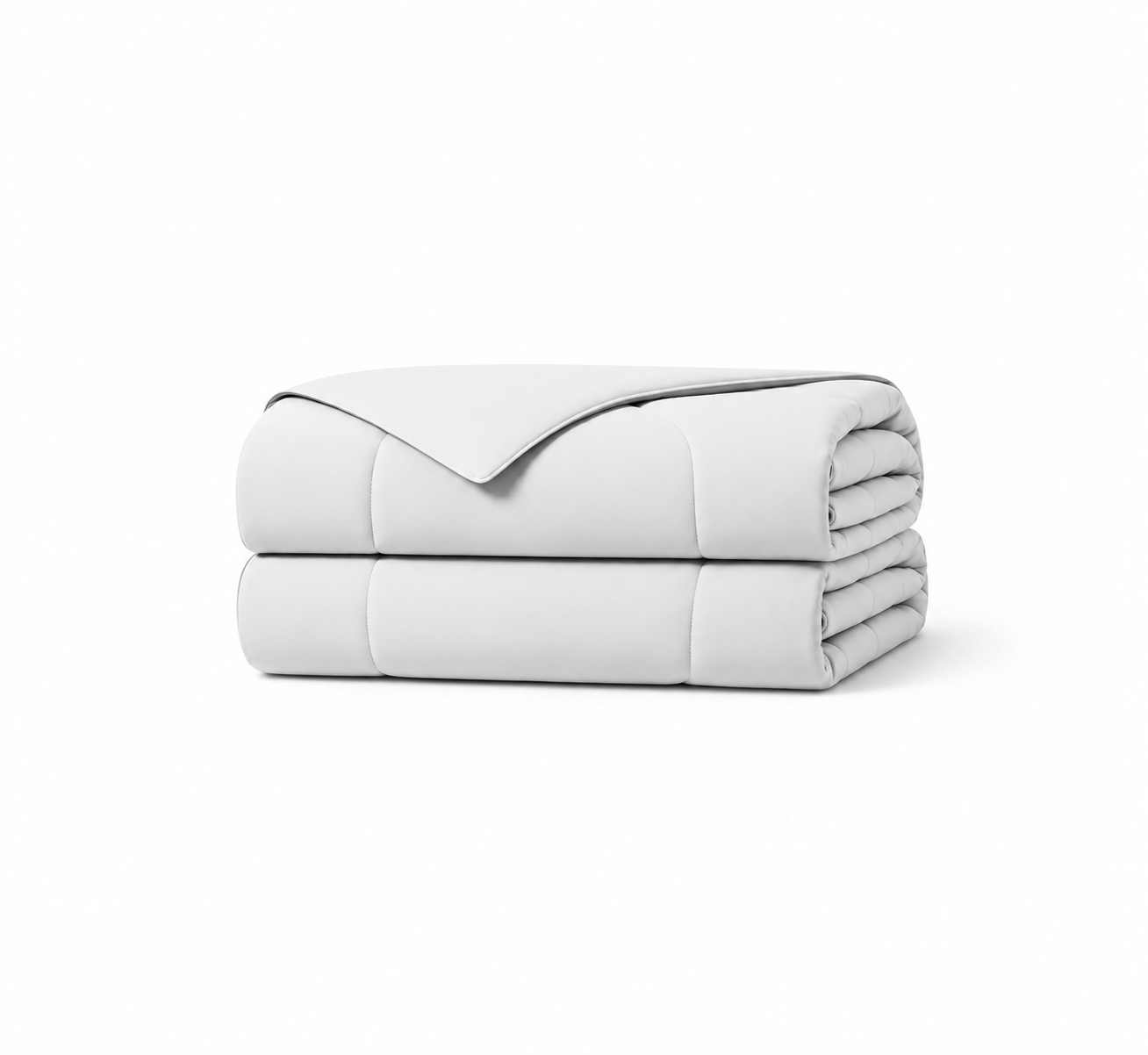
2. Replace heat-trapping bedding: This is the most important step. Switch to cooling bedding with phase-change fabric (CoolTouch®, Q-Max 0.38) that actively absorbs body heat at the skin surface. The CoolTouch® Performance Comforter replaces heat-trapping duvets with active heat dissipation.
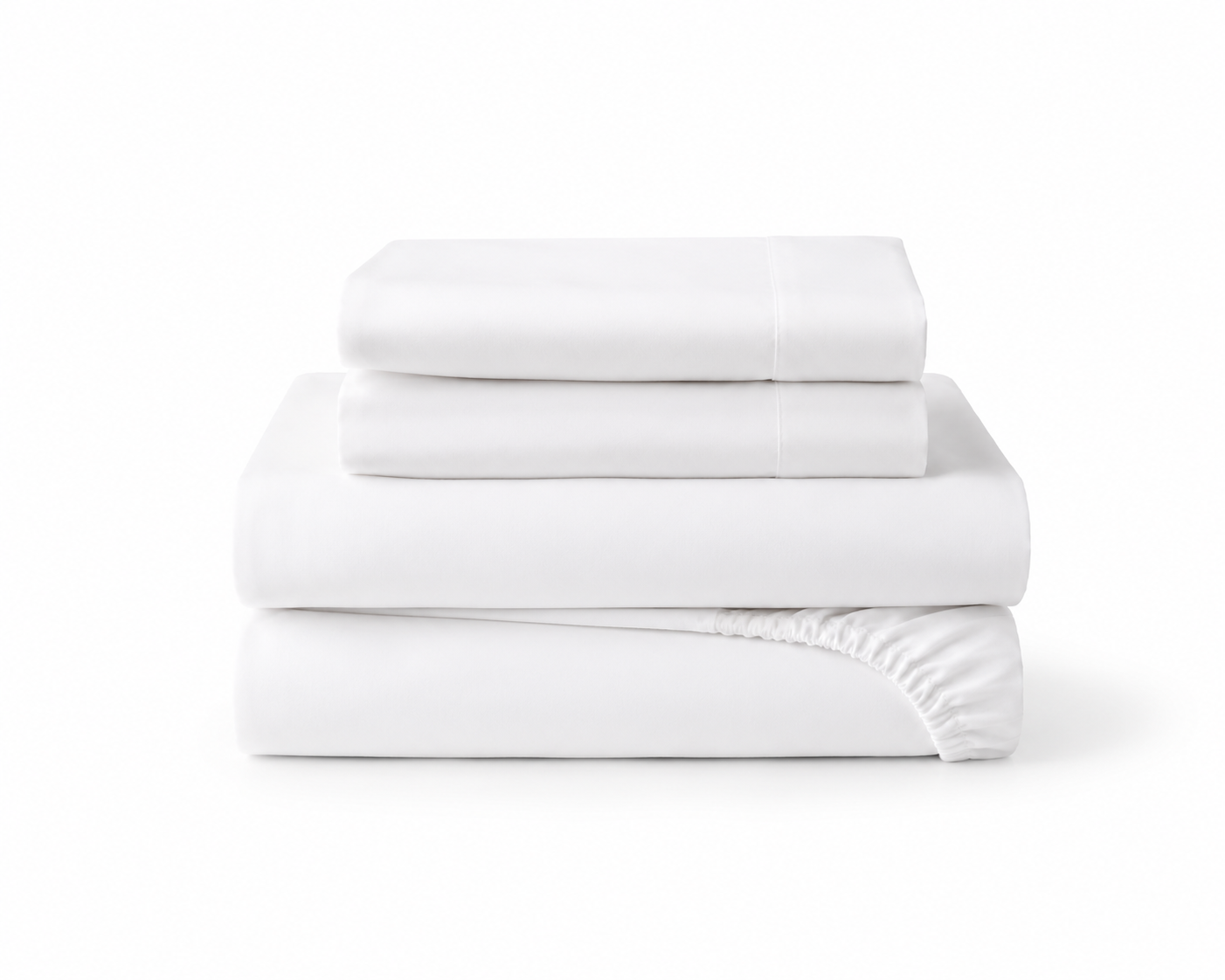
3. Use TENCEL™ Lyocell sheets: 50% more breathable than cotton, 50% faster moisture management. TENCEL™ facilitates evaporative cooling even in the UAE's humid conditions.
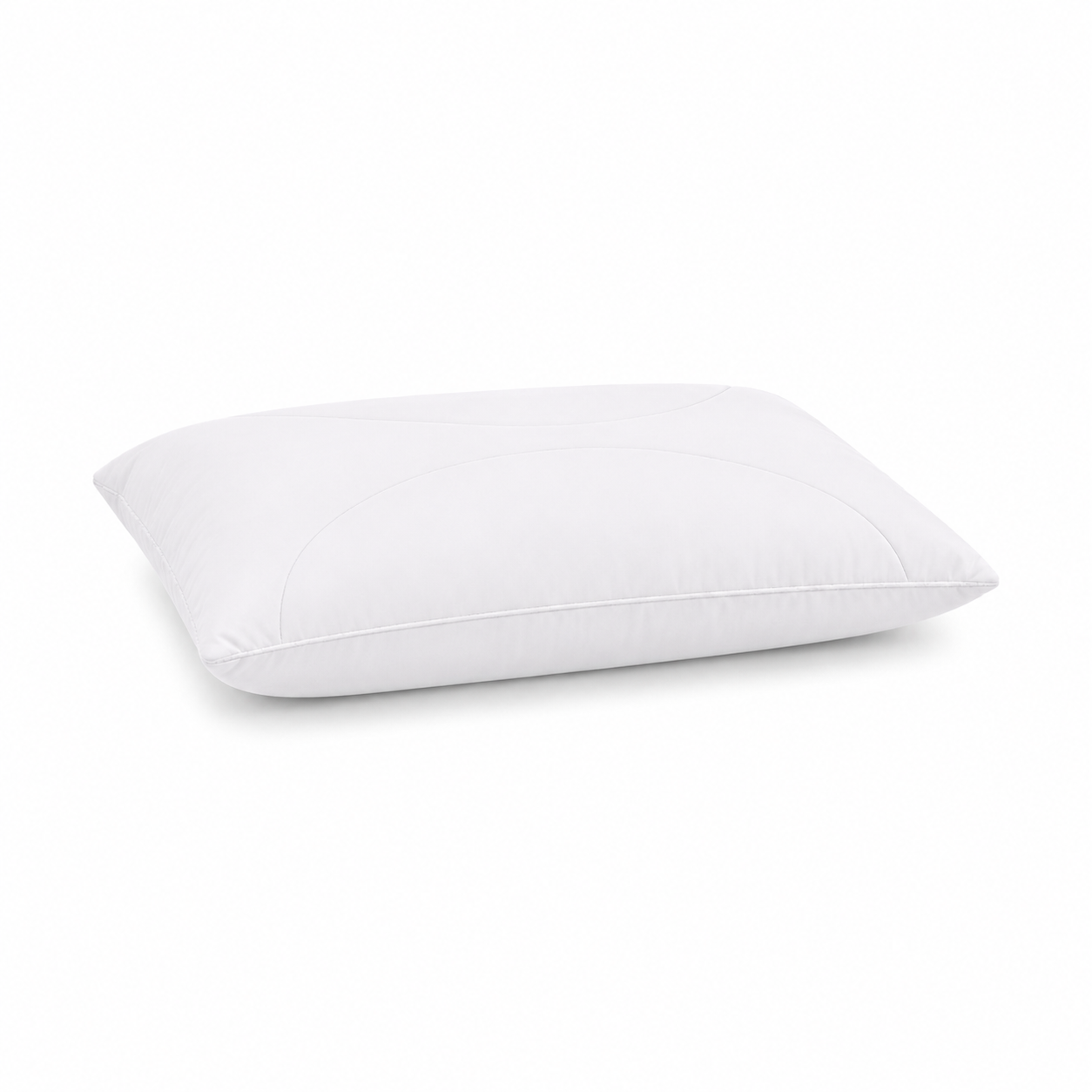
4. Use a cooling pillow: The CoolCloud® Pillow with CoolTouch® fabric manages head and neck temperature; critical because the head dissipates 25–30% of body heat.
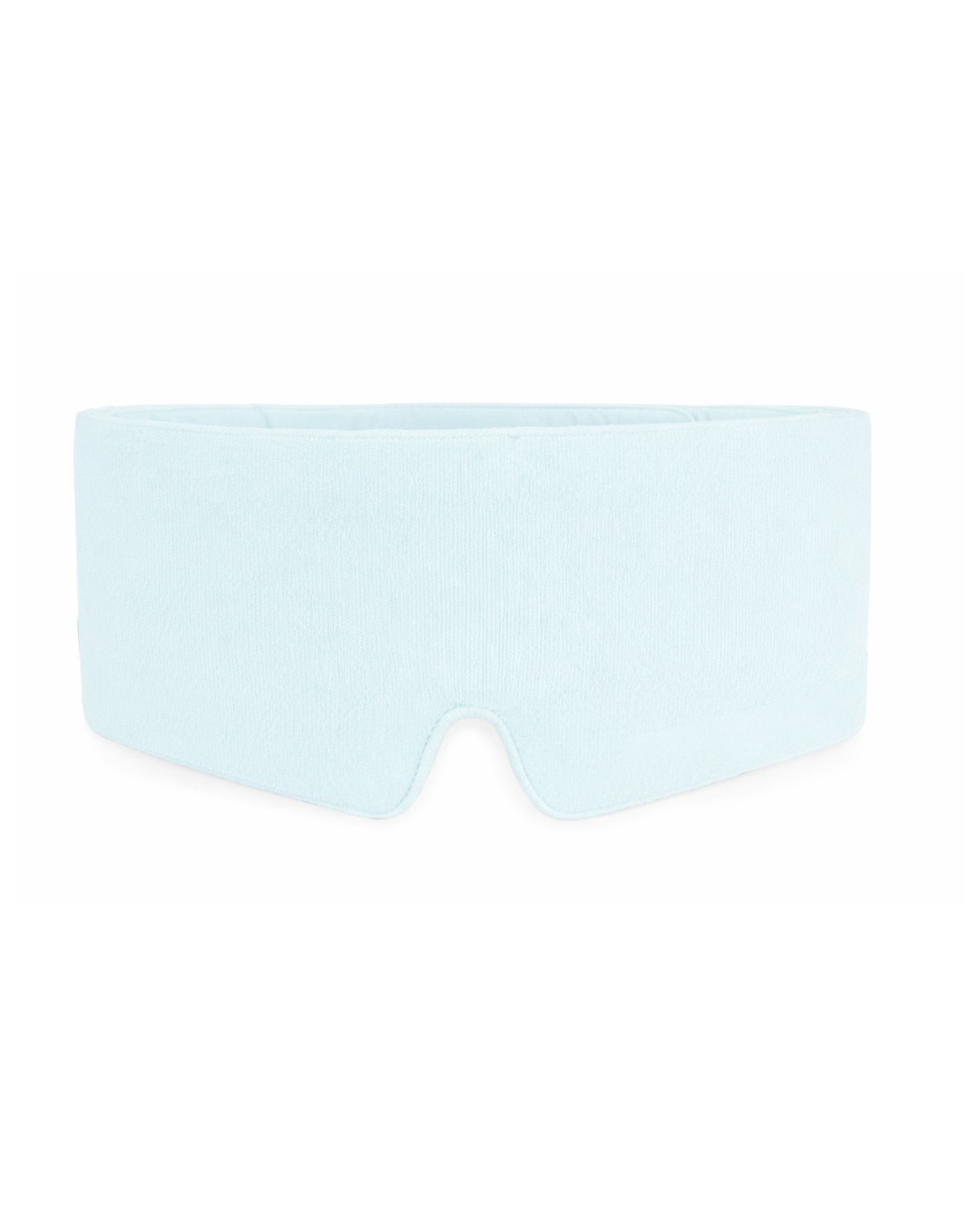
5. Use a cooling eye mask: The CoolTouch® Performance Eye Mask provides facial cooling and full blackout, supporting melatonin production.
6. Reduce thermal mass: Keep curtains closed during the day to prevent solar heat gain. Use a fan for air circulation; moving air improves evaporative cooling.
This comprehensive approach addresses both the ambient temperature and the microclimate; the only way to genuinely cool your bedroom for sleep.
AATCC Test Method 195. | Sleep Lab™ Clinical Study, 2023.
The Complete Cool Bedroom System
For a bedroom that is genuinely cool enough for quality sleep in the UAE:
1. AC at 19–21°C (ambient temperature management) 2. CoolTouch® Performance Comforter (microclimate management; active heat absorption) 3. CoolCloud® Pillow (head/neck cooling; 25–30% of body heat dissipation) 4. TENCEL™ Lyocell sheets (moisture management; 50% faster than cotton) 5. CoolTouch® Performance Eye Mask (facial cooling + blackout) 6. Curtains closed during day (solar heat gain reduction) 7. Fan for air circulation (evaporative cooling enhancement)
This system provides 27 minutes faster sleep onset, 41% fewer wake events, and 32% more deep sleep versus standard bedding with AC alone. It is the most complete solution for a bedroom that is too warm.
Sleep Lab™ Clinical Study, n=847, 2023.
Frequently Asked Questions
What temperature should my bedroom be for sleep?
Research recommends 16–19°C ambient room temperature. In the UAE, 19–21°C is practical. More importantly, the sleep surface microclimate (what your skin experiences) should be 33–36°C. Standard bedding can create a microclimate 4–6°C warmer than room air.
Why is my bedroom too warm for sleep even with AC?
AC cools the room air but not the thermal microclimate between body and bedding. Standard bedding traps body heat, creating a microclimate 4–6°C warmer than room air. You need cooling bedding (CoolTouch®, Q-Max 0.38) to manage the skin-surface temperature that AC cannot reach.
How do I cool my bedroom for better sleep?
Set AC to 19–21°C, use cooling bedding with phase-change fabric (CoolTouch®) for microclimate management, TENCEL™ Lyocell sheets for moisture management, keep curtains closed during the day, and use a fan for air circulation. This addresses both ambient temperature and the sleep surface microclimate.
Should I set my AC lower if my bedroom is too warm?
No. Setting AC below 18°C shifts the body into heat conservation mode, which disrupts sleep. It is also extremely expensive. Instead, use cooling bedding to manage the skin-surface microclimate; this is more effective and more efficient than lowering AC temperature.