Sleep Environment
Bedroom Temperature
The ideal bedroom temperature for sleep is 16–19°C. But the temperature that matters most is not the room; it is the surface your skin touches.
Ideal Bedroom Temperature
Research published in Sleep Medicine Reviews identifies 16–19°C as the optimal ambient bedroom temperature for sleep onset, sleep maintenance, and slow-wave sleep duration. However, the temperature that most affects sleep quality is the sleep surface microclimate; the temperature between body and bedding; which should be 33–36°C at skin level. Standard bedding can create a microclimate 4–6°C warmer than room air, meaning room temperature alone does not determine sleep quality.
Key Research Data
16–19°C
optimal ambient bedroom temperature for sleep
Sleep Medicine Reviews, 2019
33–36°C
optimal skin-surface temperature during sleep
Harvard Medical School
4–6°C
warmer microclimate from standard bedding vs room air
Independent textile testing
19–21°C
recommended AC setting for UAE with cooling bedding
The Sleep Lab™
The Science of the Ideal Sleep Temperature
The National Sleep Foundation and research published in Sleep Medicine Reviews (2019) identify 16–19°C as the optimal ambient bedroom temperature for sleep. This range is not arbitrary; it maps precisely onto the conditions that facilitate the body's natural 1–2°C core temperature drop required to initiate and sustain deep sleep stages.
At the lower end of this range (15–16°C), sleep onset is faster, deep sleep is deeper, and sleep efficiency is highest. Above 21°C, sleep quality begins to measurably deteriorate. Above 24°C, NREM and REM sleep are significantly fragmented, and wakefulness periods increase.
These thresholds are particularly relevant for the UAE, where overnight indoor temperatures commonly remain at 22–26°C, even with air conditioning. The bedroom ambient temperature may feel comfortable, but the sleep surface; under standard bedding; can be significantly warmer.
Okamoto-Mizuno, K. & Mizuno, K. (2012). International Journal of Biometeorology. | Sleep Medicine Reviews (2019).
Room Temperature vs Sleep Surface Temperature
A critical distinction often missed in general sleep advice is the difference between ambient room temperature and sleep surface temperature:
• Ambient room temperature: Controlled by AC. Optimal range: 16–19°C. • Sleep surface microclimate: Controlled by bedding. Optimal range: 33–36°C at skin level.
Standard bedding creates a thermal microclimate that can be 4–6°C warmer than room air. So even if your AC is set to 20°C, the microclimate at your skin may be 24–26°C; above the optimal range.
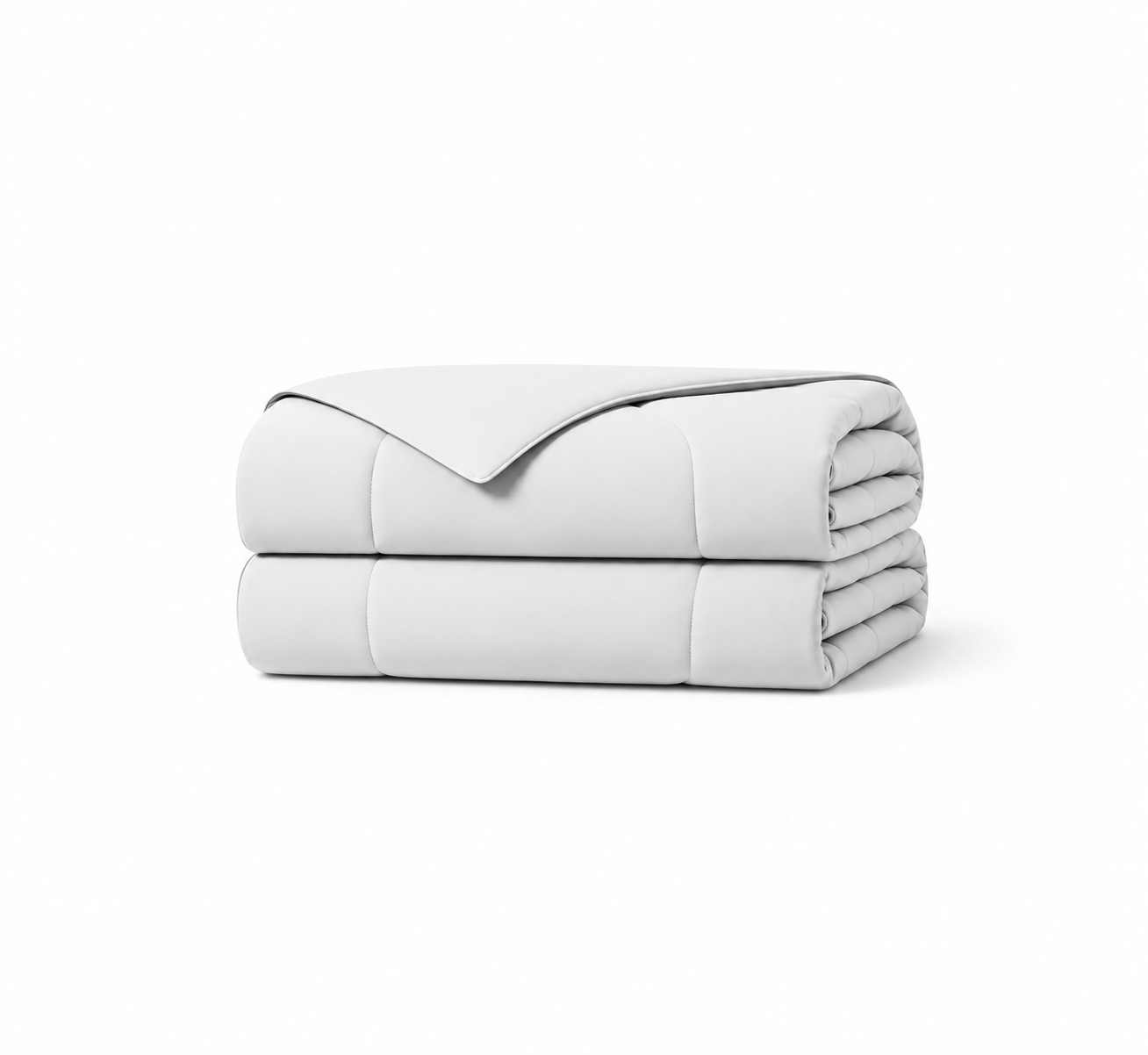
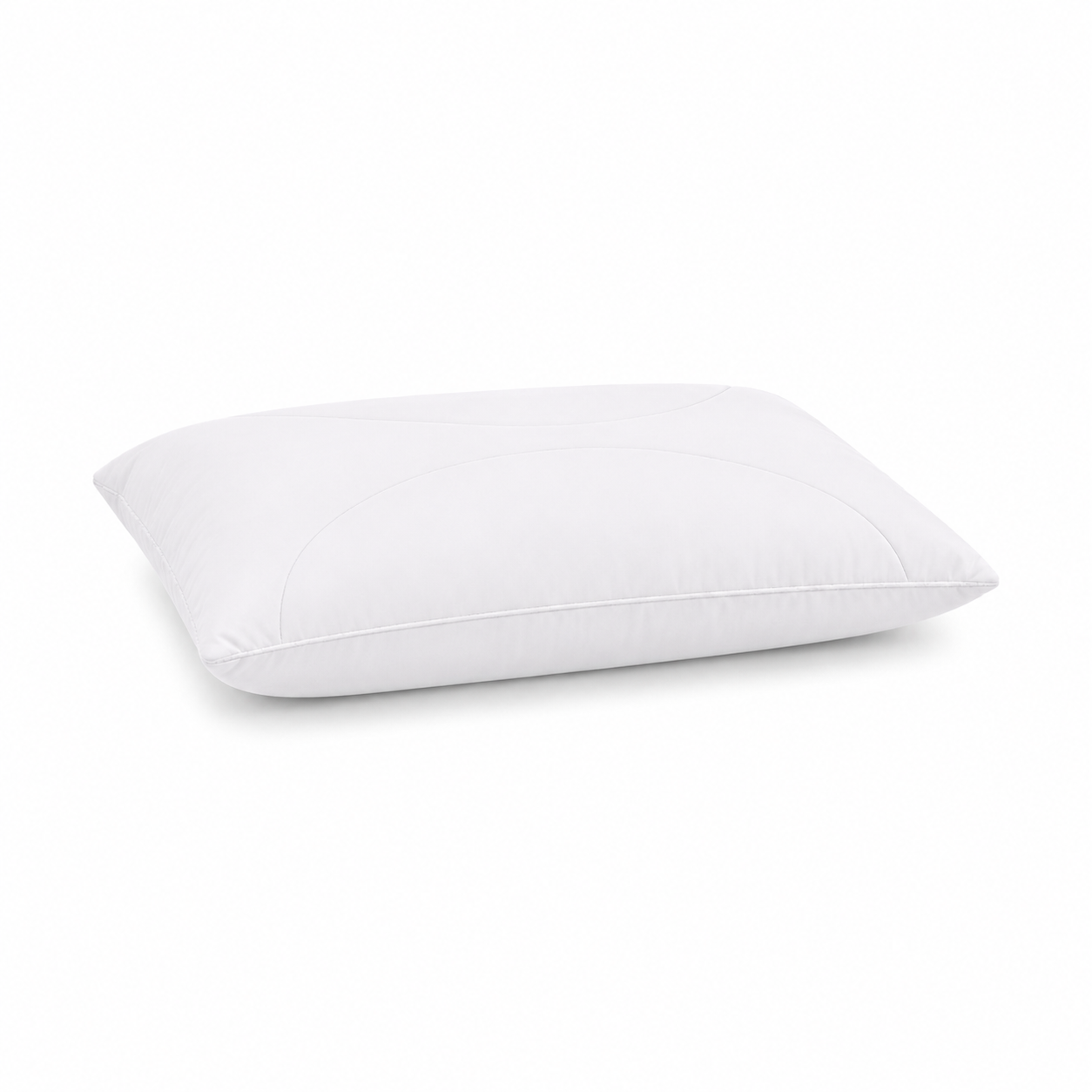
Standard memory foam pillows have been measured to be 3–4°C warmer at their surface than the surrounding air. A standard polyester duvet can create a thermal microclimate up to 5°C warmer than room temperature.
This means that simply lowering the AC temperature does not solve the problem; you are cooling the air but not the microclimate. The solution is bedding that actively dissipates heat at the skin surface.
In the UAE, the recommended approach is: AC at 19–21°C (managing ambient temperature) + cooling bedding with CoolTouch® phase-change fabric (managing the skin-surface microclimate).
Berardi, U. & Gallardo, A. (2015). Journal of Building Engineering. | AATCC Test Method 195.
Optimising Your Bedroom Temperature for Sleep
To create the optimal bedroom temperature for sleep in the UAE:
1. Set AC to 19–21°C: This is the practical optimal range for UAE sleep. Do not set it lower; below 18°C, the body shifts into heat conservation mode, which disrupts sleep. Setting AC extremely low is also extremely expensive.
2. Use cooling bedding: CoolTouch® Performance Comforter (Q-Max 0.38) actively absorbs body heat, maintaining the sleep surface at 16–19°C regardless of ambient temperature. This addresses the microclimate that AC cannot reach.
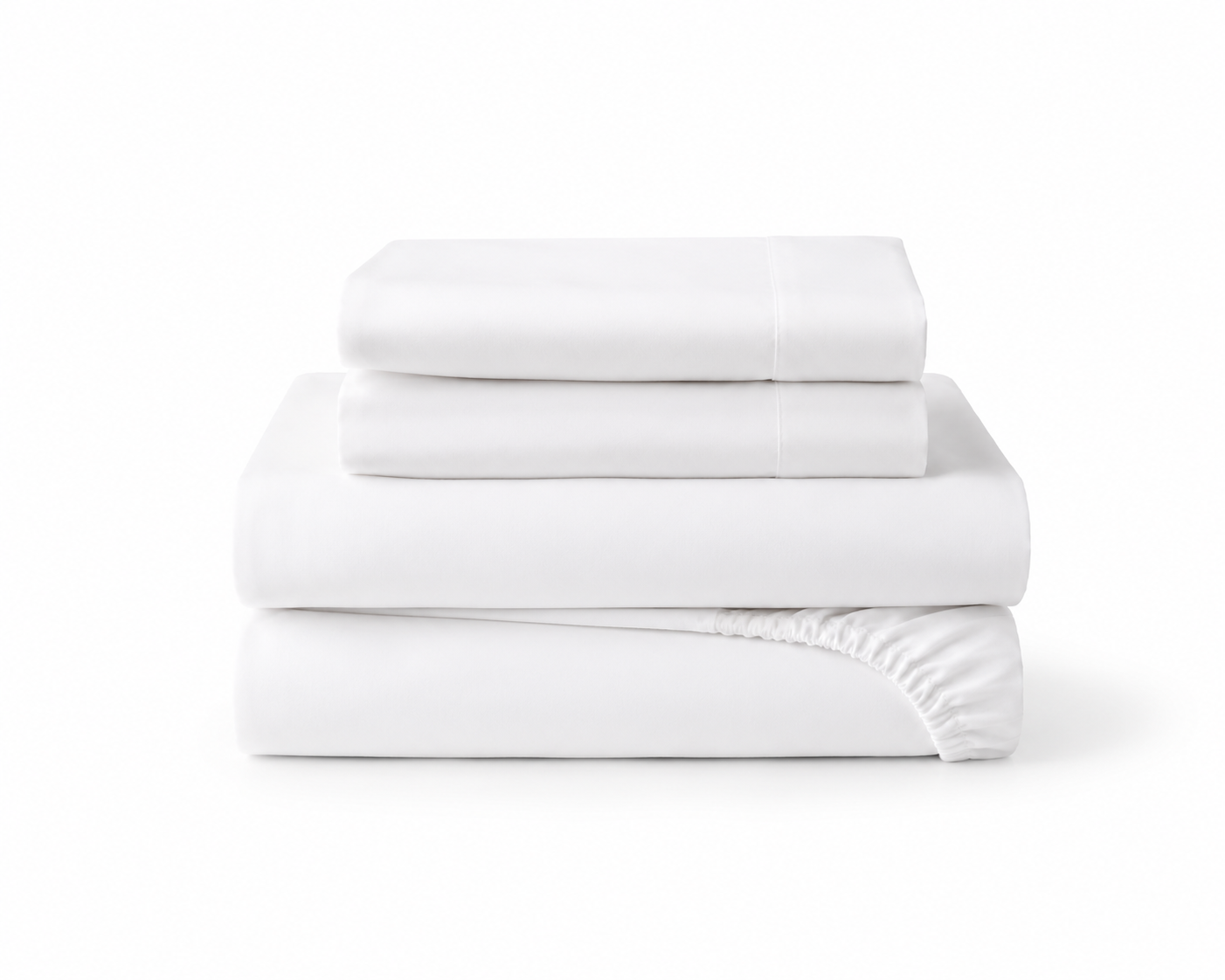
3. Use TENCEL™ Lyocell sheets: 50% more breathable than cotton, facilitating heat transfer from skin to environment. 50% faster moisture management prevents the damp-heat that raises microclimate temperature.
4. Keep curtains closed during the day: Prevents solar heat gain, especially important during UAE summer.
5. Use a fan for air circulation: Moving air improves heat transfer from exposed skin and enhances evaporative cooling.
6. Avoid heat-generating electronics before bed: TVs, computers, and bright lights generate heat and suppress melatonin.
This comprehensive approach addresses both ambient room temperature and the sleep surface microclimate; the only way to genuinely optimise bedroom temperature for sleep.
Sleep Lab™ Clinical Study, 2023. | National Sleep Foundation.
Frequently Asked Questions
What is the ideal bedroom temperature for sleep?
Research recommends 16–19°C as the optimal ambient bedroom temperature. More importantly, the sleep surface microclimate (between body and bedding) should be 33–36°C at skin level. Standard bedding can create a microclimate 4–6°C warmer than room air, so room temperature alone does not determine sleep quality.
What temperature is too hot to sleep?
Sleep quality begins to deteriorate measurably above 21°C ambient. Above 24°C, NREM and REM sleep are significantly fragmented. In the UAE, where overnight temperatures remain elevated, the sleep surface microclimate is the critical variable; standard bedding can push it well above the optimal range.
What temperature should I set my AC for sleep in the UAE?
19–21°C is the optimal range for UAE sleep. Do not set it lower; too cold shifts the body into heat conservation mode. Combine AC at 19–21°C with cooling bedding (CoolTouch®) that manages the skin-surface microclimate that AC cannot reach.
Why is my bedroom too warm for sleep even with AC?
AC cools room air but not the thermal microclimate between body and bedding, which can be 4–6°C warmer than room air. You need cooling bedding (CoolTouch®, Q-Max 0.38) to manage the skin-surface temperature that AC cannot reach.